
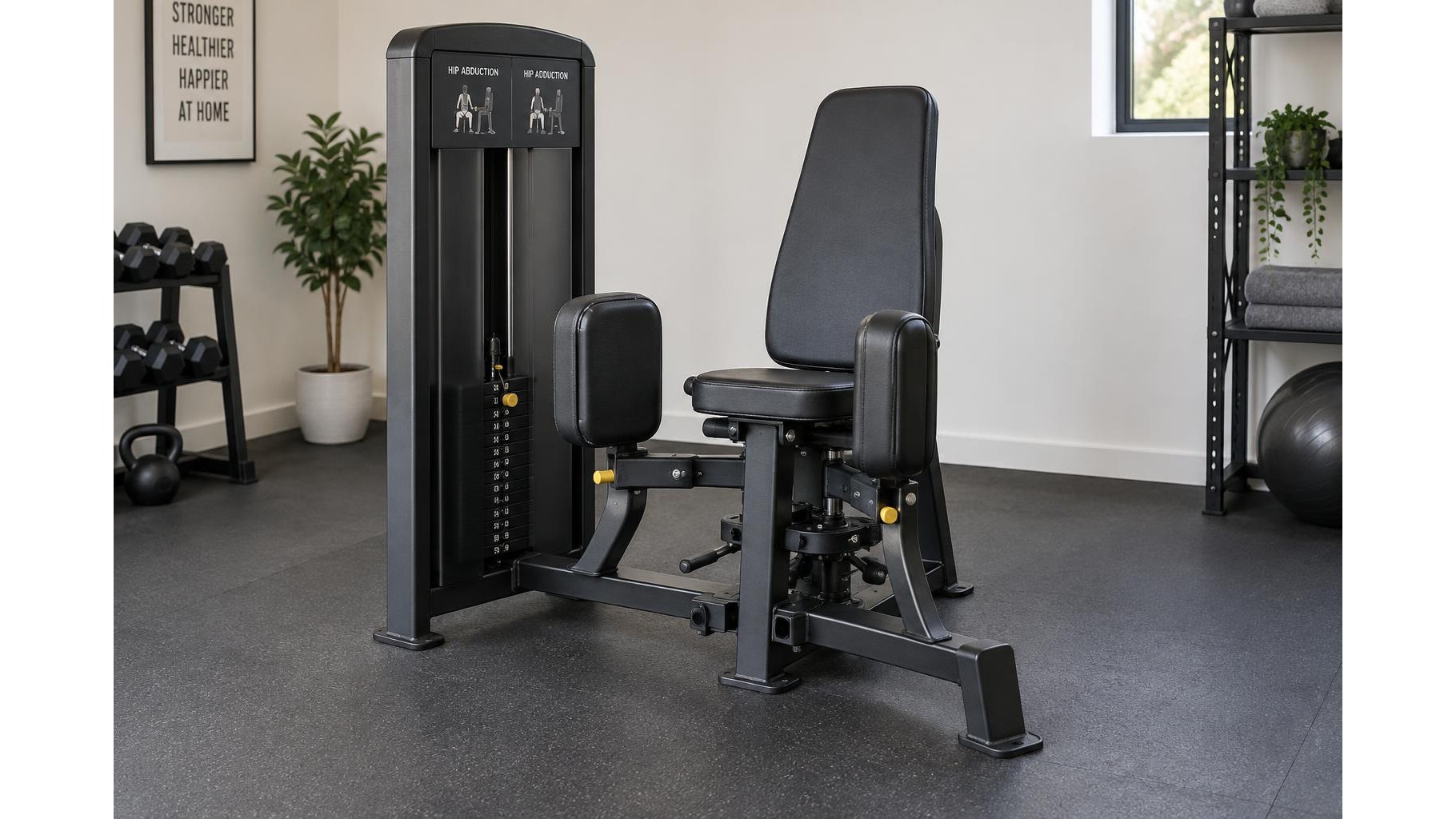
A dedicated leg abduction and adduction machine can target the outer and inner thighs in a controlled seated position, but a home-gym model must fit more than your training plan. Resistance type, adjustment range, stability, comfort and storage all affect whether the machine will be practical to use regularly. This guide explains what to check before buying, with particular attention to compact spaces and safe, repeatable movement.
Compare resistance systems
Compact machines commonly use weight plates, selectorised weight stacks, resistance bands or adjustable cable arrangements. A plate-loaded machine can be relatively simple and expandable, but you need room to store plates and must check that the machine’s loading horns accept the plates you own. A weight stack is convenient to adjust between sets, though it can increase the unit’s size and cost. Band-based designs may be lighter and easier to put away, but resistance can change considerably through the movement. Compare how resistance is increased, whether the increments suit your training, and whether the mechanism feels smooth in both directions. Avoid choosing on the maximum load alone: usable adjustment and controlled movement matter more.
Check adjustment and range of motion
Look for adjustable starting positions so you can set the pads at a comfortable width before beginning each exercise. A broad range of settings can help accommodate different body sizes and let you progress gradually, but the controls should be easy to identify and lock securely. Check that the machine supports both abduction—moving the thighs outward—and adduction—bringing them inward—or confirm whether separate configurations are required. Your hips should remain comfortably aligned, with no forced stretch at the start or abrupt stop at the end. If possible, test the movement or review clear setup instructions before purchase.
Measure the footprint and storage needs
Do not rely on the word “compact” in a listing. Compare the machine’s assembled length, width and height with the space available, and leave room to get on and off and move the levers through their full range. Check whether dimensions include handles, weight horns or other protruding parts. Also consider where it will live between workouts: some models may be movable, while others are heavy or awkward to reposition. If storage is a priority, verify whether the unit folds or can be safely stored upright; never assume that it does. Measure doorways and access routes before delivery, too.
Assess frame stability and construction
A seated machine should remain planted during controlled repetitions. Examine the base width, frame material, welds and any levelling feet, and look for clear information about maximum user weight and rated resistance. A narrow, lightweight frame may be easier to move but could feel less secure under effort. Reviews can reveal recurring concerns such as rocking, loose adjustment pins or difficult assembly, although they should not replace checking the specifications. Place the machine on a level, suitable floor and follow the maker’s assembly and maintenance instructions. Stability is essential for confidence and consistent technique.
Prioritise seat and pad comfort
Comfort can determine whether a machine gets used. Check seat dimensions, padding, upholstery and the position of the thigh pads; they should contact the legs securely without pressing painfully on the knees. A seat that is too narrow or a pad position that cannot be adjusted may make longer sessions uncomfortable. Consider how easily surfaces can be cleaned, especially if the machine will be shared. If you can try a similar design, pay attention to posture: you should be able to sit upright, brace comfortably and move without the seat or pads slipping.
Make the final choice
Before ordering, compare the total cost—including any plates or accessories—with the machine’s adjustment options, dimensions, warranty and assembly requirements. Confirm that the manufacturer provides instructions and replacement-part support. A compact model is a good fit only if it accommodates your body, offers controlled resistance and can be used safely in the room you have.
In summary, choose a compact inner- and outer-thigh machine by balancing resistance, fit, stability and storage rather than focusing on one headline specification. Measure your space, check the full range of motion and prioritize a comfortable setup. Those practical checks can help you select equipment that suits both your home gym and your training routine.









