A calm cooldown for stiff hamstrings
Hours at a desk followed by a home workout can leave the backs of your thighs feeling stiff. A short cooldown may help you transition out of training and move more comfortably, without forcing a deep stretch. This routine combines easy movement with gentle, supported positions. Keep the effort low, breathe normally and treat each sensation as feedback: you are aiming for mild tension, not pain.
Start with comfortable movement
Walk slowly around the room for two or three minutes, letting your arms swing naturally. If walking is uncomfortable, try marching gently in place or shifting your weight from foot to foot while holding a stable surface. The goal is simply to keep moving at an easy pace after exercise or a long sitting spell. Avoid bouncing, sudden reaches or trying to test how far you can stretch. If the stiffness eases as you move, continue; if it worsens, stop and reassess.
Try a supported hamstring stretch
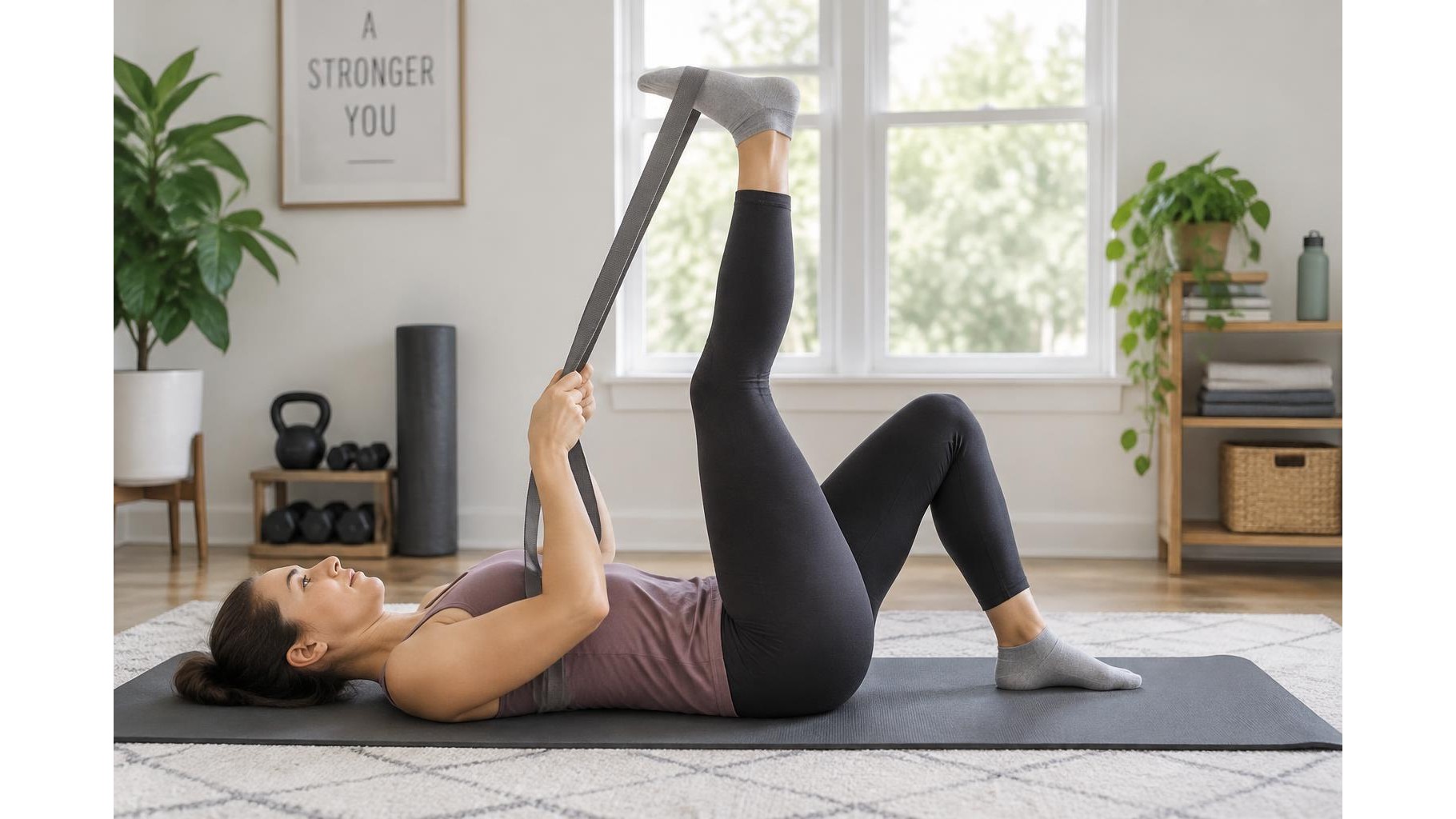
Lie on your back with both knees bent and feet resting on the floor. Bring one thigh toward your chest and hold behind it, keeping the knee comfortably bent. Slowly straighten the lower leg only until you notice a light stretch at the back of the thigh. Keep your head and shoulders relaxed and your other foot supported. Hold for 15 to 20 seconds while breathing steadily, then lower the leg and switch sides. Repeat once if it remains comfortable.
Scale the range to your day
There is no need to reach a particular angle or straighten the knee fully. A smaller range is a useful starting point, especially after a demanding workout or a long period at a desk. You can make the position easier by keeping the knee more bent, using your hands behind the thigh rather than pulling the foot, or placing a cushion under your head. If lying down is not practical, sit near the front of a sturdy chair, extend one leg with the heel on the floor, and hinge forward slightly from the hips while keeping your back relaxed. Stop before the stretch becomes sharp or intense.
Add a gentle hip hinge
Stand with feet about hip-width apart and knees soft, using a wall or chair for balance if needed. Place your hands on your hips and move them back as your torso tips forward a little, keeping your spine comfortable and your weight balanced. You may feel a mild lengthening in the backs of your thighs. Return upright smoothly. Try five slow repetitions, staying well within an easy range. This is a movement practice, not a test of flexibility, so avoid locking your knees or rounding deeply to reach the floor.
Know when to pause and seek advice
Ordinary stiffness should feel mild and should not make you brace, hold your breath or limp. Stop if you notice sharp pain, tingling, numbness, sudden weakness or symptoms that travel down the leg. Seek advice from a qualified healthcare professional if discomfort is severe, follows an injury, keeps returning, or does not improve with gentle activity. If you have a known condition or are unsure which movements are suitable, ask a clinician for personalised guidance before progressing.
Keep the cooldown easy and repeatable
Finish with a minute of relaxed walking or comfortable standing. A brief routine done consistently is often more practical than an aggressive stretch session, and it should leave you feeling the same or better—not more sore. Adjust the duration and range to how you feel that day, and let comfort guide each step.