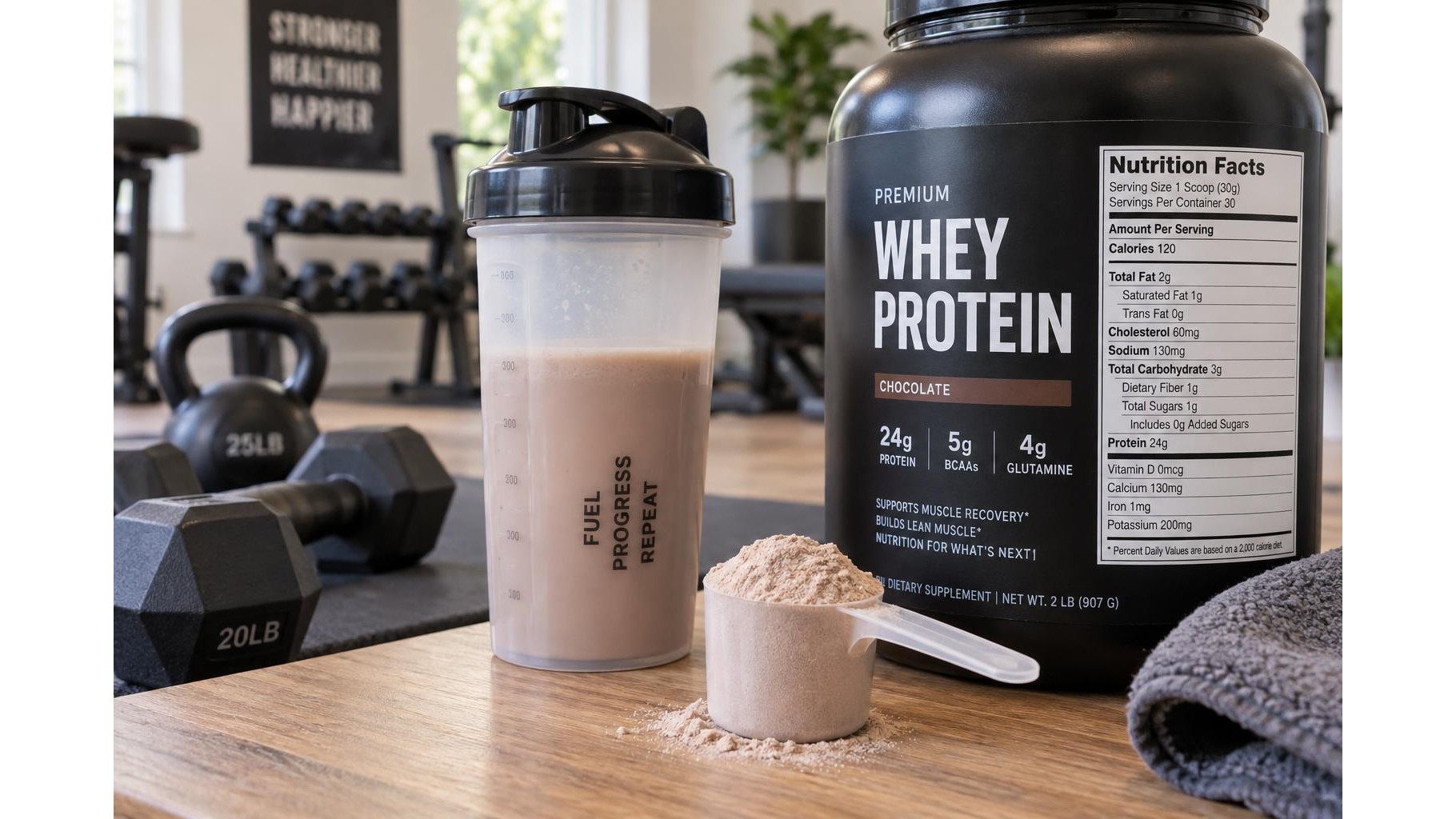
Protein powders combining whey and casein bring together two milk proteins with different digestion characteristics. Whey is generally digested more quickly, while casein forms a thicker mixture in the stomach and is digested more gradually. A blend is not automatically better than a single-source powder: the useful choice depends on your diet, preferences, budget and training routine. Compare the actual label and serving, rather than relying on phrases such as “slow release” or “premium blend”.
How blends differ from single-source powders
Whey protein is available as concentrate, isolate and hydrolysate; these forms differ in processing and typically in protein, carbohydrate and fat content. Casein, often listed as micellar casein or calcium caseinate, is another milk-derived protein. A blend may combine whey and casein in stated proportions, or simply list several protein ingredients without giving their percentages. By contrast, a single-source powder makes it easier to know which protein supplies the serving. Neither format guarantees better results: total daily protein intake and an appropriate training programme matter more than the blend name.
Read the ingredient list closely
Check which protein sources appear and their order: ingredients are generally listed by weight, so those near the beginning make up more of the product. If the label does not disclose the whey-to-casein ratio, you cannot reliably infer it from the product name. Also look for added sugars, flavourings, thickeners, enzymes and other ingredients that may affect taste, texture or suitability. People with a milk allergy should avoid both whey and casein; those with lactose intolerance may tolerate some products better than others, but tolerance varies. Review allergen information and consult a qualified healthcare professional if needed.
Compare protein per serving, not scoop size
A scoop’s weight is not the same as its protein content. Compare the grams of protein per serving and the serving weight, then calculate protein as a proportion of the powder. For example, a 30 g serving containing 22 g of protein provides less protein than a 30 g serving containing 25 g. Check whether the stated serving is one scoop or multiple scoops, and use the nutrition panel rather than the front-of-pack claim. Comparing cost per 20 g or 25 g of protein can also make prices easier to assess.
Match servings to your dietary needs
Consider how much protein you already get from meals before deciding whether to use a supplement. Needs vary with body size, activity, age, health and goals, so a serving recommendation on a tub is not a personalised target. If you use a powder, count its protein toward your overall daily intake instead of treating it as an extra requirement. A smaller portion may be enough to complement a meal or snack. Check the package for serving guidance, and seek advice from a registered dietitian or healthcare professional if you have a medical condition or specific dietary needs.
Use supplements alongside food
A blend can be convenient when a quick, portable protein option fits your day, but it is not necessary for everyone. Foods such as eggs, dairy, beans, lentils, tofu, fish and meat can provide protein along with other nutrients. Choose a powder you enjoy and can tolerate, mix it according to its directions, and avoid assuming that a particular timing window is essential. If a blend feels too heavy, tastes unsuitable or does not fit your budget, a single-source powder or ordinary food may be a better practical choice.
In summary, compare protein sources, disclosed ratios, ingredient lists and grams of protein per serving. Match portions to what you need after accounting for food, and treat whey-casein blends as a convenient option rather than a requirement. The best choice is one that suits your preferences, dietary circumstances and overall routine.