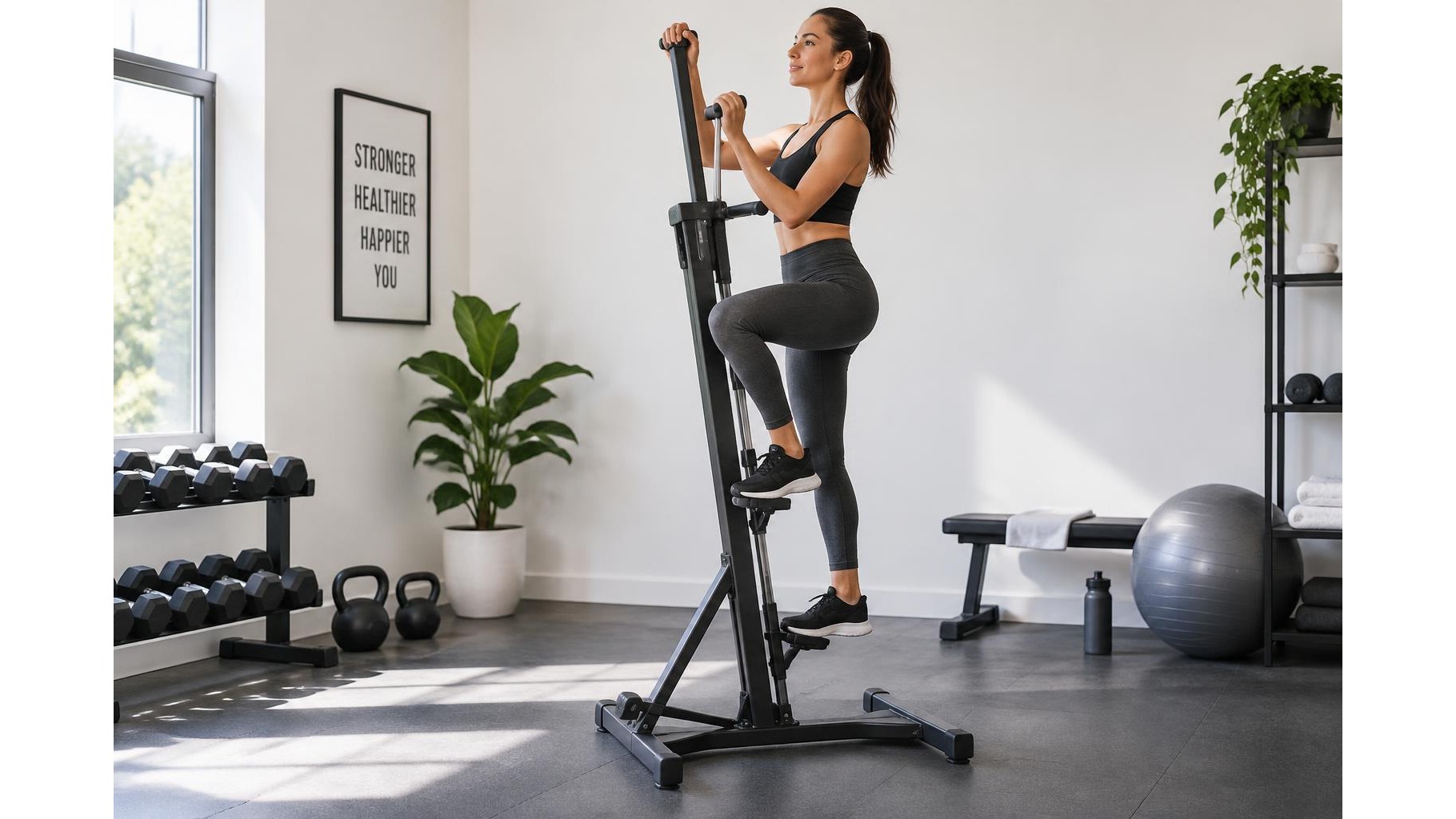
A vertical climber uses coordinated arm and leg movements to imitate climbing, creating a compact cardio workout that can involve the upper and lower body at once. The machine’s compact footprint can suit a home gym, but fit and stability matter as much as its promise of a full-body session. Before buying, check that the movement feels controlled, the range suits your body, and the effort can be adjusted for your current fitness level.
How the climbing motion works
Most home climbers use moving pedals and hand grips, linking a stepping action with an alternating pull. Your legs provide much of the work, while your arms help guide the motion and contribute to the effort. The exact feel varies by design: some machines have a more constrained path, while others allow a longer stride. Start with a natural, comfortable rhythm rather than trying to reach as high or low as possible. A smooth movement is more useful than forcing an exaggerated climb, especially when you are learning the machine.
Check stability and setup before buying
Inspect the frame, base width, joints and floor contact points. A machine should sit evenly on a hard, level surface and should not rock or shift during a gentle test. If possible, try it in the shoes you expect to wear for training. Check the manufacturer’s stated user-weight limit, assembled dimensions and any requirement for clearance around the machine. Look for secure hand grips and pedals that feel large enough for your feet. A folding design may save space, but it should lock securely in both its open and stored positions.
Adjust stride to your body
Set the machine according to its instructions before stepping on. If stride length or pedal travel is adjustable, begin with a setting that allows your knees and hips to move comfortably without locking your joints or reaching awkwardly. Stand tall, keep your feet centred on the pedals, and use a light grip rather than hanging your weight from the handles. During a test movement, check that your shoulders remain relaxed and your knees track comfortably. Stop if you feel pinching, sharp pain, or loss of balance; a shorter, controlled range is preferable to forcing a larger one.
Choose an effort you can control
Resistance, pace and stride range all affect workout intensity, although the adjustment options differ between machines. Begin at the easiest available setting and move slowly enough to maintain steady breathing and clean technique. Aim for a pace at which you can speak in short sentences. If the machine has no resistance control, regulate effort through cadence and duration instead. Avoid pulling hard with your arms or leaning heavily on the handles to compensate for a pace that is too demanding. Increase only one factor at a time, such as adding a little time or a small amount of speed.
A beginner-friendly session
Start with a few minutes of easy movement, then complete several short work periods at a comfortable pace, with easy movement or rest between them. For example, alternate one minute of steady climbing with one or two minutes of gentle recovery, repeating the sequence a few times. Finish with a slower period before stepping off carefully. Keep your first sessions brief and leave time to see how your body responds later that day and the next. As the movement becomes familiar, gradually add time before making the intervals faster or more demanding.
Make consistency the goal
A vertical climber can provide a practical cardio option when its movement fits your body and the frame feels secure. Prioritise a stable setup, comfortable range of motion and an effort you can sustain with good form. Read the product specifications carefully and, where possible, test the machine before purchase. A measured start helps you build confidence and makes it easier to progress without turning every session into an all-out climb.