After squats, lunges or step-ups, your thighs may feel tired and tight. A calm cooldown can help you shift out of training mode without forcing a stretch or trying to “fix” normal soreness. This gentle quadriceps recovery routine takes about five to eight minutes. Keep every movement comfortable, breathe easily and stop if anything feels sharp, unusual or increasingly painful.
Begin with an easy walk
Walk slowly around your room or march softly in place for two minutes. Let your arms move naturally and take relaxed breaths. The aim is simply to keep moving at a low effort while your heart rate settles—not to add another workout. If standing feels uncomfortable, sit and gently alternate lifting each foot a few centimetres from the floor. Choose the option that feels smooth and steady.
Loosen the legs with relaxed movement
Stand near a wall or sturdy chair for balance. Bend and straighten one knee through a small, easy range, then switch sides; do about eight slow repetitions per leg. You can also gently shift your weight from one foot to the other. Keep the movement controlled and pain-free. There is no need to chase a deep stretch: the goal is comfortable mobility, not maximum range.
Try a mild quadriceps stretch only if it feels good
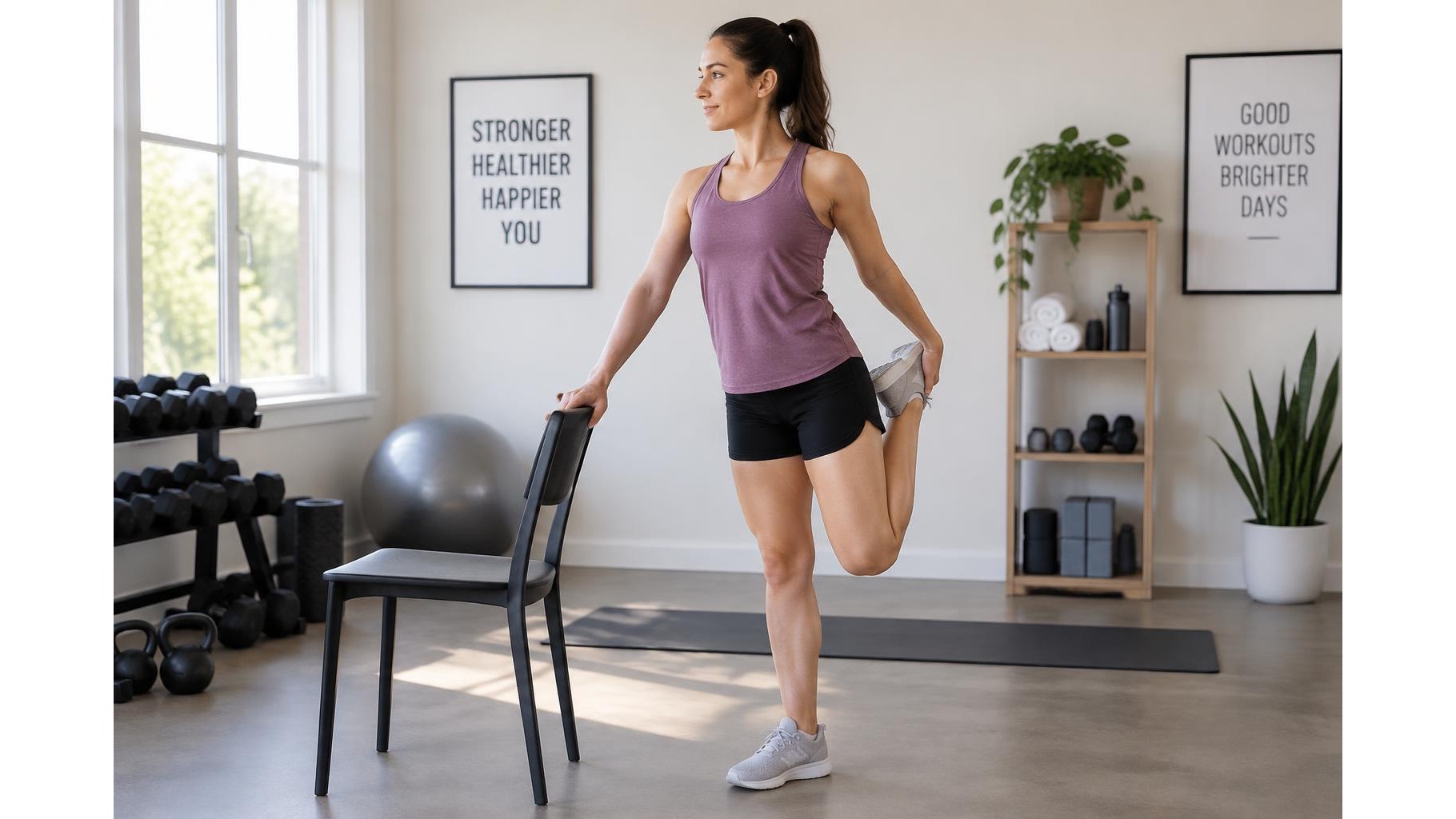
If your thighs feel comfortable with stretching, hold a support and bring one heel gently toward your seat. Keep your knees pointing down and close together, and avoid pulling hard on your ankle. Stop at a mild, comfortable stretch across the front of the thigh and breathe for 15–20 seconds. Repeat once on the other side. Skip this step if it causes pain, cramping or a sense of strain; stretching is optional, not a test of flexibility.
Settle into a supported position
Sit or lie down in a position that lets your legs relax. Try resting on your back with your knees bent and feet on the floor, or place a cushion under your knees. Take five slow breaths, letting each exhale be a little longer than the inhale. If you enjoy gentle self-massage, use your hands with light pressure around—not directly on—any tender or bruised area. Avoid aggressive rolling or pressure that makes you tense up.
Scale recovery to how you feel
After a light session, a few minutes of walking and relaxed breathing may be enough. After a harder workout, use the full routine but keep the effort low. Normal post-exercise soreness often develops later and gradually eases; it is different from sudden, sharp pain during a movement. If a stretch or walk makes symptoms worse, stop and rest. A cooldown should leave you feeling settled, not more fatigued.
In summary, use easy movement, optional mild stretching and a relaxed supported rest to wind down after home leg training. Keep the routine comfortable and adjust it to your energy and symptoms. Significant swelling, severe or worsening pain, difficulty bearing weight, or symptoms that do not improve deserve medical advice. This routine is for general wellbeing and does not replace assessment or treatment from a qualified healthcare professional.