Training at home makes it easy to skip your warm-up and cool-down, but those 10 minutes before and after your session are what keep your joints happy, muscles loose and recovery on track. Below you’ll find simple 10-minute blueprints you can plug in before and after strength, cardio or mobility workouts, using only basic space and bodyweight so you stay consistent and pain-free.
Why 10-minute warm-ups matter at home
A good home warm-up routine does three things: raises your heart rate, lubricates your joints and activates the muscles you’re about to train. In a living room or garage, that means focusing on dynamic movements rather than static stretching. Think gentle pulses, circles and controlled swings. This boosts blood flow and gently increases range of motion so your first working set or interval doesn’t shock your system. Even if time is tight, a focused 10 minutes can significantly reduce injury risk and improve how strong and stable you feel during the main workout.
10-minute warm-up template for strength days
For home strength training (squats, presses, deadlifts), use this structure: 3 minutes of whole-body pulse raiser, 4 minutes of joint prep, 3 minutes of movement-specific activation. Start with 30 seconds each of marching in place, arm swings, and easy bodyweight squats, cycling twice. Then prep the joints: hip circles, cat-cow, thoracic rotations and ankle rocks for about 30 seconds per move. Finish with activation: glute bridges, band pull-aparts (if you own a mini band), and slow tempo lunges. Keep everything pain-free and smooth; the goal is to feel “switched on” but not fatigued before you touch your main weights.
10-minute warm-up template for cardio and HIIT
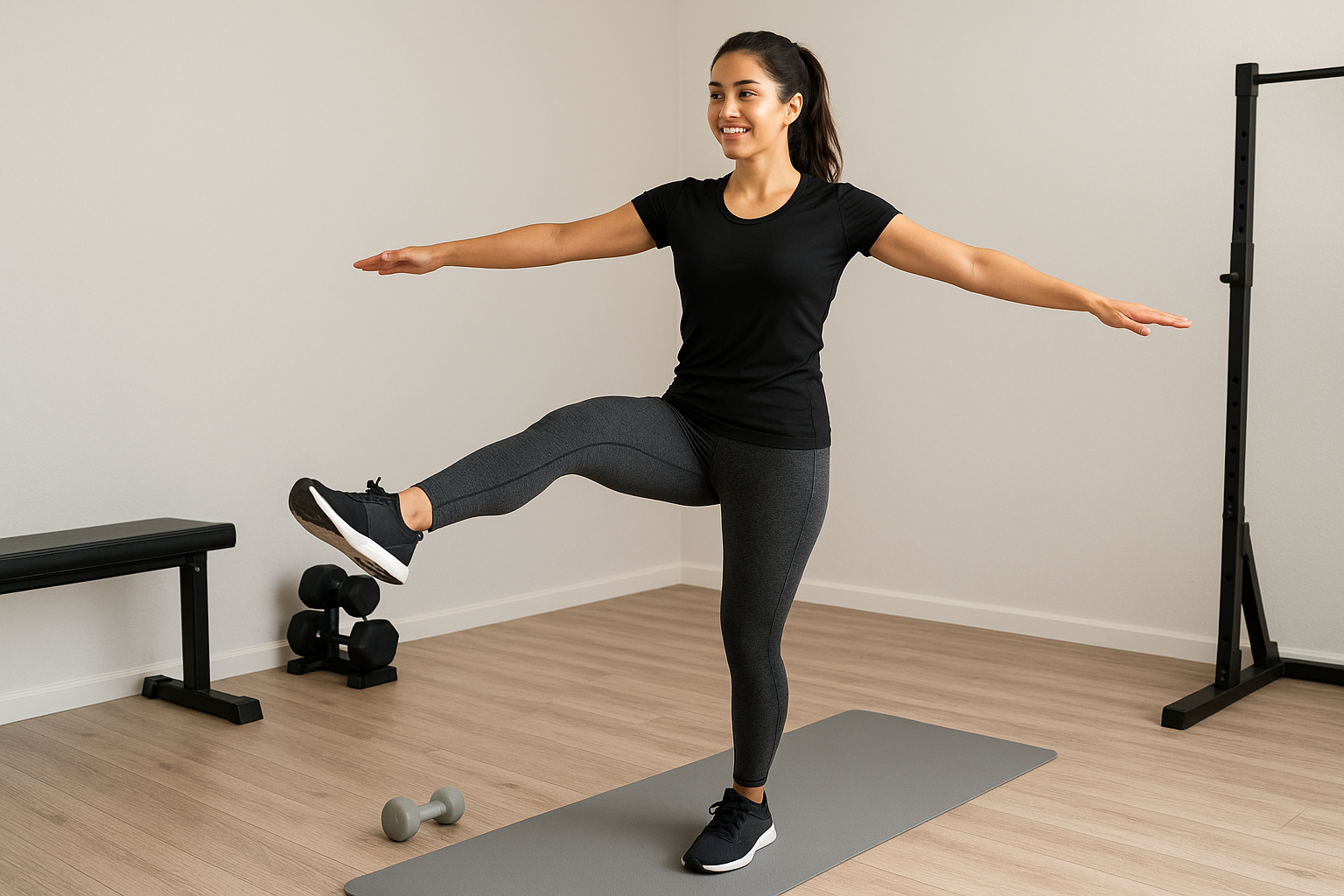
Before a cardio or HIIT home workout, your warm-up should gradually climb in intensity so your heart, lungs and joints are ready for impact. Begin with 3 minutes of light movement such as step taps, marching or low step-ups if you have a stable step. Add 4 minutes of dynamic mobility: leg swings front-to-back and side-to-side while holding a wall, arm circles, trunk rotations and gentle calf bounces. Finish with 3 minutes of low-intensity practice of your main moves (for example, slow jumping jacks, shadow squats, or walking lunges). Aim to break a light sweat but still be able to speak in full sentences before you start the hard intervals.
10-minute cool-down for faster recovery
A smart cool-down signals your body to shift from high alert into recovery. After strength or cardio sessions, spend 3 minutes gradually lowering intensity with slow walking on the spot or gentle pedal cycles if you have a small home bike. Then take 4 minutes of static stretching, holding each stretch for 20–30 seconds: hamstrings, quadriceps, calves, chest and hip flexors. Finish with 3 minutes of relaxed breathing in a comfortable position, focusing on long exhales to calm the nervous system. This simple structure reduces next-day soreness, helps manage stiffness around knees, hips and shoulders, and prepares you better for your next session.
Cool-down focus on mobility and joints
On dedicated mobility days or after particularly heavy lifting, shift your 10-minute cool-down toward slower, joint-friendly work. Use floor-based positions like the 90/90 hip stretch, child’s pose, and open-book thoracic rotations to gently explore your available range. Move in and out of each position before finishing with longer holds where you feel mild—not sharp—tension. Incorporating this style of cool-down two or three times per week can gradually improve your range of motion, make your squat and overhead positions feel smoother, and ease the tightness that often builds up when you train at home and sit for much of the day.
Putting your home templates into a weekly plan
To make these 10-minute warm-up and cool-down templates stick, plug them directly into your weekly plan. For example, use the strength warm-up before two weekly lifting sessions, the cardio warm-up before one or two interval days, and the enhanced mobility cool-down after your heaviest or stiffest-feeling workout. Treat these mini-sessions as non-negotiable bookends: set a timer for 10 minutes and start your first exercise as soon as it beeps. Over time you’ll notice better joint comfort, fewer niggles and more consistent performance, turning your home gym into a place where you not only train hard but also recover well.
This image could show a person in a small home gym area performing dynamic leg swings and arm circles during a warm-up, with a yoga mat, light dumbbells and a water bottle nearby to emphasise a simple but effective pre- and post-workout routine.