Choosing a compact adjustable kettlebell is one of the smartest ways to build a progressive home strength training setup in very little space. Instead of buying a full rack of fixed kettlebells, a single adjustable model lets you move from beginner to advanced loads simply by changing plates or pins. Understanding weight ranges, handle design, locking systems and safety features will help you pick the right tool for your goals and experience level.
Why an adjustable kettlebell is ideal for small home gyms
A compact adjustable kettlebell replaces multiple traditional bells, saving both space and money. For a typical home workout corner or studio flat, one footprint on the floor is easier to store than six or seven individual kettlebells. Adjustable designs allow progressive overload: you can start light for swings, goblet squats and overhead presses, then gradually increase weight as you get stronger. This makes them perfect for home strength training, full-body conditioning and even circuit workouts where you need several loads but don’t have room for a full collection of equipment.
Choosing the right weight range for your training level
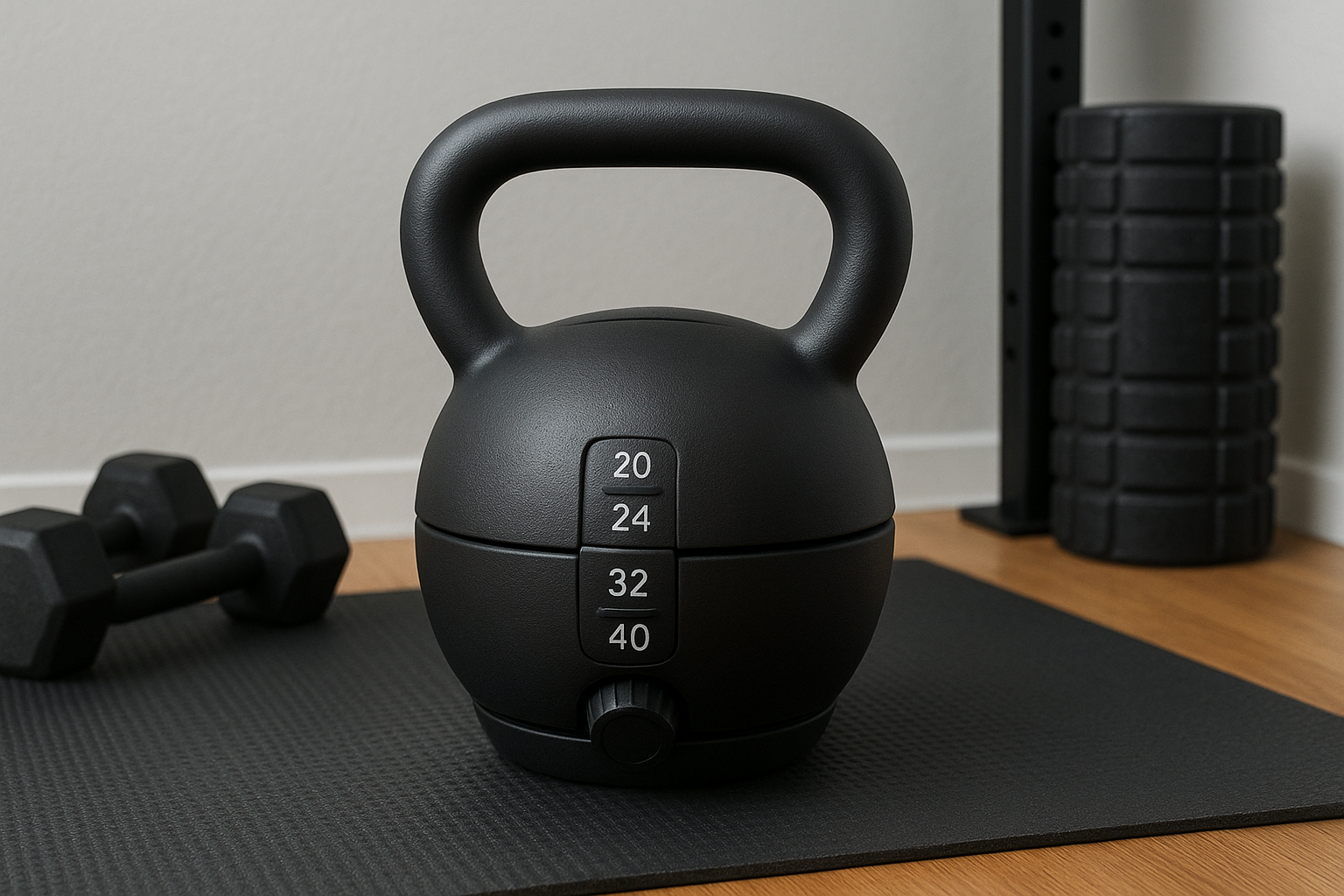
Weight range is the most important spec when selecting an adjustable kettlebell. Beginners often do well starting around 4–6 kg for upper body moves, progressing up to 12–16 kg as technique and strength improve. More experienced lifters may want access up to 20–24 kg or beyond to keep swings, deadlifts and squats challenging. When you compare products, look for models that offer small, even increments between settings so you can progress smoothly without big jumps that compromise form. A compact design that still reaches your long-term target weights will serve you better than a bulky bell that is awkward to swing.
Handle design, grip comfort and movement versatility
The handle controls how the kettlebell feels during swings, cleans, snatches and presses. Prioritise a handle with enough width to accommodate both hands for swings, especially if you have larger hands. A slightly textured or powder-coated finish usually provides better grip than a slippery, highly polished surface. Check that the handle thickness is comfortable for repeated sets; too thin can feel sharp, too thick can fatigue your grip early. A well-shaped handle also ensures a smoother transition in ballistic lifts, helping you keep the bell in the right rack position without bruising your forearms—vital for both beginners and advanced lifters.
Locking systems, safety and build quality
Because an adjustable kettlebell contains moving plates or blocks, the locking mechanism is critical. A solid system should click or screw firmly into place and be impossible to shift during swings or overhead work. Before you buy, examine how plates are added and removed, and whether there are any exposed edges that could catch your hands or floor. For safety, always double-check the lock before each set and avoid overfilling beyond the manufacturer’s limits. A stable base helps prevent tipping during parking or floor exercises. For home use, durable construction with high-quality steel and robust pins or dials will withstand frequent weight changes and drops better than cheaper, flimsy designs.
Key features for beginners vs. advanced lifters
Beginners should prioritise a kettlebell that is easy to adjust, clearly labelled in kilograms, and comfortable for high-rep technique practice. A moderate maximum weight with many small steps is more useful than a very heavy top end that you may never reach. Clear visual markings and a secure but simple locking system support confidence as you learn new movements. Advanced lifters may want a higher maximum load, a compact shell that feels close to a competition-style kettlebell, and a handle suited to more technical work. For them, performance, durability and tight tolerances in the locking system matter most, especially for heavy swings, cleans and snatches.
In summary, the best compact adjustable kettlebell for your home strength training depends on your available space, current strength and long-term goals. Focus on the weight range you realistically need, a comfortable and secure handle, and a locking system you trust. Prioritising safety, build quality and smooth progressions will give you a versatile training tool that grows with you from foundational technique all the way to advanced full-body workouts, without cluttering your home gym.