
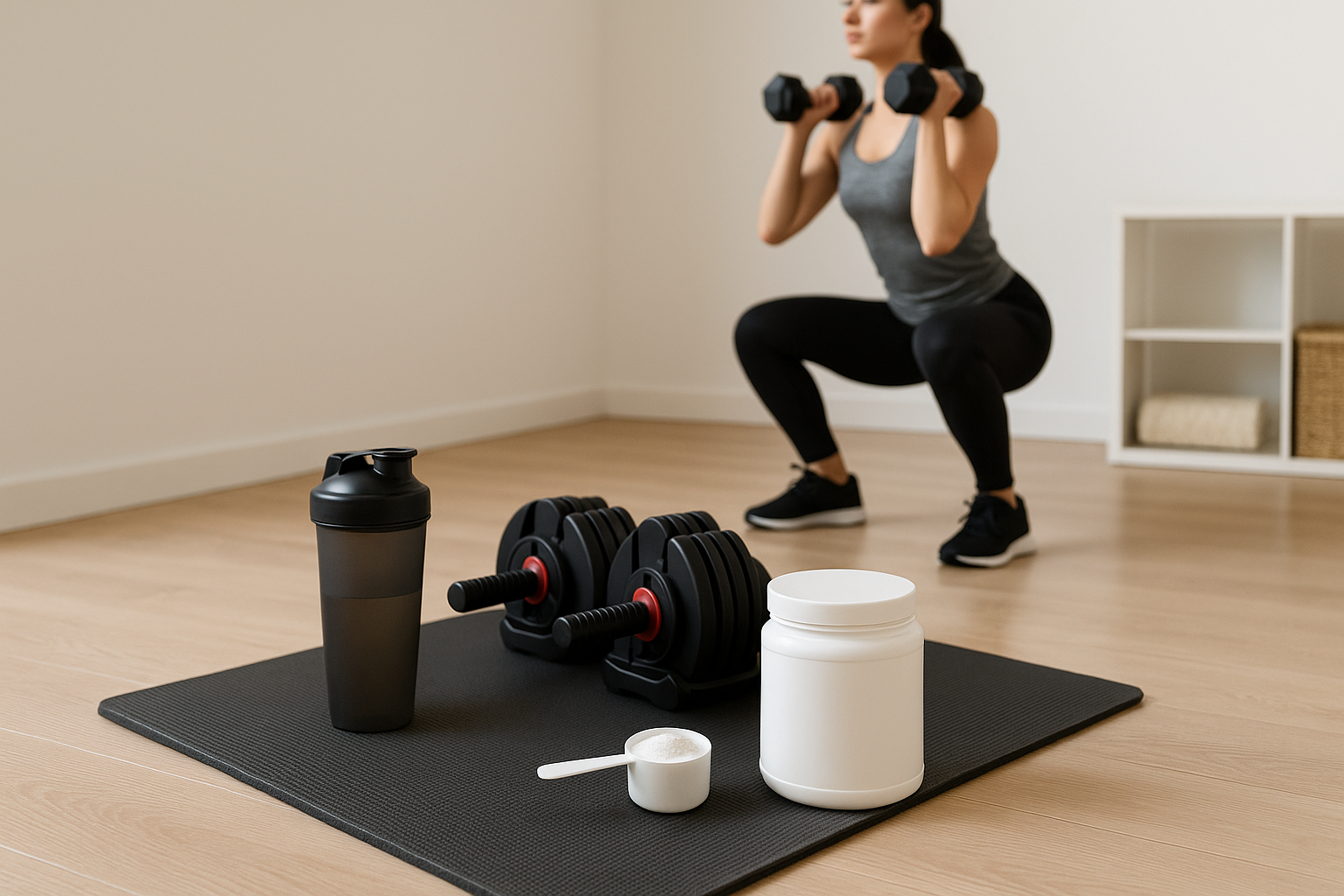
If you train at home with dumbbells, resistance bands or bodyweight, you might wonder whether adding creatine is worth it. Far from being a magic shortcut, creatine is one of the most researched sports supplements, with strong evidence for boosting strength, power and muscle mass. This article explains who actually benefits, how to dose it safely, and how to integrate it into a simple home workout routine, with an evidence-based look at side effects and practical tips.
What creatine does (and what it doesn’t)
Creatine monohydrate helps your muscles regenerate ATP, the primary energy source for short, intense efforts. This means better performance in sets of 5–12 reps, sprints, and explosive drills. Research consistently shows small but meaningful increases in strength, lean muscle, and training volume over weeks and months. However, creatine does not burn fat directly, replace a balanced diet, or compensate for poor training. It mainly supports high-intensity work, so it shines when your home sessions include challenging sets close to muscular failure rather than light, random exercise.
Who really needs creatine in a home gym setting
Creatine is most useful if you do structured resistance training at home: dumbbell or kettlebell lifts, barbell work, heavy resistance bands, calisthenics progressions (push-ups, dips, pull-ups, single-leg squats). If you train 3–5 times per week and aim to increase strength and muscle, supplementation can help you squeeze more reps and sustain performance over time. It is less critical for low-intensity steady-state cardio like casual cycling or walking. Vegetarians and vegans, who typically have lower baseline muscle creatine levels, often see a bigger benefit. If your main goal is general health, and your training is light, creatine becomes optional rather than essential.
How to dose creatine safely at home
The simplest evidence-based protocol is 3–5 g of creatine monohydrate once per day, every day, with or without food. A product like Applied Nutrition Creatine Monohydrate Powder 500g – 100% Micronized Creatine – 5g per Serving – Unflavoured provides 5 g of pure, micronized creatine per serving, is unflavoured and contains no fillers, making it easy to mix with water, juice or a protein shake. You can skip the traditional “loading phase”; consistent daily intake saturates muscle stores within a few weeks. Drink enough water through the day, especially if you notice mild cramping or dryness. Healthy adults with normal kidney function generally tolerate creatine well, but if you have kidney issues or take medications, consult a healthcare professional before starting.
Timing, side effects and safety myths
Timing is flexible: many people take creatine post-workout with a meal, but evidence shows that total daily intake matters more than the exact moment. Micronized powders, such as the Applied Nutrition formula, tend to mix better and reduce the chance of mild stomach upset. Common, usually harmless effects include small increases in body weight due to intramuscular water retention, which can actually support strength and joint comfort. Creatine does not dehydrate you when you’re well hydrated, and current research does not support the idea that it damages healthy kidneys. To stay on the safe side, stick to standard doses (3–5 g per day), avoid unnecessary megadoses, and pair supplementation with regular blood work if you have any underlying health concerns.
Integrating creatine into a simple home workout routine
To actually see results from creatine, your home training needs progressive overload. A basic three-day routine might include full-body sessions built around compound movements: Day 1 with squats or split squats, push-ups or dumbbell presses, and rows; Day 2 with hip hinges (Romanian deadlifts or kettlebell swings), overhead presses, and core work; Day 3 repeating patterns with small variations. Aim for 3–4 sets of 6–12 reps, resting 60–120 seconds. Take your daily creatine dose on both training and rest days, for example in your morning coffee or post-workout shake. A consistent schedule, like taking your Applied Nutrition Creatine Monohydrate at the same time each day, helps you build the habit so muscle creatine levels remain topped up.
Choosing the right creatine for your home gym lifestyle
When training at home, you want simple, reliable supplements that integrate smoothly into your routine. Look for pure creatine monohydrate with no unnecessary flavours or blends, clear dosing, and good mixability. The Applied Nutrition Creatine Monohydrate Powder 500g ticks these boxes: it is unflavoured, micronized for easy mixing, informed-sport certified for quality and banned-substance testing, and offers 100 servings per tub, making it practical and cost-effective for long-term home use. Paired with a structured home strength plan, adequate protein intake, and sleep, creatine becomes a straightforward, evidence-based tool to support your progress.
Used intelligently, creatine is a low-cost, high-evidence supplement that fits perfectly into a serious home training setup. It will not replace hard work, but it can enhance the quality of that work by helping you lift more, recover better, and gradually build more muscle and strength. Choose a reputable, pure creatine monohydrate powder, take it consistently at 3–5 g per day, and anchor it to a solid home workout routine. Over time, this combination can turn a simple home gym into a powerful environment for long-term progress.









