Long hours at a desk or a demanding workout can leave your hips feeling tight. This gentle hip rotation routine offers a short, low-intensity way to explore comfortable movement at home. It is not a diagnosis or a treatment for injury: work within an easy range, breathe normally and stop if a movement causes sharp or worsening pain.
Settle in before you move
Choose a clear, non-slip space and wear comfortable clothing. You can do the sequence after sitting or as a cool-down after training, once your breathing has settled. Stand near a sturdy chair or wall for support, or sit on a firm chair if balancing is difficult. Begin with a minute of easy walking or gentle marching in place. The aim is to feel ready to move, not to raise your heart rate or stretch as far as possible. Keep the effort light and treat each repetition as a check-in with your body.
Try seated hip rotations
Sit toward the front of a chair with both feet planted and your knees comfortably bent. Keeping your trunk relaxed, slowly let one knee travel a few centimetres inward, then outward, allowing the hip to rotate without forcing the foot to roll or the pelvis to twist. Return to centre and repeat on the other side. Do five to eight smooth repetitions per leg. Make the movement smaller if you feel pinching, strain or loss of control. A modest, comfortable range is useful; there is no need to match the movement on both sides.
Add an easy standing rotation
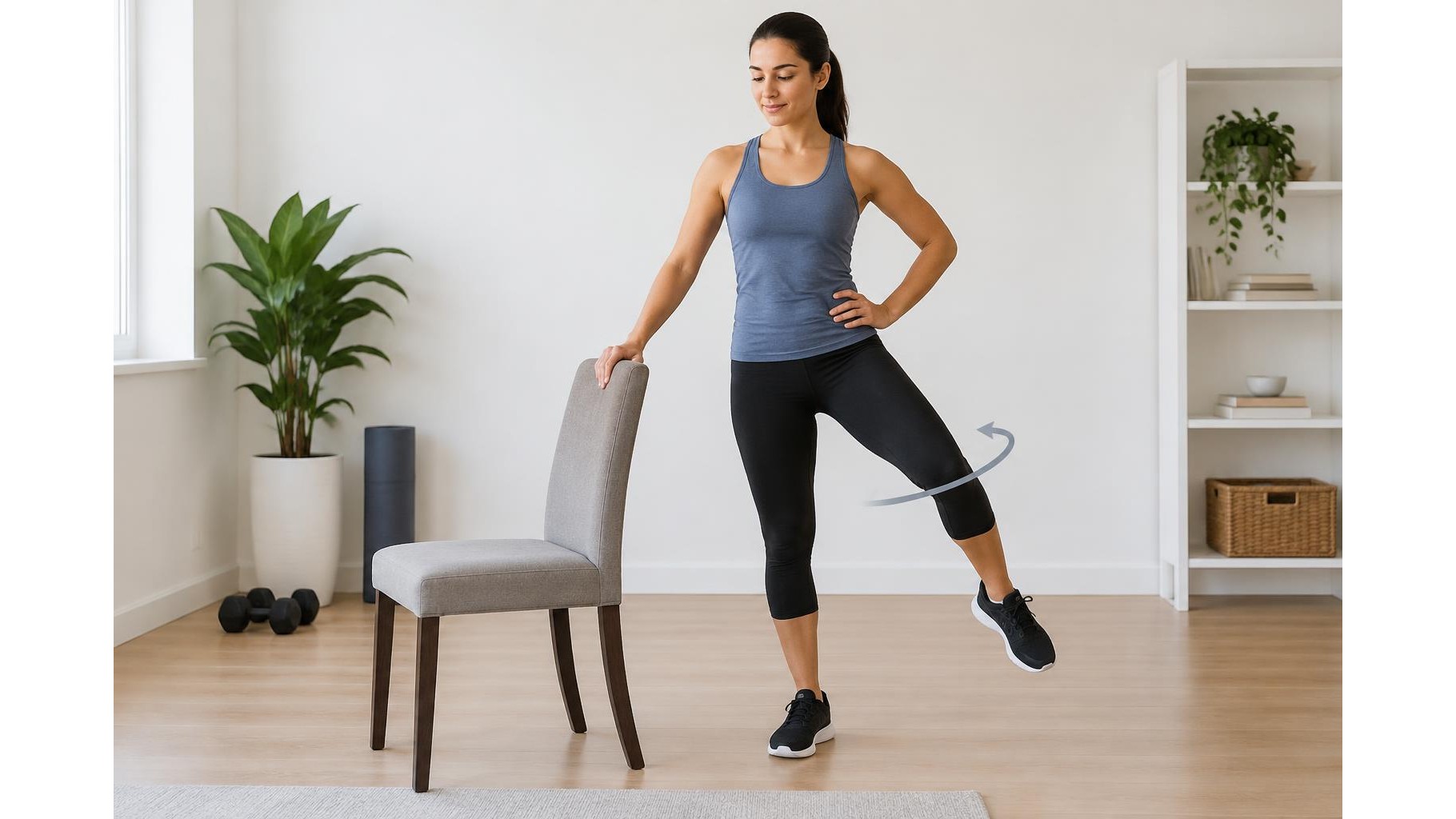
Hold a chair or wall lightly. Stand tall with your weight shared between both feet, then turn one knee gently inward and outward while keeping the foot on the floor. Let the hip do the work rather than swinging your whole body. Try five slow repetitions, then switch sides. If standing on one leg feels unsteady, keep both feet down and shift your weight only slightly, or stay with the seated version. Move at a pace that lets you stop smoothly at any point.
Explore a supported hip circle
With both hands resting on a sturdy support, soften your knees and make a small circle with your pelvis, as if tracing a coin-sized loop. Keep your chest relaxed and avoid arching your lower back to make the circle bigger. Complete three circles in each direction, then pause and notice how the movement feels. You can also gently shift your hips from side to side. Keep these mobility drills easy and controlled; they should not become a deep stretch or a test of flexibility.
Adjust the range and intensity
Use a comfortable range where you can breathe freely and remain in control. Reduce the size, slow down or choose a seated option if your hips feel stiff or your balance is uncertain. Do not bounce, force a position or push through sharp pain, catching, numbness or symptoms that worsen as you continue. Mild awareness of movement can be expected, but discomfort is a reason to ease off. A few minutes is enough; repeat the routine only if it continues to feel comfortable.
Know when to seek professional advice
Stop and seek prompt medical advice for severe pain, a recent significant injury, inability to bear weight, or sudden symptoms such as marked swelling or weakness. Arrange an assessment with a qualified healthcare professional if hip pain persists, keeps returning, limits everyday activities or does not improve with sensible adjustments. A clinician can assess the cause and advise which movements are appropriate for you. This routine is general guidance and should not replace individual care.
In summary, use these controlled hip rotations as a brief, gentle movement break after sitting or training. Keep the range comfortable, choose support when needed and stop if symptoms worsen. Consistency matters less than responding to how your body feels; persistent or concerning symptoms deserve professional assessment.