A compact leg press can add focused lower-body training to a home gym, but a small footprint alone does not guarantee a good fit. Compare the machine’s dimensions, resistance system, movement range and safety features, then check that it suits your room and your body. This guide outlines the practical questions to answer before you buy.
Measure the full footprint
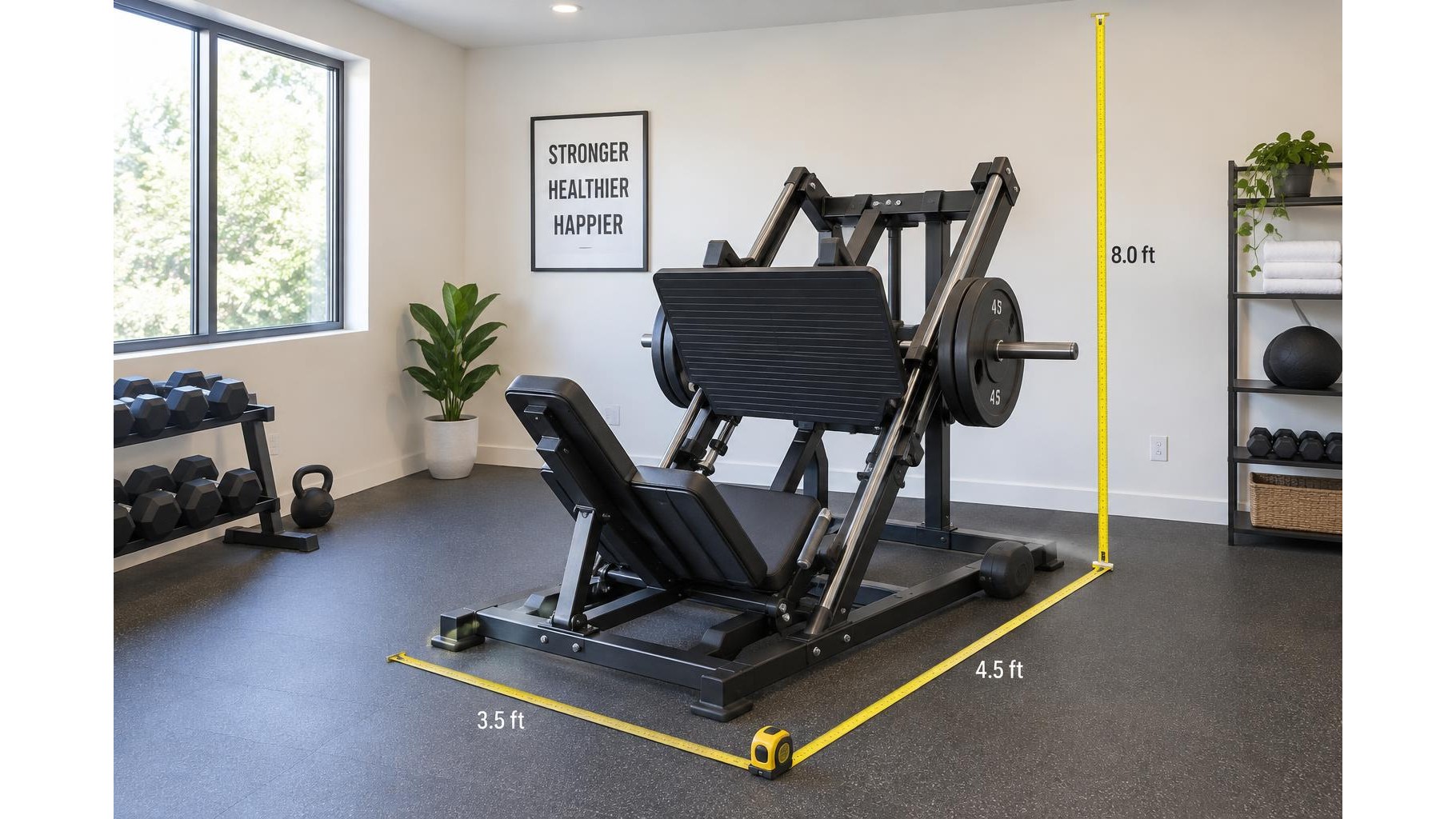
Check the manufacturer’s dimensions for the machine in use, not only its shipping or folded size. Allow extra room to get on and off, load plates if applicable, and move the seat or carriage through its full travel. Measure doorways, stairs and corridors on the delivery route, too. A unit that fits the corner may still obstruct a walkway or be difficult to assemble. If space is tight, compare the complete operating footprint and note whether the machine can be repositioned or stored upright safely.
Compare resistance and progression
Compact leg presses use different resistance systems, including weight plates, selectorised stacks, bands or other mechanisms. Consider the starting resistance as well as the maximum load: a heavy starting weight may not suit a beginner, while a low capacity can limit future progression. For plate-loaded machines, check plate compatibility, loading access and whether the listed capacity refers to the user, the plates or their combined load. For cable or stack systems, ask how resistance changes and whether replacement parts are readily available. Choose a setup that makes gradual, controlled progression practical.
Check range of motion and user fit
A machine should let you move through a comfortable range without forcing your hips or lower back into an awkward position. Check the seat adjustment, backrest angle, footplate size and carriage travel. If possible, try the machine or compare its measurements with your own seated position. At the bottom of the movement, your knees should bend comfortably without your pelvis lifting from the backrest; at the top, avoid locking your knees. Ask whether the machine accommodates your height and leg length, and whether several household users can adjust it quickly.
Inspect safety and stability
Look for accessible safety stops, clear locking positions and a reliable way to secure the carriage when entering or leaving the machine. Stops should be adjustable to suit your range and easy to engage under control. Examine the frame, welds, rails and footplate, and check the stated maximum user and load capacities. Floor stability matters as much as frame strength: place the unit on a level, firm surface and follow the maker’s guidance on floor protection. Avoid using it on a slippery mat that could shift under load.
Check the room and ask before buying
Measure ceiling clearance above the highest point of the machine, including space needed to lift or remove parts during assembly. Confirm the delivery dimensions, assembly requirements, warranty, return terms and availability of service parts. Ask the seller: what is the usable range of motion; what resistance is included; how is the carriage locked; and what is the total operating footprint? Also check whether the stated load limit covers the user plus added resistance. These details can reveal practical limitations that a headline capacity or compact label will not.
In short, choose a compact leg press by matching its real operating footprint and resistance to your room, training level and body. Verify ceiling clearance, floor stability, user fit and safety stops before ordering. A careful measurement and a few specific questions can help you find a machine that is space-efficient without compromising comfortable movement or controlled training.