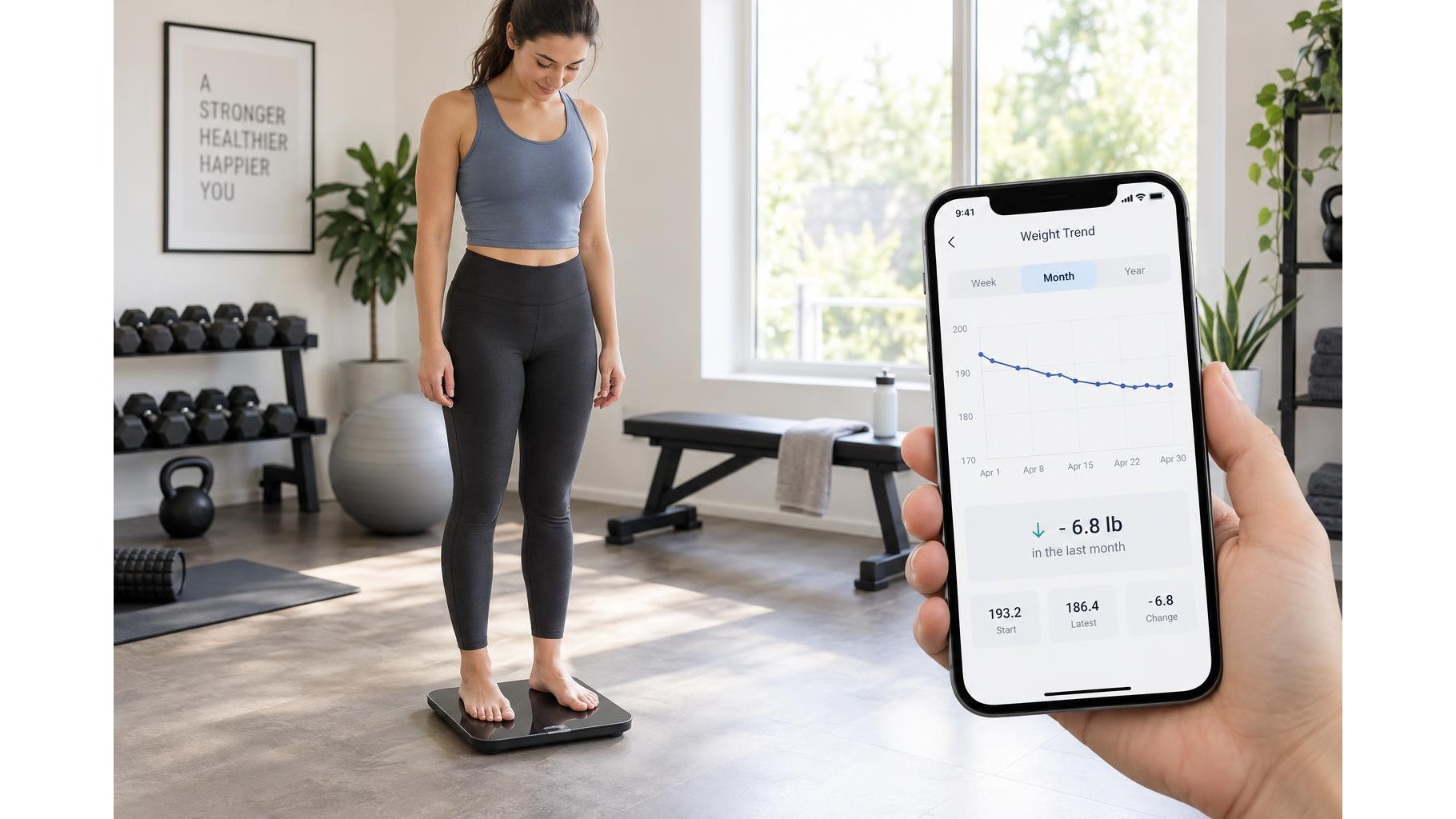
A smart scale can make it easier to notice changes over time, but its daily numbers are not a verdict on your health or training. Weight and body-composition estimates naturally fluctuate, and a single reading cannot explain why. Use the scale as one source of information: focus on consistent measurements, longer-term patterns and how you feel and perform.
Know what the measurements mean
Most smart scales measure body weight directly and estimate other values, such as body-fat percentage, through bioelectrical impedance. A very small electrical current passes through the body; the scale uses the resulting impedance, along with information such as height, age and sex, to calculate estimates. These figures are not direct measurements of fat or muscle. Treat them as approximate indicators that may help reveal a broad pattern, rather than precise readings of body composition.
Expect hydration to affect results
Body water influences electrical impedance, so readings can shift with hydration and everyday changes in fluid balance. A salty meal, alcohol, a hard workout, sweating, a large drink or a different point in your menstrual cycle may affect the result. Food and fluid in your digestive system also contribute to scale weight. Such changes do not necessarily indicate a meaningful gain or loss of body fat. That is why a surprising number is best viewed in context, not as proof that your plan has succeeded or failed.
Make measurement conditions consistent
For a more useful comparison, weigh under similar conditions each time. Many people choose the morning, after using the bathroom and before eating or drinking. Use the same scale on a hard, level floor, and follow its instructions about bare, dry feet and positioning. If you track body-composition estimates, consistency matters especially: changing the time of day or weighing immediately after exercise can make comparisons less meaningful. Choose a routine that fits your life, then keep it steady.
Look at weekly and monthly patterns
Daily weigh-ins are optional. If they make you anxious or encourage unhelpful habits, weigh less often or pause. If you do collect frequent readings, use an app’s weekly average or calculate one yourself rather than reacting to each result. Compare averages across several weeks, not just two individual days. A gradual trend that persists is generally more informative than a sudden jump. For body-fat estimates, allow even more time: small day-to-day changes may reflect measurement noise rather than actual tissue change.
Pair scale data with other signs of progress
Weight is only one part of fitness progress. Consider it alongside training performance, energy, recovery, sleep, how clothes fit and, if appropriate, measurements taken consistently. Strength gains can occur without a large change in scale weight, while shifts in water can temporarily obscure longer-term changes. Set a review schedule—for example, checking trends once a week—and decide in advance what information would prompt a reasonable adjustment. If tracking affects your mood or relationship with food, step back and seek support from a qualified professional.
A smart scale is most helpful when it turns repeated, consistent readings into a broad view—not when it dictates how you feel about one day. Keep conditions similar, account for hydration, and judge progress over weeks alongside training and wellbeing. The aim is useful context, not perfect numbers.