A compact adjustable pull-up bar can make strength training easier to fit into a busy home, but the right choice depends on more than its maximum width. Check your doorway, understand how the bar mounts, and match its design to your body weight and training style. Most importantly, treat safe installation and regular checks as part of every workout.
Measure the doorway before you buy
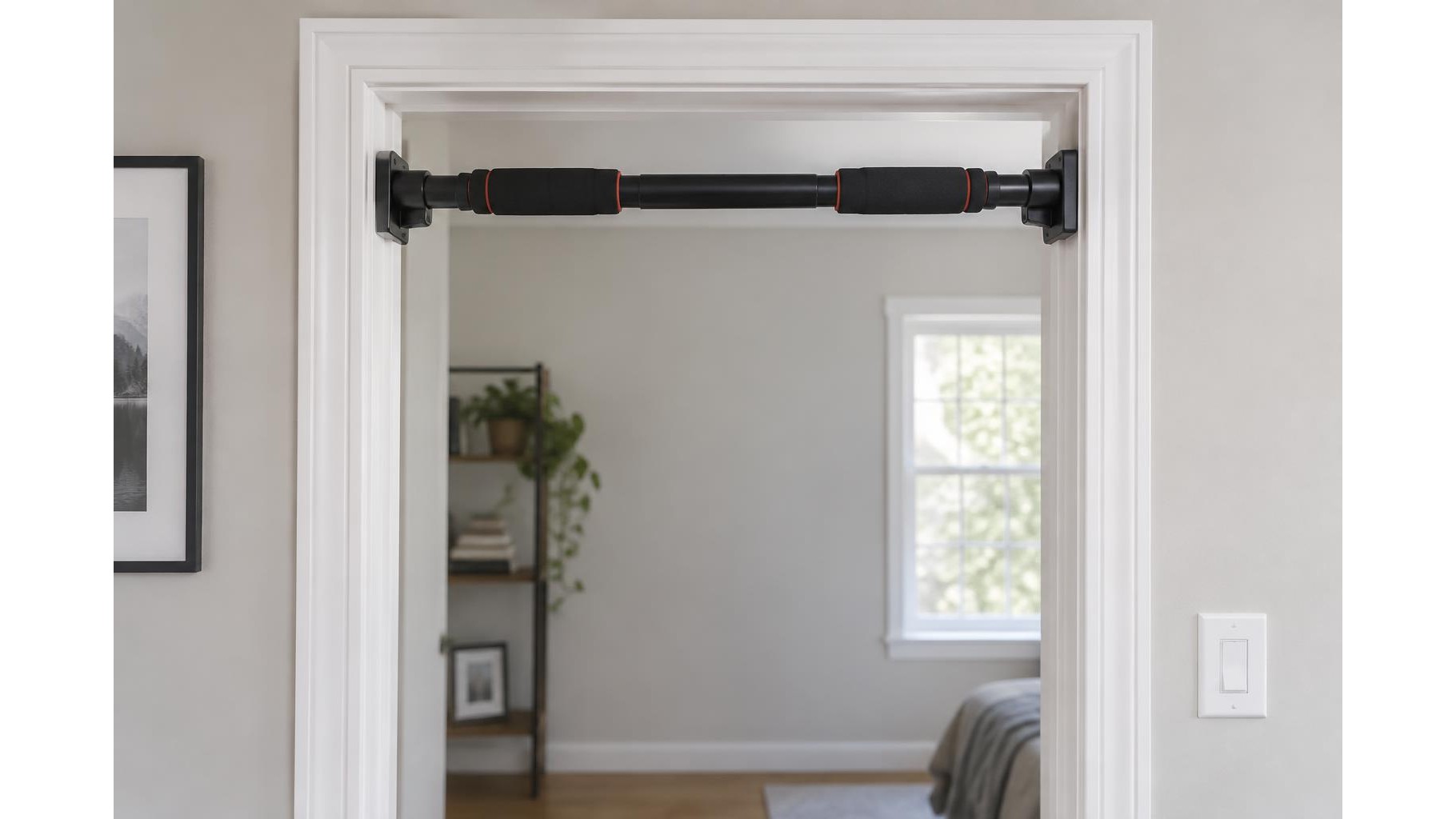
Measure the clear internal width between the surfaces where the bar will sit, then check the depth and shape of the frame. Compare these measurements with the manufacturer’s minimum and maximum adjustment range; do not assume a bar will fit because it looks close. Also inspect the trim, wall material and available space above and around the opening. A narrow hallway or low ceiling can limit your grip and movement. Avoid fitting a bar to a damaged, loose or unusually shallow frame unless the manufacturer specifically confirms that the installation is suitable.
Choose a mounting style that suits your home
Telescopic tension bars expand between opposing sides of a doorway and are often quick to install or remove. They rely on secure contact with suitable surfaces, so follow the instructions precisely and check whether the model requires additional screw-fixed brackets. Leverage-style bars typically rest against the frame and use body weight to hold their position; they need compatible, sturdy trim and correct orientation. Fixed, screw-mounted designs can offer a more permanent setup, but require appropriate fixings and careful installation. In every case, confirm the bar is designed for your frame type rather than relying on appearance alone.
Read load ratings with care
Look for the stated maximum user weight and follow the manufacturer’s definition of that rating. A dynamic movement such as kipping, swinging or jumping onto the bar can create forces beyond a controlled dead hang. Unless the product explicitly permits dynamic exercise, choose a model for strict, controlled repetitions and avoid swinging. Allow a sensible margin between your body weight and the stated limit, especially if you plan to use resistance bands or add weight. A high rating does not compensate for an unsuitable doorway or incorrect installation.
Match the bar to your training goals
For basic pull-ups and chin-ups, a simple straight grip may be sufficient. Multiple grip positions can add variety, while a compact design is easier to store or remove between sessions. Check the usable grip width, handle shape and surface finish: comfort matters when your hands are supporting your full weight. If you plan to use bands, make sure there is enough clearance and that the manufacturer allows this use. Avoid attaching accessories or loading the bar in ways not covered by its instructions.
Use a safety check before every session
Install the bar exactly as directed and test it gradually before hanging fully. Check that it is level, secure and correctly seated, and that any locking parts or screws are engaged. Before each workout, look for movement, slipping, loose fixings, cracks or damage to the frame. Stop immediately if the bar shifts or makes an unusual noise. Keep the area below clear, use controlled repetitions, and never let children play on the equipment unsupervised. Recheck the installation after moving or adjusting the bar.
In short, choose a bar that fits your measured doorway, suits its construction and offers a clearly stated rating appropriate to your intended exercises. Prioritise a secure mounting method, follow the instructions and make routine safety checks. A well-matched compact bar can support consistent home training, but only when the doorway and installation are suitable.