Heavy lifting does not end when you re-rack the bar. What you do in the next 20–30 minutes can decide whether you bounce back stronger or carry stiffness and fatigue into your next session. A smart, home recovery routine does not need gadgets or specialist tools: with basic household items like pillows, towels and a sturdy chair you can cool down, reduce soreness and reset your nervous system so you are ready to train again.
Transition from lifting to cool-down
Start by shifting your body from “max effort” to “cruise.” After your final set, move into 5–7 minutes of very light activity to gradually lower heart rate. Walk slowly around your home, march on the spot or pedal gently on a stationary bike if you have one. Focus on relaxed, nasal breathing and shaking out your arms and legs. This gentle cool-down helps flush metabolic by-products from hard sets, keeps blood moving through your muscles and reduces the post-session “crash” that many lifters feel when they stop abruptly.
Floor-based stretches with a towel
Once your breathing is calmer, move to the floor for 8–10 minutes of simple stretching. Lie on your back and use a regular bath towel as a strap: loop it around one foot and gently pull your straight leg toward you to stretch tight hamstrings after deadlifts and hip hinges. Switch sides after 30–45 seconds. For the chest and shoulders, sit tall, hold the towel behind you with both hands and slowly lift it away from your back to open the front of your body after bench presses. These easy towel-assisted stretches increase range of motion without forcing positions and are ideal for lifters who feel too stiff for classic yoga poses.
Using pillows and a chair for comfortable positions
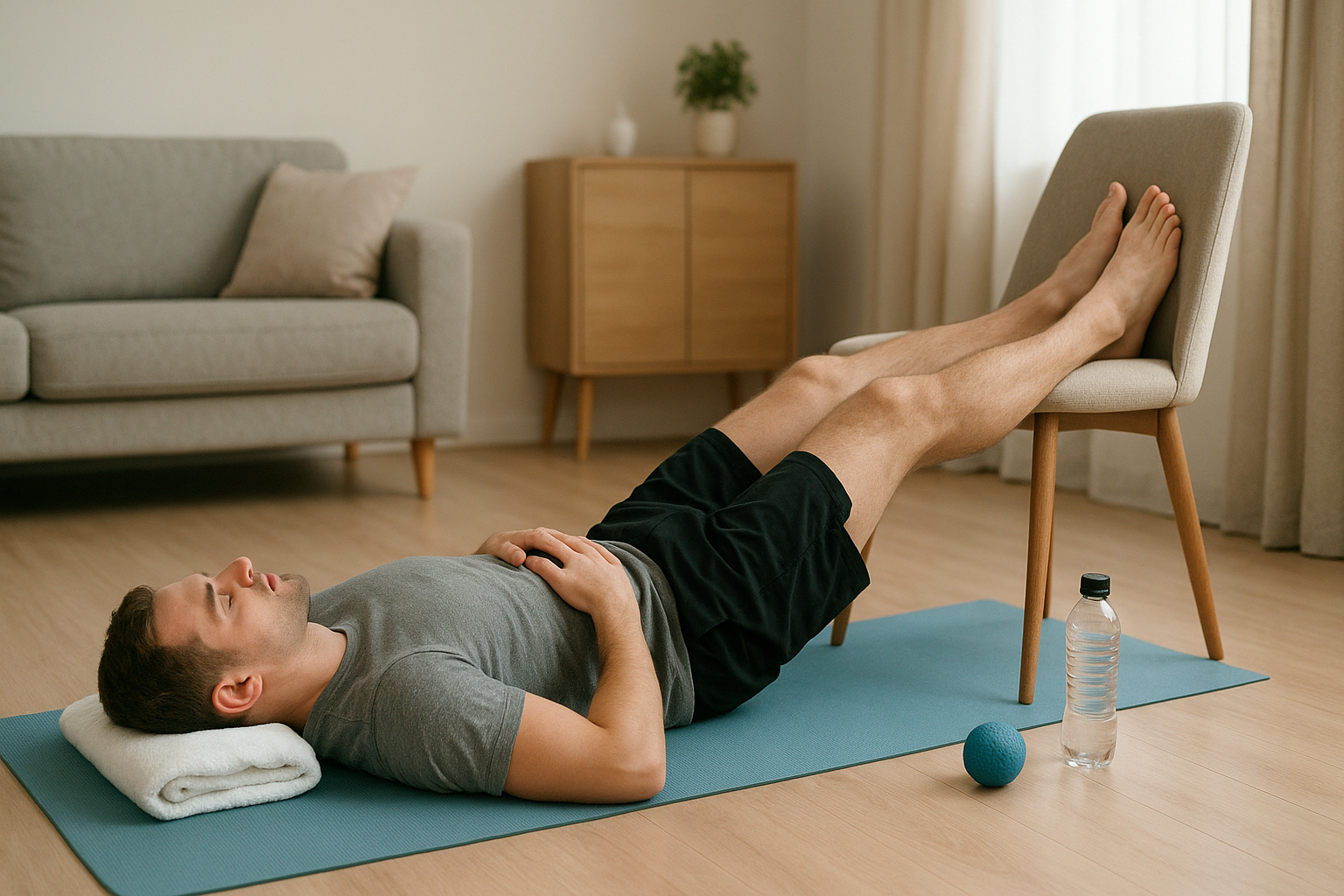
Next, set up comfortable, supported positions so your body can relax. A firm pillow or folded blanket under your head and another between your knees can take pressure off the lower back when lying on your side. For a gentle hip and glute reset, lie on your back and place your calves on a sturdy chair, hips and knees at 90 degrees, arms relaxed by your sides. This position unloads the lumbar spine after squats and pulls. Adding a small pillow under your hips or head lets you stay there for 5–10 minutes without fidgeting, giving muscles time to downshift out of “bracing” mode.
Breathing drills to reset the nervous system
With your body supported, focus on simple breathing exercises to complete the recovery transition. Try a 3- to 5-minute drill of “4-6 breathing”: inhale gently through your nose for a count of four, feeling your lower ribs expand sideways into the floor or pillow, then exhale softly through your nose or mouth for a count of six. The longer, relaxed exhale activates the parasympathetic nervous system, lowering heart rate and tension. This calm, rhythmic breathing helps reduce post-workout jitters, supports better sleep and may even improve long-term recovery by reducing chronic stress around your training.
Hydration, refuelling and simple self-massage
Finish your post-workout routine with the basics that many lifters rush: hydration, food and a quick body check-in. Drink water or an electrolyte drink, especially after sweaty sessions, and have a protein-rich snack within an hour of training. Then spend 3–5 minutes on self-massage using a tennis ball or other firm ball you have at home. Place it between your glutes or upper back and a wall, then lean gently into tight areas, rolling slowly until the intensity feels like a “good discomfort” rather than pain. These low-tech steps round out your recovery and help you notice early signs of overuse before they become injuries.
Putting your home recovery protocol together
A solid home recovery protocol for lifters can be done in about 20 minutes with nothing more than light movement, a towel, a few pillows, a chair, calm breathing and basic hydration and nutrition. Cool down to lower heart rate, use towel-assisted stretches to open key lifting muscles, relax into supported positions, practise slow exhalation breathing and then rehydrate, refuel and do a brief self-massage scan. Repeat this simple sequence consistently after each strength session and you will arrive at your next workout less sore, more mobile and better prepared to add weight to the bar over time.