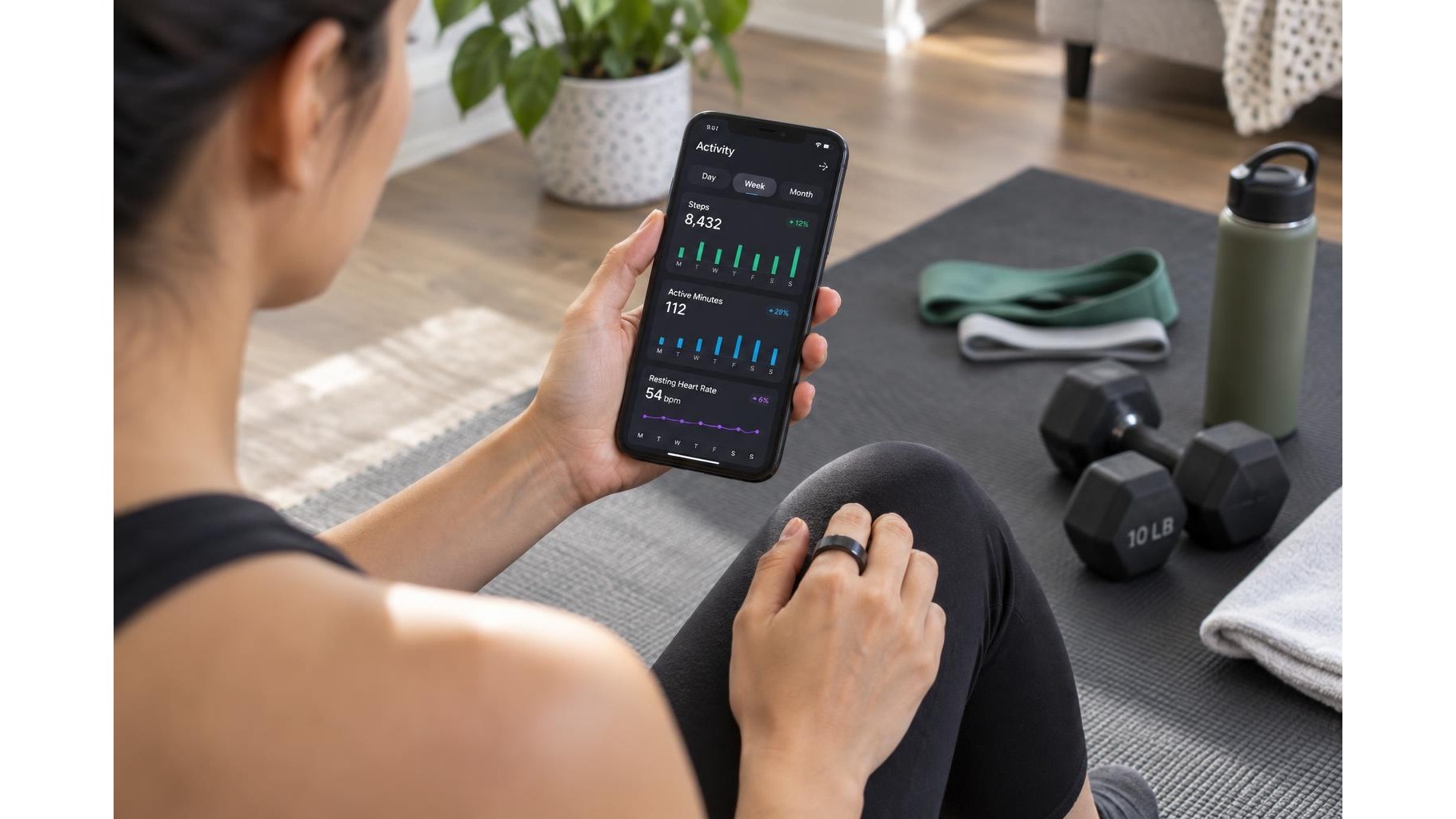
A smart ring can offer a useful snapshot of how much you move, when activity tends to happen and how your routine changes over time. Its numbers are estimates, not a precise record of every squat or step. Used as a guide rather than a scorecard, activity data can help you spot patterns and build realistic home workout habits.
Start with trends, not a single day
Daily activity totals can shift because of errands, work, sleep, stress or a missed workout. Instead of judging your effort by one unusually high or low reading, compare similar days across several weeks. Look for recurring patterns: perhaps weekdays are mostly sedentary, or movement rises on days when you schedule a short strength session. A weekly trend is usually more useful than an isolated number because it gives everyday variation room to even out.
Understand what the ring can and cannot measure
Smart rings commonly estimate activity using movement sensors and related signals. They may be better at showing broad movement patterns than identifying the details of a home workout. Wrist and finger movement, grip, equipment use and exercise type can affect what is recorded. A quiet strength session may appear less active than a brisk walk, even when it was challenging. Treat activity scores, calorie estimates and workout detection as approximations, not proof of how hard you trained or how much energy you used.
Connect activity data to your workout diary
For a clearer picture, note your workout alongside the ring’s daily summary. Record the session type, duration and a simple effort rating, such as easy, moderate or hard. After a few weeks, compare those notes with movement trends. You might find that a short circuit reliably fits into busy days, or that evening training coincides with less overall movement. This context helps explain the data without assuming that every rise or dip was caused by exercise.
Turn patterns into achievable consistency goals
Use your baseline to choose a goal you can repeat, not an ambitious target copied from someone else. If your current routine includes two home workouts most weeks, aim to make those sessions more consistent before adding more. You could set a simple plan: two strength sessions and a brief movement break on workdays. Track whether you followed the plan, then review the trend after a few weeks. Consistency matters more than chasing a perfect activity score.
Adjust thoughtfully and protect recovery
Activity data can help you notice when movement drops, but it should not pressure you to train through fatigue or illness. A lower reading may reflect a rest day, a change in routine or imperfect tracking. Consider how you feel, how well you slept and whether your workouts are progressing comfortably. If the data suggests a pattern you did not expect, check it against your diary and daily circumstances before changing your plan. Use the ring to prompt reflection, not to make health decisions on its own.
In short, a smart ring is most useful as a long-term habit tracker. Review broad movement trends, account for measurement limits and pair the numbers with notes about your sessions and wellbeing. Then choose modest, repeatable goals that fit your life. The aim is not to make every day look active on a chart, but to understand your routine and build a home workout habit you can sustain.