A compact weightlifting platform can give a home gym a defined, stable place for Olympic lifts while helping protect the floor beneath it. Choosing one is about more than finding the smallest option: the platform must fit your lifting style, available space and surroundings. Check its dimensions, surface, impact management and position before buying or building, and remember that no platform can make an unsuitable floor structurally safe.
Measure for your lifts and your room
Start by measuring the usable floor area, including clearance around the platform for loading plates, moving safely and handling the bar. A full-size lifting area offers generous room, but a home setup may need a smaller footprint. Make sure the bar and plates can travel without striking walls, doors, mirrors or stored equipment. Consider the lift itself: controlled deadlifts need less room than dynamic snatches or clean and jerks, which involve moving under the bar. Check the platform’s stated dimensions and allow additional space around it rather than treating its edges as your entire training area.
Choose a surface that suits your training
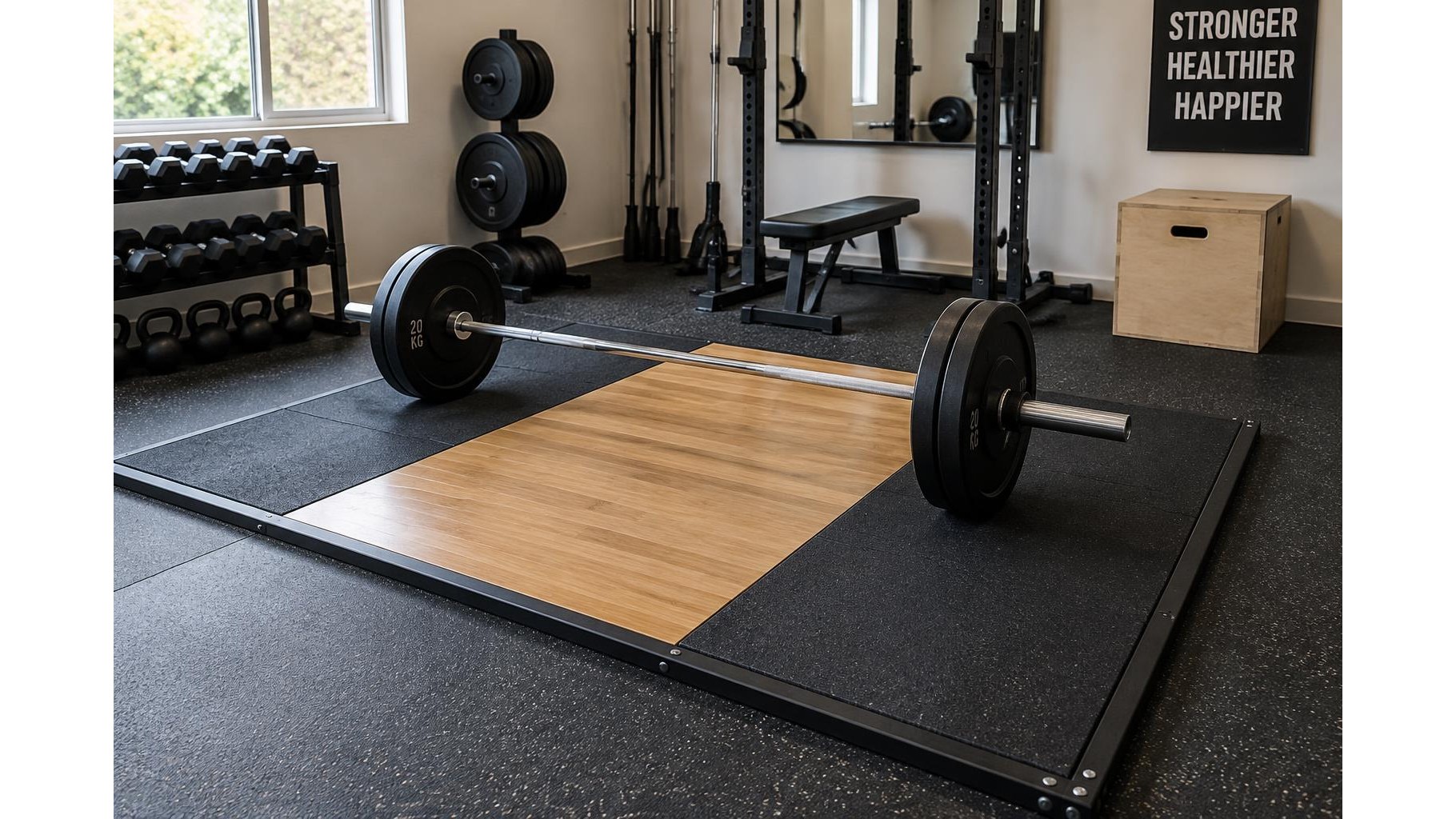
The common approach is a firm central lifting surface combined with rubber sections where the plates land. Plywood provides a solid base; a replaceable hardwood centre can offer a smooth, durable surface for footwork. Rubber tiles or mats at the sides help reduce noise and protect plates on impact. Look for a surface that stays level and provides reliable traction in both bare feet and training shoes. Avoid slick coatings, loose carpet and soft foam beneath the lifting area: they can compromise footing or make the bar feel unstable. Check that materials are compatible with the floor and easy to clean.
Think about shock, noise and neighbours
Rubber can soften impacts, but it does not eliminate vibration or sound—especially in a flat or a room above another living space. Thicker, dense rubber may help, but performance depends on the full construction, the weight being dropped and the building beneath it. A platform should spread impact across a broad, stable base rather than wobble or rock. If possible, use controlled lowering instead of dropping weights, and test the setup with lighter loads first. Consider your neighbours, local noise rules and the time of day you train; a platform is not a substitute for considerate lifting.
Check the floor and build a stable base
Before installation, inspect the floor for slopes, soft spots, damage and moisture. A platform needs firm, even support; shims or improvised padding can create movement if used carelessly. In a house, confirm that the floor structure can handle the combined load of the lifter, equipment and repeated impacts. Renters should check with the property owner before making changes, while anyone uncertain about floor capacity should seek qualified advice. Keep the platform away from damp areas and ensure its edges do not create a trip hazard. Secure layers as appropriate so they cannot slide during use.
Compare ready-made and DIY options
A ready-made platform can simplify assembly, but verify its exact footprint, thickness, materials, weight capacity and delivery requirements. A DIY platform can be tailored to an awkward room, though accurate cutting, a level base and secure construction matter. Do not choose on price or dimensions alone: weak joints, uneven panels or undersized rubber can undermine stability. Check whether the surface can be repaired or replaced and whether the finished height will interfere with nearby racks or equipment. Whichever route you take, inspect the platform regularly for shifting, splintering, loose fixings or compressed rubber.
In summary, choose a compact weightlifting platform that fits your lifts and room while leaving safe clearance. Prioritise a level, secure base, dependable grip and suitable impact-absorbing sections, then account for the floor structure and household noise. Measure carefully, compare materials and test the finished setup progressively. A well-planned platform creates a more stable lifting zone and helps protect the floor, but safe loading and controlled technique remain essential.