Long desk sessions can leave the hips feeling stiff, especially when you move straight from a chair to a workout. This gentle reset takes about eight minutes and uses slow, comfortable movements rather than forceful stretching. It is intended as light mobility, not a treatment for an injury. Move within an easy range, breathe normally and stop if you feel pain.
Settle in and check your comfort
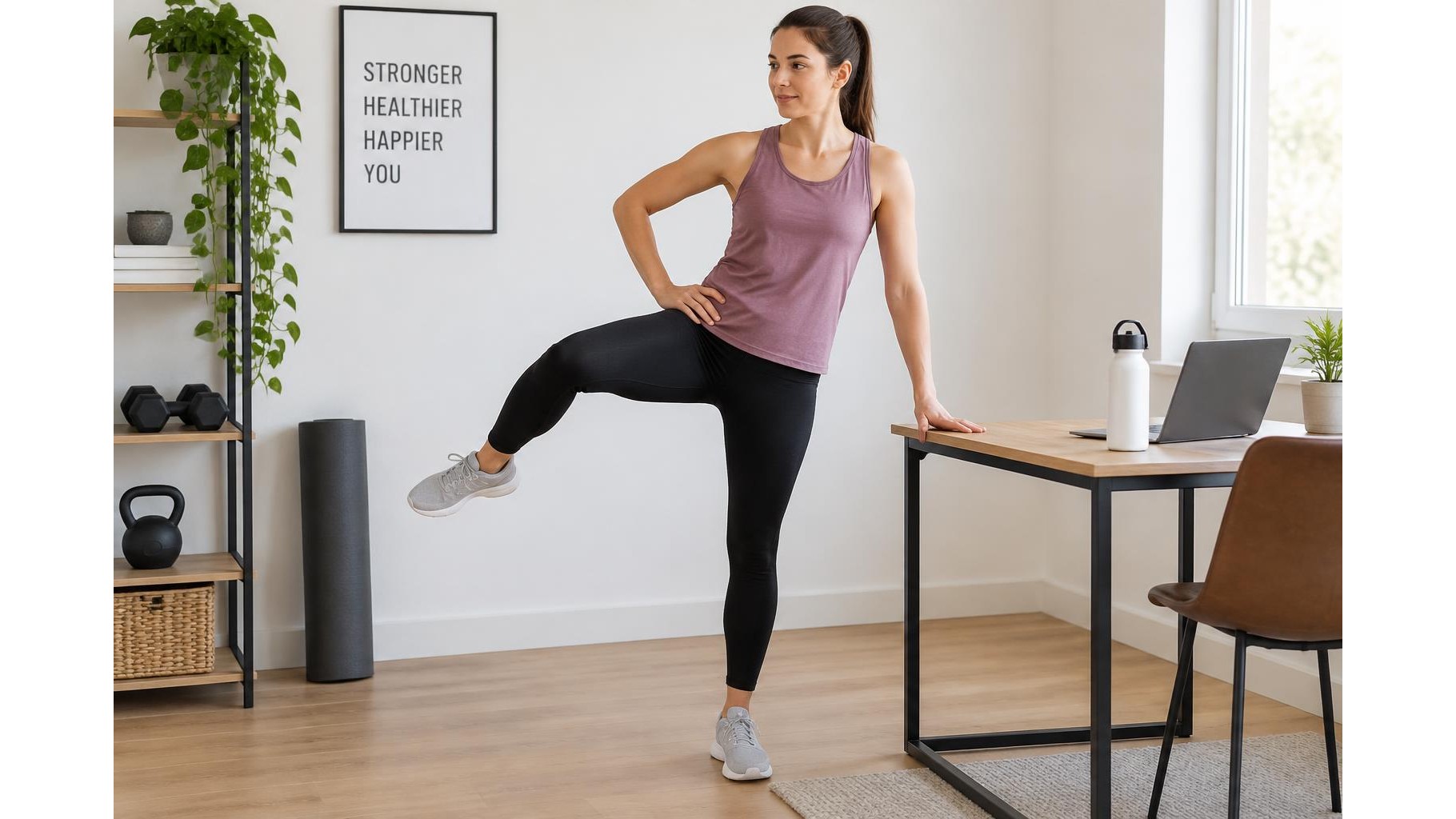
Stand beside a sturdy chair or wall for support, wearing clothes that allow you to move freely. Take a few relaxed breaths and notice how your hips feel before starting. The aim is not to reach a particular depth or achieve a dramatic stretch; it is to explore comfortable range of motion without strain. Keep the effort low, around two or three out of ten. If you are unsure whether a movement is suitable for you, skip it and consider asking a qualified health professional for guidance.
Begin with gentle standing shifts
Hold the chair lightly and stand with your feet about hip-width apart. Slowly shift your weight from one foot to the other, keeping both feet grounded and your torso relaxed. Continue for 30–45 seconds, moving only as far as feels easy. Then make small hip circles, as if tracing a saucer with your pelvis: five in each direction, with no need to exaggerate the movement. If balance is a concern, keep both hands supported or perform the shifts seated.
Try a supported hip hinge
With hands resting on the chair back or thighs, soften your knees and send your hips gently backward as your chest tips forward a little. Keep your back comfortable and return to standing smoothly. Repeat six to eight times at an unhurried pace. This is a small hinge, not a deep forward fold. If you prefer a seated option, sit near the front of a firm chair, place your feet flat and lean forward slightly from the hips before sitting upright again.
Open one side at a time
Stand tall with support and step one foot a short distance behind you, keeping both toes pointing forward. Gently bend the front knee and let your weight travel forward until you notice a mild sensation at the front of the back hip. Hold for two or three easy breaths, then return and switch sides. Keep the range small and avoid arching your lower back. Alternatively, sit upright and slide one foot a little behind the other beneath the chair, staying well within a pain-free position.
Finish with relaxed knee movements
Sit securely with both feet on the floor. Keeping one foot planted, slowly let the other knee drift outward a few centimetres, then bring it back to centre. Do six repetitions per side without pushing on the knee or forcing the hip. Keep breathing steadily and pause if the movement feels awkward. Finish by standing or sitting quietly for several breaths and notice whether moving feels easier; a change is optional, not a test of success.
Keep the reset gentle and responsive
Repeat this routine after sitting when it feels helpful, or choose only one or two movements as a brief break. Slow pacing, support and small ranges are useful modifications; there is no need to stretch intensely or chase a click or pop. Stop if you experience sharp, increasing or persistent pain, numbness, tingling, weakness, dizziness or symptoms that spread. Seek professional advice for concerning symptoms, a recent injury, or stiffness that persists or limits daily activities. This routine is general movement guidance, not a substitute for individual care.
A short, calm mobility break can help you transition from desk time to home training without demanding a hard workout. Use the movements that feel comfortable, adjust or skip anything that does not, and let pain-free ease—not depth or intensity—guide your hip mobility reset.