Long hours at a desk can leave your upper back feeling tired, but a focused strength session can help build the endurance to hold a more upright position. This 30-minute dumbbell workout combines rowing, rear-delt exercises, loaded carries and trunk control. Choose weights you can move smoothly, and treat every repetition as practice in staying steady rather than chasing speed.
Warm up and set your pace
Spend five minutes preparing: march in place, roll your shoulders gently, then perform easy hip hinges and arm sweeps. Follow with a light set of bent-over rows, keeping your spine long and your neck relaxed. You will need a pair of dumbbells and a clear space to walk. The session uses controlled sets with short rests; use lighter weights or bodyweight alternatives whenever your form starts to slip.
Build endurance with supported rows
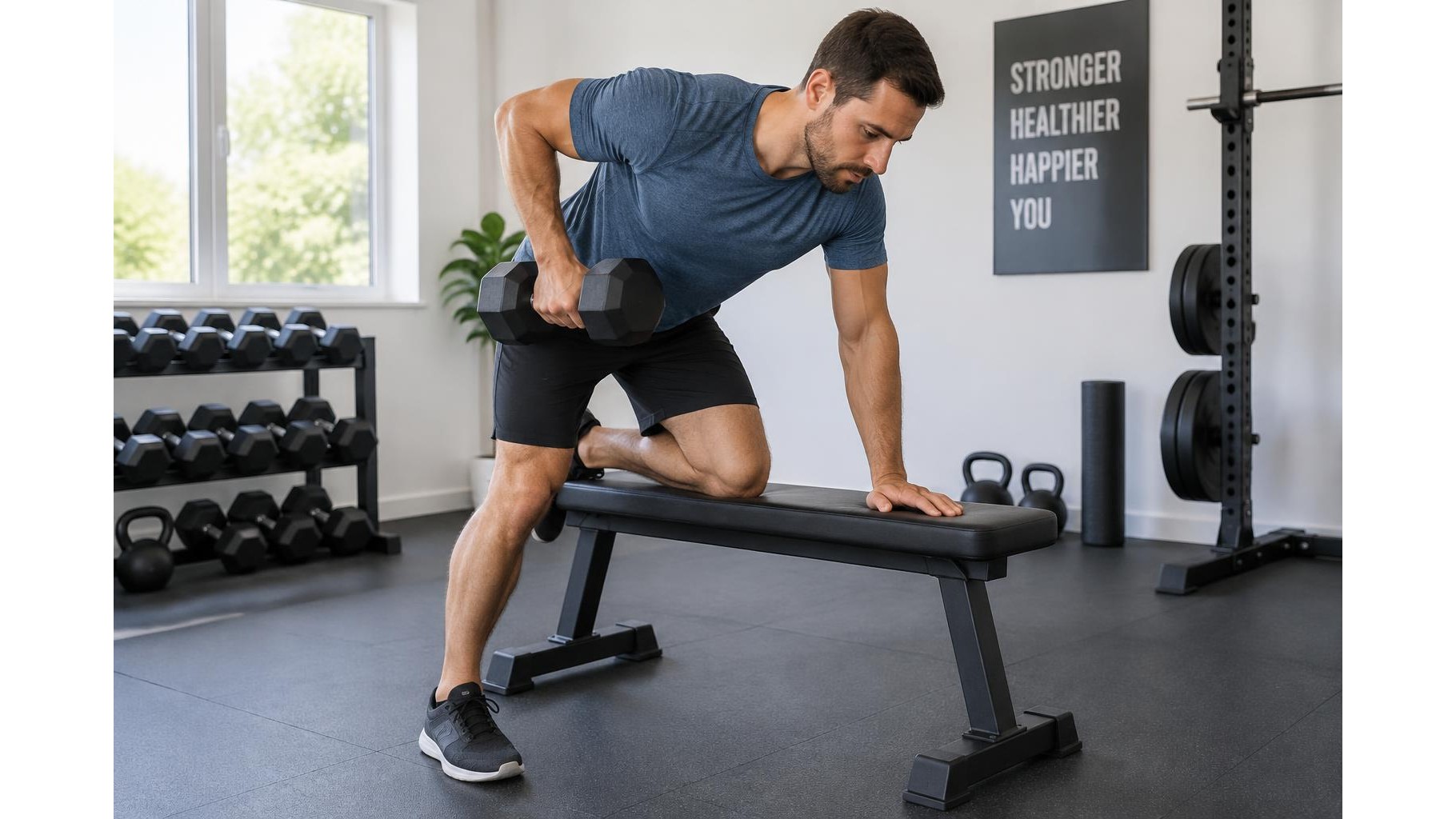
Start with a one-arm dumbbell row, bracing one hand on a sturdy chair or bench. Complete 10–12 repetitions per side for three rounds, resting about 30–45 seconds between sides or rounds. Draw your elbow toward your hip, pause briefly, then lower the weight for two or three seconds. Keep your shoulders away from your ears and avoid twisting your torso. Beginners can use a lighter dumbbell, reduce the range of motion or perform the movement without weight.
Train the rear delts with control
Next, perform a bent-over reverse fly for two or three sets of 10–15 repetitions. Hinge at the hips, soften your knees and let the dumbbells hang beneath your shoulders. Open your arms out to the sides without shrugging, then return slowly. Use very light weights: the goal is smooth motion and steady tension, not a large swing. If hinging is uncomfortable, sit on a chair, lean your chest toward your thighs and work through a comfortable range.
Add a carry for posture under load
For farmer carries, hold a dumbbell in each hand and walk for 30–45 seconds, completing three rounds with 30–45 seconds of rest. Stand tall, look ahead and keep your ribs stacked over your pelvis. Take short, quiet steps and resist leaning or letting the weights pull your shoulders forward. If you have limited space, march slowly in place. Beginners can shorten each interval or carry just one light dumbbell, switching hands halfway through.
Finish with trunk control
Close with a dead bug to reinforce steady trunk positioning. Lie on your back with knees bent above your hips and arms reaching upward. Slowly lower one heel and the opposite arm toward the floor, then return and switch sides. Complete 6–8 controlled repetitions per side for two rounds, resting 30 seconds. Keep your lower back comfortably steady; shorten the reach if it arches. This bodyweight option complements the loaded work without adding fatigue to your shoulders.
Use the final few minutes to breathe easily and notice how your shoulders and upper back feel. Across the session, stop a set when you can no longer control the lowering phase or maintain your position. Increase repetitions or load gradually over time, not both at once. With consistent practice, these dumbbell exercises can help develop upper-back endurance and stronger, more confident posture.