Frequent home workouts put clothing through repeated stretching, friction, sweat and washing. A garment that feels comfortable on the first session may quickly lose shape, develop thin spots or unravel if its materials and construction are not suited to regular use. Before buying, look beyond appearance: check the fabric blend, seams, stretch recovery and care label. These simple checks can help you choose durable workout clothes that remain comfortable over many indoor training sessions.
Look closely at fabric construction
Fabric durability depends on more than fibre names. A tightly knitted material with an even surface is often less vulnerable to snagging and abrasion than a loose, delicate knit. Examine the garment in good light: avoid obvious thin patches, uneven loops or areas where the fabric looks distorted. For leggings and fitted tops, a blend of synthetic fibres with elastane can provide a balance of moisture management and stretch, but the exact proportions do not guarantee quality. Feel the material and gently stretch it in several directions. It should feel substantial enough for your activity without being stiff or excessively heavy. A smooth finish can be comfortable, while brushed fabrics may need extra care to prevent pilling. Choose a weight and knit that suit your routine, since floor exercises and repeated contact with equipment can wear fabric differently from low-impact sessions.
Check seams and high-friction areas
Seams are common points of failure, especially where garments experience tension. Turn the item inside out if possible and inspect stitching for consistent spacing, secure ends and loose threads. Reinforced or flat seams can reduce rubbing and help a garment withstand repeated movement, although seam type alone is not proof of quality. Look carefully at the crotch, inner thighs, underarms, waistband and shoulder joins. These areas are exposed to friction or pulling during squats, lunges, push-ups and cycling. Gently pull the fabric on either side of a seam; it should not gape dramatically or reveal skipped stitches. A comfortable seam placement matters, too: seams running directly across a high-friction area may irritate skin and wear faster. Choose a fit that allows full movement without forcing seams to stretch continuously.
Test stretch and recovery
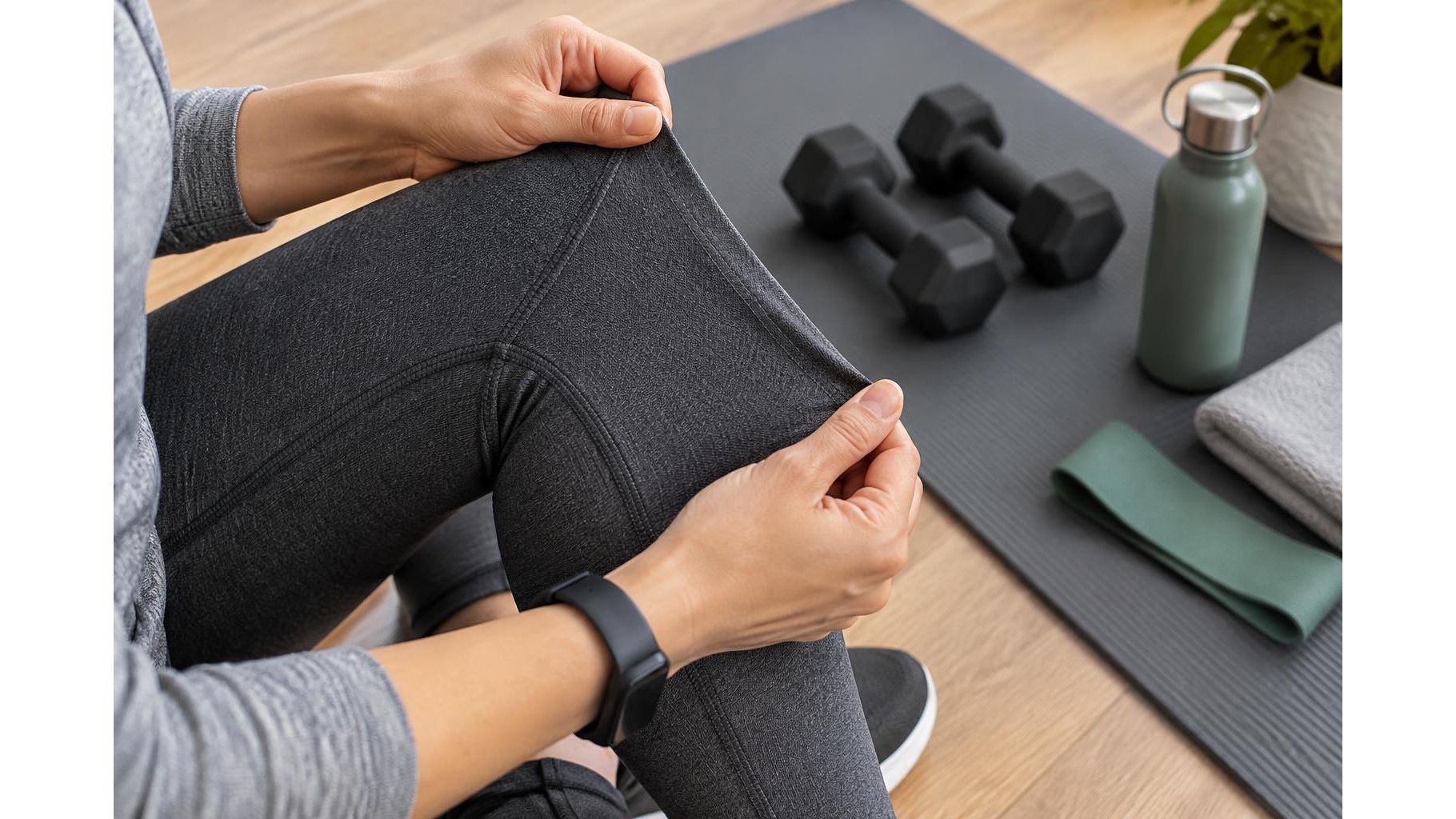
Workout clothing needs to move with you, but it should also return to shape. Gently stretch a small section of fabric and release it. Good stretch recovery means the material springs back rather than staying rippled, sagging or visibly slack. Check the waistband separately, since it must retain its hold without digging in. If trying on the garment, move through a few training positions: squat, reach overhead and bend at the hips. Watch for persistent bagging at the knees or elbows, shifting waistbands and fabric that becomes transparent when stretched. Do not rely on a single stretch test to predict years of use, but it can reveal weak recovery before purchase. A supportive fit should feel secure without restricting breathing or circulation.
Read labels and care instructions
Care instructions have a direct effect on garment lifespan. Check whether the item can be machine-washed and whether it requires a cool cycle, a laundry bag or air drying. Technical fabrics generally benefit from washing soon after sweaty sessions, using mild detergent and avoiding fabric softener when the label advises against it. Softener can leave a coating that affects moisture management in some performance textiles. High heat from tumble drying or ironing may damage elastic fibres, so follow the garment’s specific instructions rather than assuming all gym clothes are alike. Close zippers and fasten hook-and-loop tabs before washing to reduce snags. Washing similar items together and avoiding an overloaded machine can also limit unnecessary friction.
Assess value for repeated sessions
Compare garments by construction and practical use, not by price or marketing language alone. Look for clear product details about fibre content, fit and care, and review close-up photographs when shopping online. Consider how often you train and whether you can rotate between garments; allowing clothes to dry fully between sessions can reduce wear and lingering odour. A versatile top or pair of leggings that fits well and is easy to care for may offer better long-term value than a cheaper item that loses shape quickly. Check the seller’s return policy so you can assess fit and movement safely at home.
Choose for comfort and longevity
Before buying, inspect the knit, seams and high-friction zones, then consider how well the fabric recovers after stretching. Match the fit and fabric to your workouts, and follow the care label after every sweaty session. No single feature guarantees durability, but these checks help you make a more informed choice. With sensible washing, thorough drying and a little garment rotation, well-constructed workout clothes can stay supportive and comfortable through frequent home training.