A smart scale can make body-composition tracking feel precise, but its numbers are estimates—not a daily verdict on your health or training. The most useful approach is to understand how the readings are produced, measure under repeatable conditions and look for patterns over time. Treat the scale as one source of context, alongside how you feel and what your body can do.
Understand what the numbers actually mean
Most smart scales estimate body fat and other measurements using bioelectrical impedance analysis (BIA). A small electrical current passes through the body, and the device uses the resulting impedance, along with details such as height, age and sex, to calculate estimates. Because water and lean tissue conduct electricity differently from fat tissue, hydration can affect the result. The scale does not directly measure fat, muscle or bone, and readings can differ between devices and algorithms. Use the figures as a rough guide to possible trends, not as a clinical assessment or an exact account of your body composition.
Make each measurement comparable
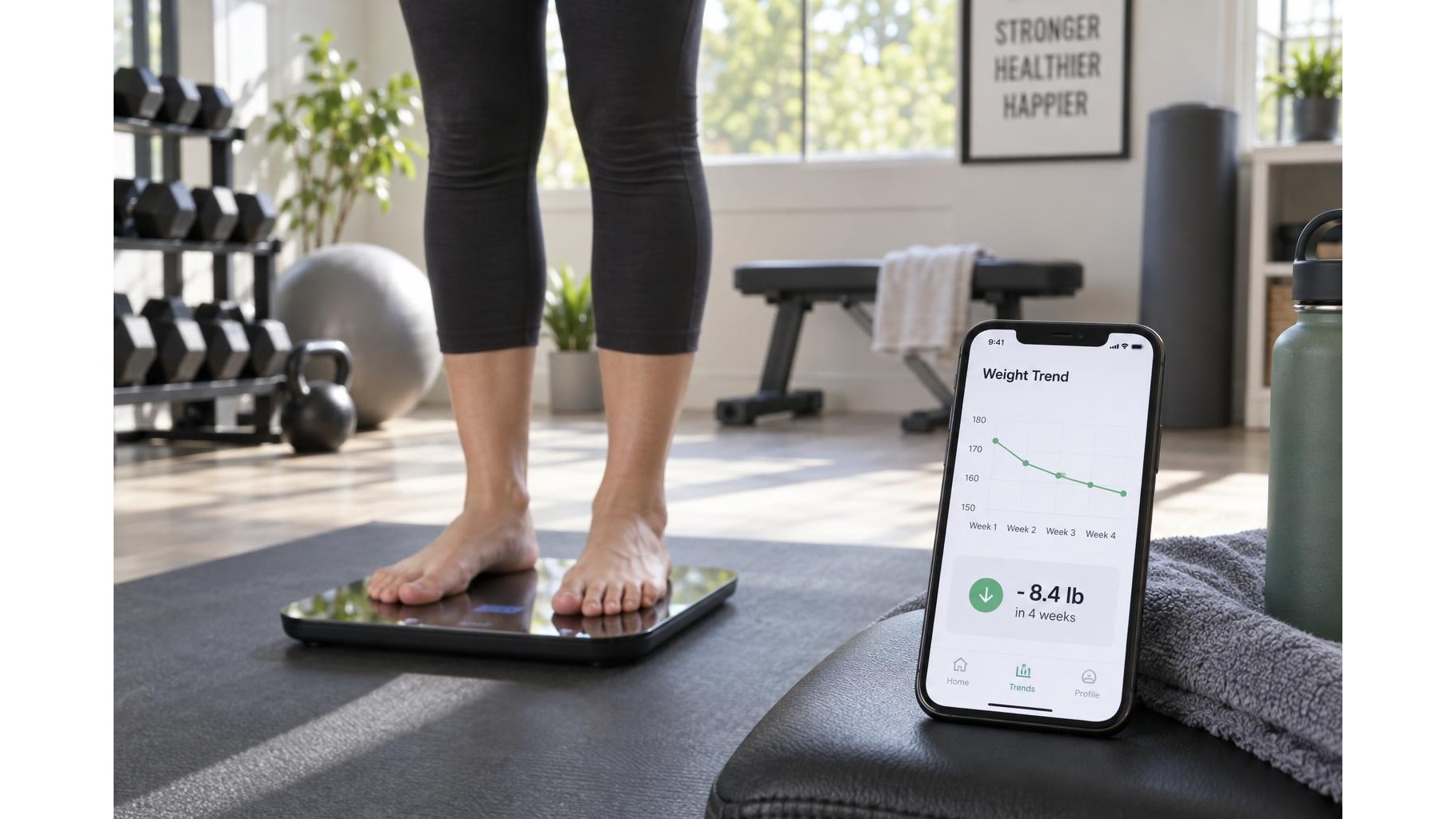
Consistency helps reduce avoidable variation. Weigh yourself on the same scale, on a hard, level floor, at roughly the same time of day. For a practical routine, take a reading in the morning, after using the bathroom and before eating, drinking or exercising. Use bare, dry feet and follow the manufacturer’s instructions for foot placement. Avoid comparing a reading taken after a workout with one taken after a rest day. If you use a companion app, check that your profile details are accurate and keep them up to date.
Expect normal fluctuations
Body weight and BIA estimates can shift from day to day for reasons unrelated to fat gain or loss. Fluid intake, salty or carbohydrate-rich meals, alcohol, digestion, menstrual-cycle changes, travel, sleep and recent exercise may all influence readings. A hard session can temporarily change fluid balance, while a large meal can affect scale weight without representing a change in body fat. These variations are normal. Rather than reacting to a single number, consider whether the measurement conditions were comparable and give short-term changes time to settle.
Use trends, not isolated readings
Choose a schedule you can follow without stress—perhaps several mornings each week, or once weekly if frequent weighing feels unhelpful. Review a weekly average or compare readings across several weeks, rather than judging progress by one day. Some apps display charts automatically; you can also note weight and body-fat estimates in a simple log. Look for a gradual direction that persists across repeated measurements. If the data are noisy, extend the observation period instead of changing your plan in response to every fluctuation.
Pair scale data with meaningful markers
Body-composition estimates are only one part of progress. Record training performance, such as loads, repetitions or walking pace, and notice recovery, energy, sleep and how clothes fit. A waist measurement taken consistently may provide another useful comparison, though it too can vary. Consider your goals: maintaining weight while getting stronger may be a positive outcome, even if the scale’s body-fat estimate barely changes. Avoid using these readings to diagnose a condition or make major dietary decisions; speak with a qualified health professional if you have concerns.
Keep the scale in perspective
A smart scale is most useful as a trend-tracking tool when readings are collected consistently and interpreted alongside other evidence. Expect noise, focus on longer-term patterns and let strength, energy, recovery and everyday wellbeing help shape the picture. If tracking starts to create anxiety or encourages restrictive behaviour, take a break or choose a less frequent routine. The aim is informed, sustainable progress—not perfect numbers every morning.