Long stretches at a desk or on the sofa can leave your hips feeling stiff and your glutes less active. A few minutes of gentle movement may help you feel more comfortable before or after a home workout. This short hip and glute recovery routine uses easy mobility and activation exercises, with no need to push into a deep stretch. Move slowly, breathe normally and work within a comfortable range. It is not a diagnosis or a substitute for personalised medical advice.
Start with an easy reset
Stand with your feet about hip-width apart and hold a wall or sturdy chair if you want extra support. Gently shift your weight from one foot to the other for 30–45 seconds, keeping your steps small and relaxed. Then make a few slow pelvic tilts: soften your knees, lightly draw your lower abdomen in, and gently rock your pelvis forward and back. Keep the motion subtle rather than forcing an arch in your lower back. If standing feels uncomfortable, do the weight shifts seated, with both feet resting on the floor. The aim is simply to ease into movement, not to create a strong stretch or a workout.
Try a comfortable seated hip opener
Sit near the front of a stable chair with both feet flat. Keeping your torso upright, slowly move one knee a little outward, then return it to centre. Repeat five to eight times before changing sides. Let the movement come from the hip and keep your pelvis steady; avoid pressing the knee down with your hand. If your chair is too high or your hip feels restricted, make the range smaller or skip this exercise. You should feel comfortable and in control throughout. A mild sense of movement is fine, but pinching, sharp pain or increasing discomfort is a reason to stop.
Wake up the glutes with gentle squeezes
Remain seated, feet planted and shoulders relaxed. Lightly squeeze both glutes for two or three seconds, then fully release for the same amount of time. Repeat eight to ten times while breathing freely. Keep the effort easy—around a gentle reminder to the muscles, not a maximal contraction. You can also do this lying on your back with knees bent if that position feels more comfortable. Avoid holding your breath or tensing your jaw. If you notice your lower back doing most of the work, reduce the squeeze or return to a relaxed position.
Add a supported hip hinge
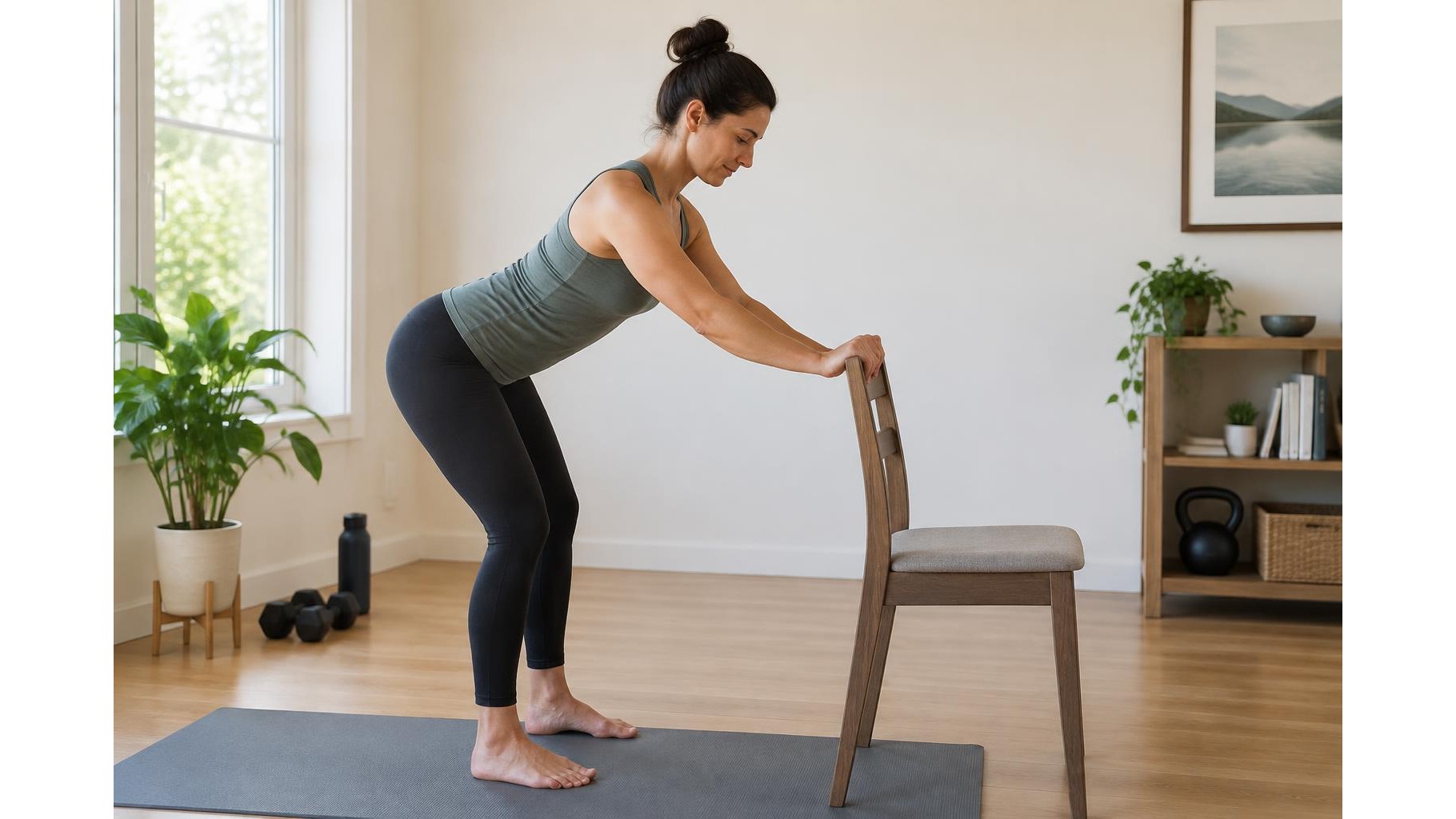
Stand behind a sturdy chair and rest your hands lightly on its back. With soft knees, send your hips a small distance backward as your torso inclines forward, keeping your back comfortably long. Return to standing by bringing your hips forward without snapping your knees straight. Try six slow repetitions. This small hip hinge encourages movement through the hips while the chair offers balance support. Keep the range shallow, especially if you are new to the movement. If standing is not suitable today, leave this step out rather than trying to push through.
Finish with an easy walk or march
To round off the sequence, walk gently around the room for one or two minutes. If space is limited, march slowly on the spot while holding a chair or counter. Lift each foot only as high as feels natural and let your arms swing comfortably. Keep the pace conversational; this is a cool-down, not cardio training. Notice whether your steps feel easy and balanced, and stop if symptoms become worse. There is no need to complete every exercise each time—choose the movements that feel comfortable and keep the session short.
For a simple reset after sitting, start with a minute or two and repeat this routine when it feels helpful. Progress gradually, and treat comfort as your guide rather than chasing a bigger stretch. Stop immediately if you experience sharp, worsening or unusual pain, numbness, or a feeling of instability. If discomfort persists, affects daily activities, or concerns you, seek advice from a qualified health professional. Gentle movement should feel manageable; it should never require you to ignore warning signs.