Building sustainable cardiovascular endurance doesn’t require a lab, a coach or a commercial gym. With a basic home setup and a simple structure, you can use zone 2 cardio at home to strengthen your heart, improve everyday energy and support fat metabolism, all while staying comfortably in control of your breathing.
What is zone 2 cardio and why it matters
Zone 2 cardio is a low‑to‑moderate intensity where you can still talk in full sentences, feel slightly warm and sweaty, but not exhausted. Technically, it sits around 60–70% of your max heart rate, but you don’t need lab equipment to benefit from it. Training regularly in zone 2 improves your heart’s ability to pump blood, increases the number and efficiency of your mitochondria, and boosts your capacity to use fat as fuel. For busy people training at home, it is the ideal mix of health, recovery and endurance with minimal injury risk.
How to find your zone 2 without lab equipment
You can approximate zone 2 intensity using simple cues. First, use the talk test: you should be able to speak in full sentences but singing would feel too hard. Breathing is deeper but not ragged. Second, use a perceived exertion scale from 1 to 10: zone 2 usually feels like a 3–4 out of 10. If you wear a heart rate monitor, estimate max heart rate as roughly 220 minus your age and aim for 60–70% of that value. Spend the first 5–10 minutes of each session adjusting speed, resistance or step height until you land in this sustainable, “I could do this for a while” effort.
Structuring treadmill, bike and step sessions at home
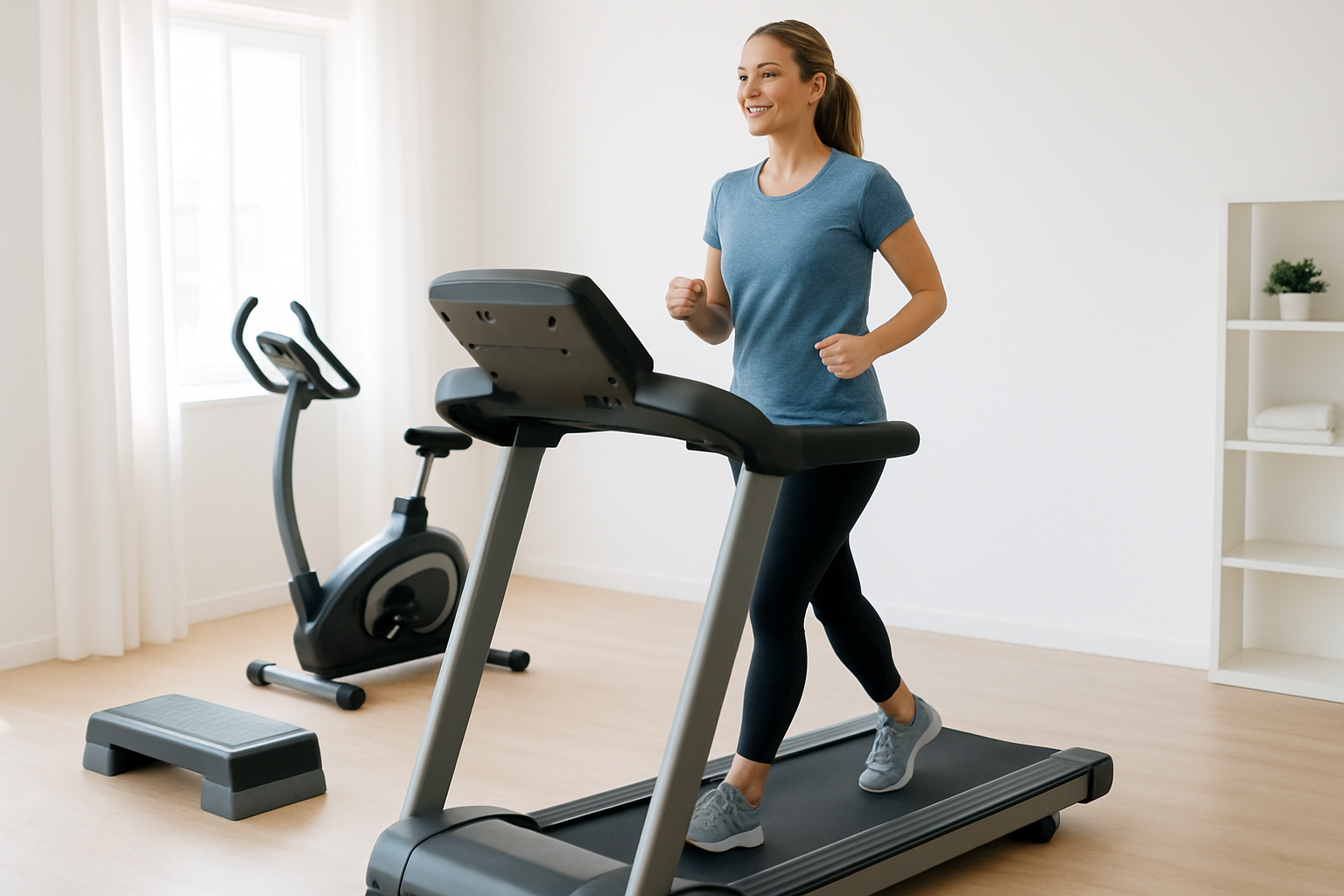
At home, you can perform zone 2 on almost any cardio machine or simple platform. On a treadmill, walk with a brisk but controlled pace and use a slight incline to raise intensity without forcing a run. On a stationary bike, sit tall, keep resistance light‑to‑moderate and focus on smooth pedalling to stay in the talking zone. With a sturdy stepping platform, alternate step‑ups at a rhythm that elevates your heart rate while keeping good balance. Each session can follow a simple framework: 5–10 minutes gentle warm‑up, 20–40 minutes steady zone 2, then 5–10 minutes easy cooldown, finishing with light mobility for hips and calves.
A simple weekly progression plan
For beginners, aim for 2–3 zone 2 sessions per week. In week 1, start with 20 minutes of zone 2 time per session. In week 2, add 5 minutes per workout, moving to 25 minutes. In week 3, progress to 30 minutes. Keep at least one rest or light‑activity day between sessions. Once you can comfortably handle 30–40 minutes, you can add a fourth weekly session or slightly increase intensity while still staying conversational. This gentle progression lets your joints, tendons and cardiovascular system adapt, reducing the risk of overuse injuries and burnout while steadily improving aerobic capacity.
Combining zone 2 with strength and daily life
Zone 2 training works best when it supports, not replaces, the rest of your fitness routine. If you also lift weights, place your zone 2 workouts on separate days or after lighter strength sessions so you are not too fatigued for heavy lifts. On busy weeks, use shorter 20‑minute home sessions to maintain your base. Spread low‑intensity activity through the day by walking more, taking the stairs and breaking up sitting time; this lifestyle movement complements structured home cardio and makes zone 2 feel easier over time.
Listening to your body and staying consistent
Zone 2 cardio at home is about building a sustainable habit, not chasing exhaustion. Expect progress to feel subtle week to week: walks feel lighter, breathing steadier, recovery faster. Adjust duration or frequency if you notice unusual fatigue, poor sleep or lingering soreness. Protect your joints with supportive shoes, a stable surface and good posture on your treadmill, bike or step. With a simple framework, clear intensity cues and a realistic progression plan, zone 2 becomes a reliable anchor in your routine, steadily improving endurance and long‑term health from the comfort of your home.