
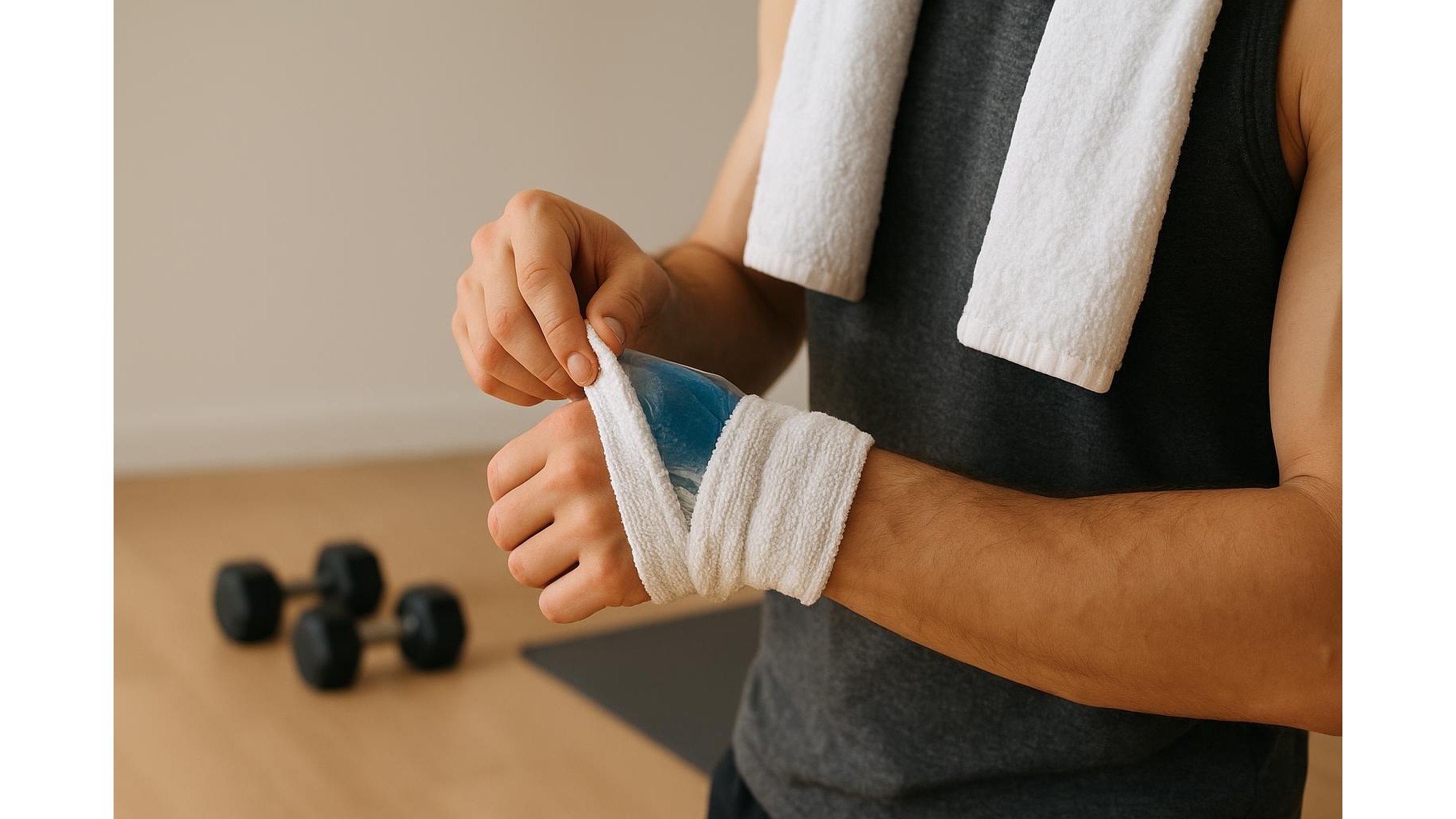
Training hard in a home gym during summer can quickly turn your favourite workout space into a heat trap. As your body temperature rises, performance, focus and safety can all suffer. Simple DIY cooling wraps and targeted cold points for wrists and neck offer an easy way to control heat stress without buying bulky cooling vests or installing air conditioning. Using basic household items like towels, reusable ice packs and elastic bandages, you can build a practical cooling system that supports both intense training and faster recovery.
Why wrists and neck are ideal cold points
The wrists and neck are prime targets for cooling because blood vessels run close to the surface of the skin. Applying cold in these areas helps cool the blood as it circulates, which can reduce your overall sensation of heat. This means a small cooling wrap can have a surprisingly big impact on how hot you feel in your home gym. Cooling the neck also affects the head and upper spine, which can lower perceived exertion and help you think clearly during complex lifts or circuit sessions. By focusing on these compact cold points, you avoid soaking your clothes while still getting meaningful relief from heat.
Basic DIY wrist wraps with household items
To build a simple DIY wrist cooling wrap, start with a clean cotton or microfibre cloth, a thin reusable ice pack or a few ice cubes in a sealed sandwich bag, and a light elastic bandage or strip of stretchy fabric. Lay the ice source in the centre of the cloth, fold it into a slim band, then place it over the pulse side of your wrist. Wrap gently with the elastic, leaving enough room to slide a finger underneath so you do not restrict circulation. Alternate wrists every 5–10 minutes. Keep an extra cloth and bag ready in the freezer so you can rotate them between sets, especially during high-rep or conditioning work in a warm garage or loft gym.
Neck cooling wraps and post‑workout cold points
For a neck cooling wrap, use a longer, thin towel or scarf and a slightly larger cold source such as a flat gel pack or a row of ice cubes sealed inside a strong plastic bag. Place the cold pack along the centre of the fabric, roll it into a tube, then drape it around the back of your neck so the cold section sits on the upper spine. Tie or tuck the ends in front of your chest, keeping the fit snug but not tight. Use this during rest intervals or immediately after your session to help bring your temperature back down. Rotating cold points—neck, then one wrist, then the other—prevents overcooling a single area while maintaining an overall refreshing effect.
Safety rules, timing and best practices
While cold wraps are simple, they still require some safety rules. Avoid placing ice directly on bare skin for more than a couple of minutes; always have at least a thin layer of fabric between skin and cold pack to prevent irritation. Limit continuous cooling on any single area to 10–15 minutes, then give the skin time to warm slightly before reapplying. During intense home workouts, use wrist and neck wraps mainly in rest periods so you do not distract your grip or range of motion. Combine cooling with solid hydration and light clothing to make the biggest difference to your comfort and performance. If you feel dizzy, nauseous or chilled, remove all cold wraps and rest.
Integrating cooling into your home gym routine
To get consistent benefits, treat cooling wraps as part of your training plan rather than a last‑minute fix. Before you start, place your DIY wraps or gel packs in the freezer so they are ready for your warmest sessions—high‑intensity intervals, heavy complexes or long circuits. Use them strategically in between sets of demanding lifts or cardio bursts, and again immediately after your final exercise to speed the transition from overheated to comfortable. Over time, you will learn how much cooling you personally need to feel sharp without becoming sluggish from excessive cold. By adopting these simple DIY cooling strategies, you turn a hot home gym from a limiting factor into a manageable challenge.
Effective temperature control is a key part of sustainable training at home. By focusing on small but powerful cold points on the wrists and neck, you can extend your sessions, protect your focus and reduce the risk of heat‑related fatigue. With nothing more than towels, elastic bands and well‑wrapped ice or gel packs, you can build a flexible system that fits any budget and any space. Incorporate these habits into your warm‑up, working sets and post‑workout recovery, and your home gym becomes a cooler, safer and more productive place to train all year long.









