If you spend the day hunched over a laptop and then push heavy presses in your home gym at night, your shoulders are under constant stress. That mix of desk posture, tight pecs and heavy strength training can create pain, pinching and stalled progress on your bench or overhead press. This simple at-home routine focuses on daily shoulder care so you can keep lifting hard while reducing stiffness, protecting your joints and improving pressing performance.
Reset your desk posture to protect your shoulders
The foundation of healthy shoulders starts at your desk. Aim to keep your ears stacked over your shoulders, shoulders relaxed and ribs down, instead of slumping forward all day. Set a 30–45 minute timer and, when it goes off, stand up, roll your shoulders and walk for 1–2 minutes. Place your screen at eye level and keep the keyboard close so you are not reaching forward. Think of your daytime as low‑intensity training for your posture: the more often you return to a tall, neutral position, the less strain piles up before your evening workout.
Essential mobility drills before you lift
A quick shoulder mobility circuit before pressing can dramatically change how your shoulders feel. Start with 8–10 slow arm circles in each direction, then wall slides: stand with your back and forearms against a wall and slide your arms up and down for 10–15 reps. Add thoracic rotations in a half‑kneeling or all‑fours position to open your mid‑back, which lets your shoulders move freely instead of compensating. Finish with 20–30 seconds of gentle doorway pec stretches per side. This entire block takes about five minutes and prepares the joints, capsule and surrounding muscles for safe home strength training.
Band activation to stabilise the shoulder
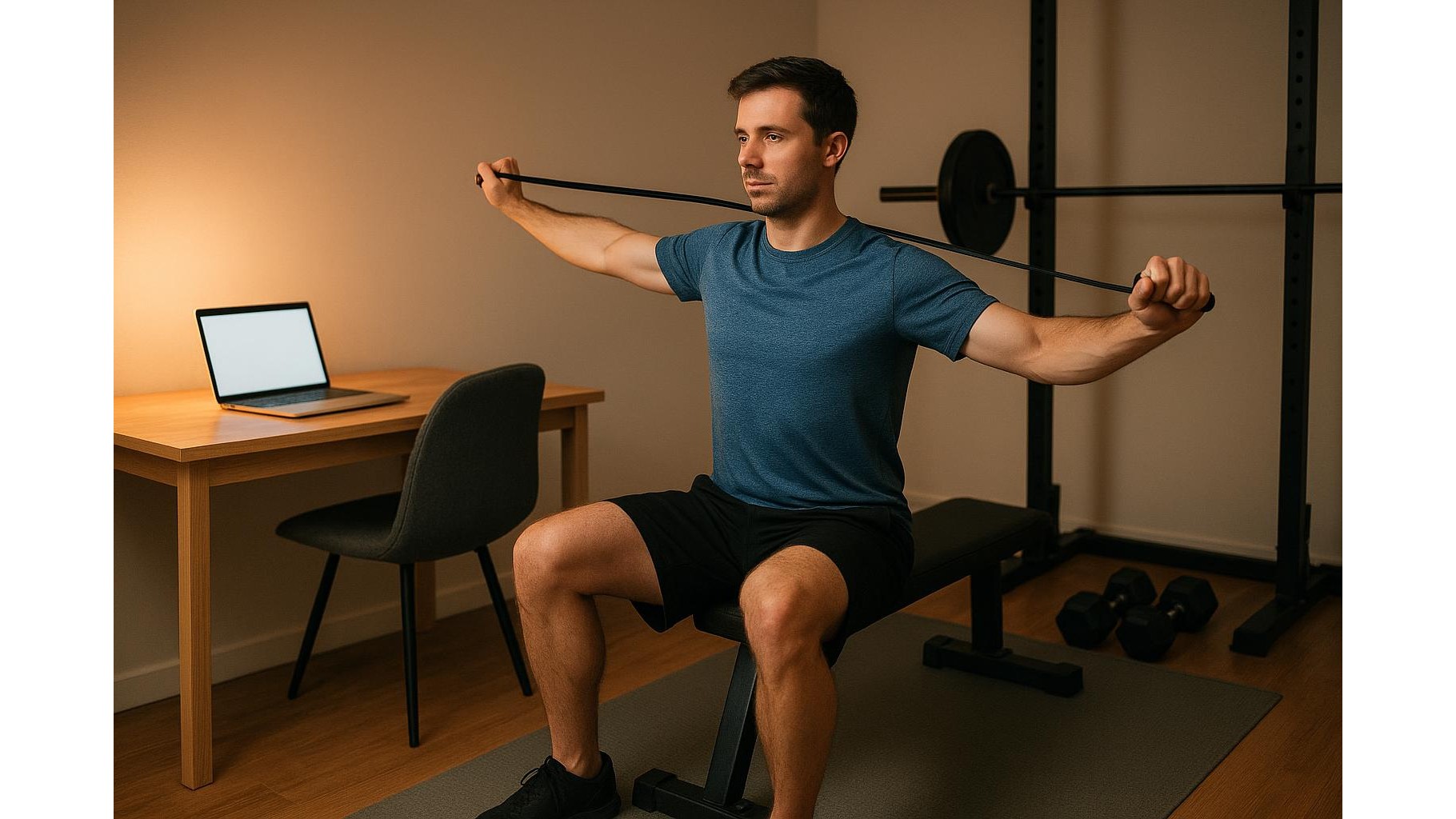
Once your shoulders are warm, add targeted band activation to wake up the rotator cuff and upper back. Loop a light resistance band around your wrists and perform 12–15 band pull‑aparts, focusing on squeezing your shoulder blades together without shrugging. Follow with 10–12 external rotations per side, keeping your elbow tucked at your ribs and moving only from the shoulder. Finally, perform 10–12 face pulls, driving your elbows out and back. These small, controlled movements teach your shoulders to centre the ball in the socket, so when you press later, the joint feels stable and supported instead of cranky and overloaded.
Self-massage tactics for tight pecs and upper back
To undo hours of sitting and repeated pressing, add a few minutes of self‑massage. Lie on the floor with a firm ball or roller placed between your upper back and the ground and slowly roll along the muscles around your shoulder blades, pausing on tender spots for 20–30 seconds while you breathe. Then gently work around the chest and front of the shoulder, staying off the joint itself and avoiding sharp or radiating pain. The goal is to reduce tension in overworked areas so your scapulae can glide smoothly and your shoulders no longer feel pulled forward by tight pecs.
Daily movement habits that keep shoulders happy
Between desk sessions and lifting, sprinkle in micro‑breaks that keep your shoulders moving. Every couple of hours, perform 5–8 scapular push‑ups against a wall or desk, focusing on letting the shoulder blades slide apart and then squeeze together. Carry a light weight or even a heavy bag in one hand for 30–40 seconds per side to build shoulder stability and grip strength. In the evening, swap some scrolling time for gentle hanging from a sturdy bar or doorframe (if safe) for 10–20 seconds at a time, which can decompress the shoulders and stretch the lats. Consistent, low‑intensity movement is what locks in the benefits of your routine.
Putting your at-home shoulder care routine together
Healthy shoulders for desk workers who lift are built on consistency, not complexity. Through the day, maintain better posture and add short movement breaks. Before you train, spend five minutes on mobility drills and band activation so your rotator cuff and upper back are ready to stabilise each press. After training or in the evening, use brief self‑massage and light stretching to calm down tight tissues and restore range of motion. This simple at‑home system helps reduce pain, protects your joints and keeps your bench and overhead presses progressing instead of stalling.