Indoor rowing machines are ideal for building cardio and strength in a compact home gym, but in an upstairs flat the wrong choice can upset neighbours and roommates. The main decision is often between an air rower and a water rower. Both simulate on‑water rowing, yet they differ in noise, vibration, and maintenance, all crucial factors when you live above someone else.
Noise levels in a shared building
In general, an air rowing machine is louder than a water rower because the fan creates a constant whooshing sound that rises as you pull harder. This broadband noise can travel through thin walls, so late‑night or early‑morning sessions may disturb light sleepers. Water rowers produce a gentler sloshing noise that many users describe as relaxing; it tends to blend into background sounds and is less piercing. For upstairs apartments, the airborne noise from either type can be reduced with soft furnishings and closed doors, but if your priority is a quieter acoustic profile, a water‑based resistance system is usually the more neighbour‑friendly option.
Floor vibration and impact on neighbours
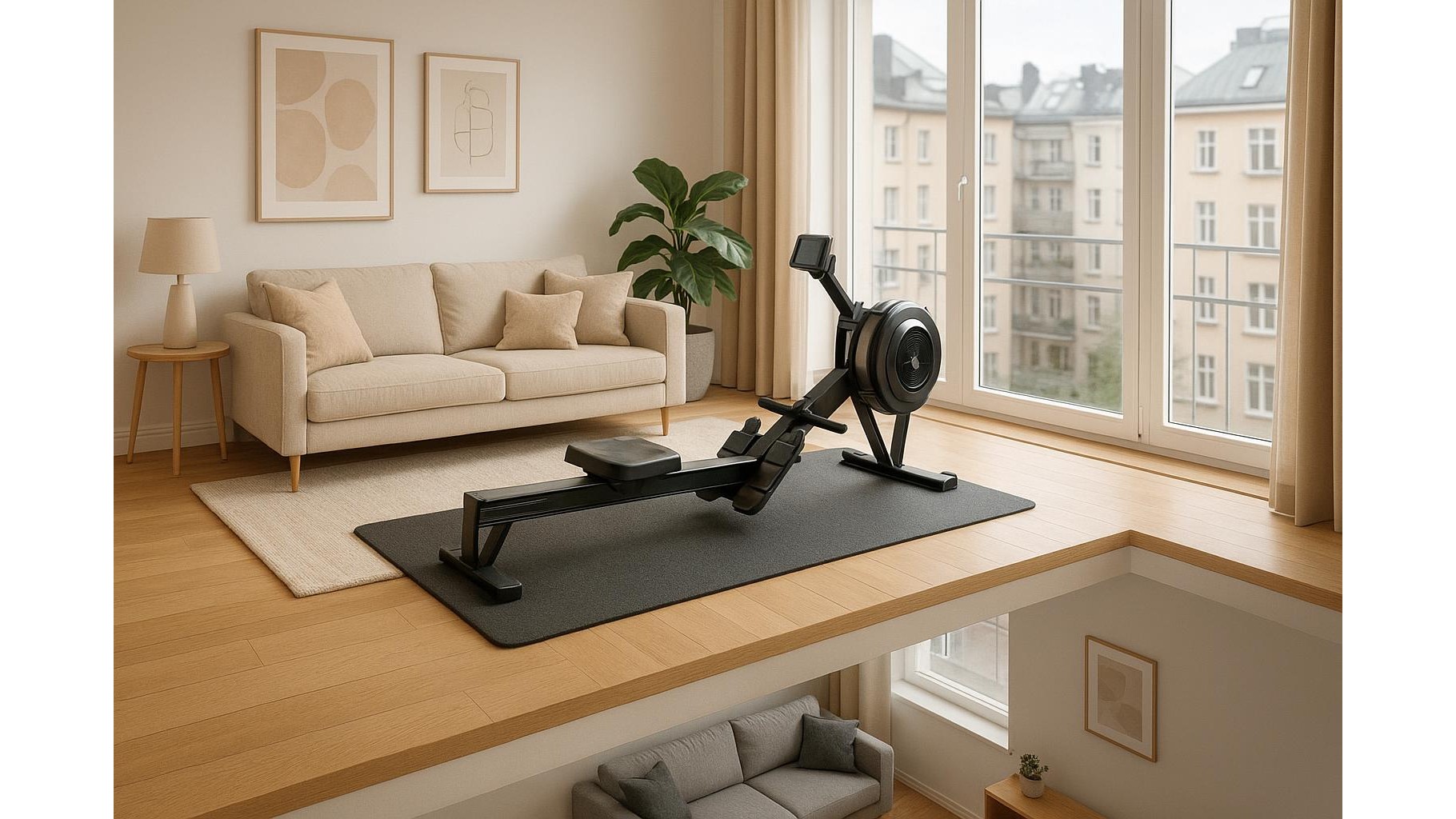
Beyond volume, vibration and impact matter for people living below you. Both air and water rowers offer smooth, low‑impact motion, but vibration depends heavily on frame design, weight and feet. Heavier, well‑built machines typically transmit less movement into the floor. Regardless of resistance type, placing your rower on a thick rubber gym mat and, if possible, on top of a rug significantly reduces structure‑borne noise. Choose a machine with wide, rubberised feet and a stable base to avoid wobble during hard intervals. While water rowers are often slightly heavier and feel more planted, even an air rower can be apartment‑friendly if it is properly isolated from the floor.
Rowing feel: performance vs smoothness
The rowing feel differs noticeably between the two technologies. Air rowers provide resistance that increases with stroke speed, giving a very responsive, performance‑oriented feel popular with athletes who do interval training and race pacing. They also make it easy to quantify effort when paired with a good performance monitor. Water rowers deliver a smoother, more fluid stroke: the resistance curve feels closer to a boat in water, with a consistent load through the drive and a relaxing recovery. For apartment users who prioritise a meditative, less aggressive workout that disturbs others less, a water rower’s calmer sound profile and flowing sensation can be more appealing, whereas air rowers suit those focused on high‑intensity training.
Maintenance, cleaning and long‑term care
Maintenance needs are another factor in small homes. Air rowing machines are relatively low‑maintenance: you mainly need to keep the chain or belt lubricated as recommended by the manufacturer and occasionally vacuum dust from the fan cage. Water rowing machines require attention to the tank: the water should be kept clear with purification tablets, and the level may need topping up over time. You must also avoid direct sunlight on the tank to prevent algae growth. In terms of mess, both types are clean, but spilling water when moving a water rower is a small risk. For upstairs apartments with limited storage space, also check whether the rower can stand upright safely and how easy it is to wheel into a corner after use.
Impact on roommates and daily routine
Living with others means balancing your training schedule with their routines. Even a relatively quiet rower can feel intrusive at 6 a.m. if your bedroom walls are thin. Discuss preferred workout windows with housemates and consider their sleep patterns before deciding. If you anticipate frequent early or late sessions, a water rower combined with a mat, careful placement away from shared walls, and soft‑closing movements of the seat and handle is a smart compromise. If your training is mostly during daytime hours and your priority is performance data and intense intervals, an air rower may still fit, especially if your building has solid floors and understanding neighbours.
In summary, both air rowers and water rowers can work in an upstairs apartment, but they suit different priorities. Air rowers offer a sharper, more athletic feel with higher noise, best for focused performance training in buildings with good sound insulation. Water rowers deliver a smoother, quieter experience that is kinder to neighbours and roommates, at the cost of slightly more maintenance. Combine your chosen machine with a quality floor mat, thoughtful placement and respectful workout times, and you can build an effective home rowing setup without turning your flat into a nuisance.