Recovering after intense training often means dealing with tight upper traps, a stiff neck and tension headaches. In recent years, neck hammocks and other cervical traction devices have become popular home tools promising quick relief. But hanging your head from a doorway is not risk‑free. This article takes an objective look at how neck hammocks work, their potential benefits and risks, and safer alternatives you can use in your home gym recovery routine.
How neck hammocks are supposed to work
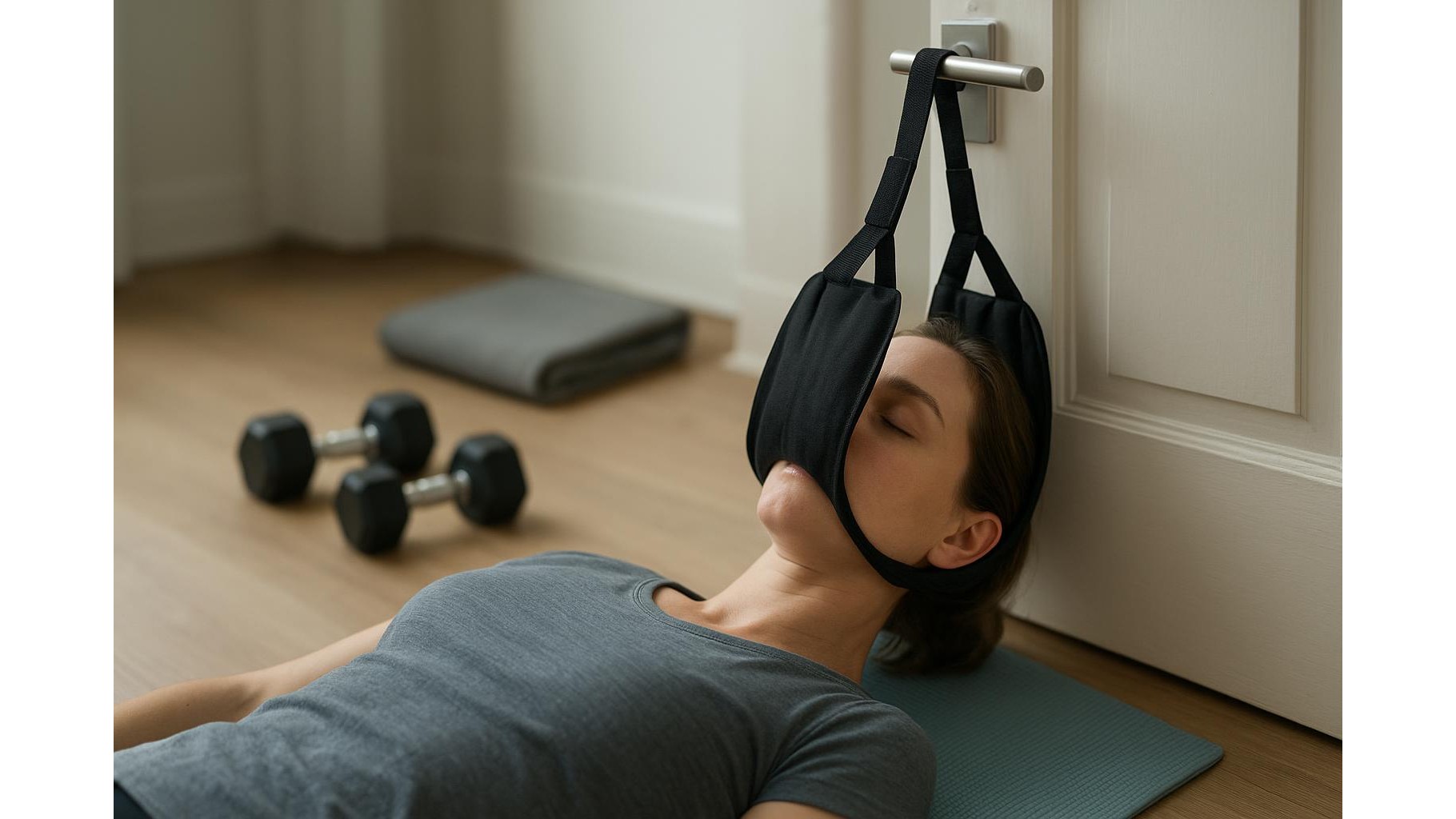
A neck hammock is a fabric or padded cradle that supports the back of your head and occiput while it is attached to a door handle, rail or post. When you lie back, the device applies gentle cervical traction, aiming to slightly stretch the neck, decompress the vertebrae and relax overworked muscles. In theory, this can reduce pressure on compressed discs, ease tension in the upper trapezius and suboccipital muscles, and improve blood flow. Many users report short‑term relief of tightness or stress after 10–15 minutes of use. However, the quality of support, the angle of pull and the amount of traction depend entirely on the design of the product and how you set it up, which is where safety concerns begin.
Potential benefits and when neck hammocks might help
When used appropriately, a well‑designed cervical traction sling can offer some benefits for people with mild, non‑specific neck stiffness after desk work or training. Light traction can temporarily reduce muscle guarding, allow joints a bit more freedom to move and create a relaxation effect similar to gentle manual therapy. This may be especially appealing to home gym users who perform heavy upper‑body lifts and struggle with constant tight traps. That said, neck hammocks should be considered a comfort tool, not a cure. Evidence for long‑term structural change is limited, and they should never replace a tailored rehab plan, strength work for the deep neck flexors, or professional assessment when pain is persistent or severe.
Risks, red flags and who should avoid neck hammocks
Despite their simple appearance, neck hammocks can pose real risks if misused. Excessive or poorly positioned traction may aggravate cervical disc issues, irritate nerve roots or increase headaches. People with a history of neck trauma, osteoporosis, arthritis, spinal instability, dizziness, vascular problems or diagnosed cervical disc herniation should avoid unsupervised traction unless cleared by a qualified clinician. Red flags include sharp or radiating pain, numbness, tingling in the arms, visual changes, sudden severe headache or feeling faint during or after use. If any of these appear, stop immediately and seek medical advice. For most lifters and home exercisers, the goal should be gentle, reversible comfort, not maximal stretching or aggressive pulling on the neck.
Safer mobility and self‑care alternatives after training
Rather than relying solely on a neck hammock, you can build a safer post‑workout recovery routine around progressive mobility and strengthening. Start with controlled neck range‑of‑motion drills (slow rotations, side bends and nods within a pain‑free range), then add scapular retraction and depression exercises to offload the upper traps. Simple tools such as a low‑density foam roller or small massage ball placed under the upper back and between the shoulder blades can ease thoracic stiffness that often drives neck tension. Breathing drills in a supine position, focusing on long exhales and relaxed shoulders, further reduce sympathetic nervous system drive. These strategies target the underlying movement habits and muscular imbalances that commonly cause post‑workout neck tightness, instead of pulling directly on the cervical spine.
How to use a neck hammock more safely if you choose to try one
If you still decide to experiment with a neck traction hammock at home, treat it like any other piece of home gym equipment: with respect and caution. Set the attachment point at approximately head height, lie on a firm surface and start with the lightest possible tension for no more than 5–10 minutes. Keep your neck in a neutral position, avoiding excessive extension or rotation. Stop at the first sign of tingling, dizziness or increasing pain. Combine hammock sessions with active mobility work, strength training for the upper back and posture breaks throughout the day. Most importantly, consult a physiotherapist, sports doctor or other qualified professional before use if you have any history of neck injury, chronic pain or neurological symptoms.
In summary, neck hammocks can provide short‑term comfort for mild post‑workout stiffness, but they are not a magic fix and carry clear risks when used without guidance. Home athletes will usually get better long‑term results by focusing on smart programming, regular mobility work, progressive neck and upper‑back strengthening and good desk ergonomics. If you do experiment with cervical traction devices, start gently, respect red flags and prioritise advice from a healthcare professional. Your neck is not an area for aggressive DIY solutions, and sustainable relief comes from a combination of thoughtful training and careful recovery habits.