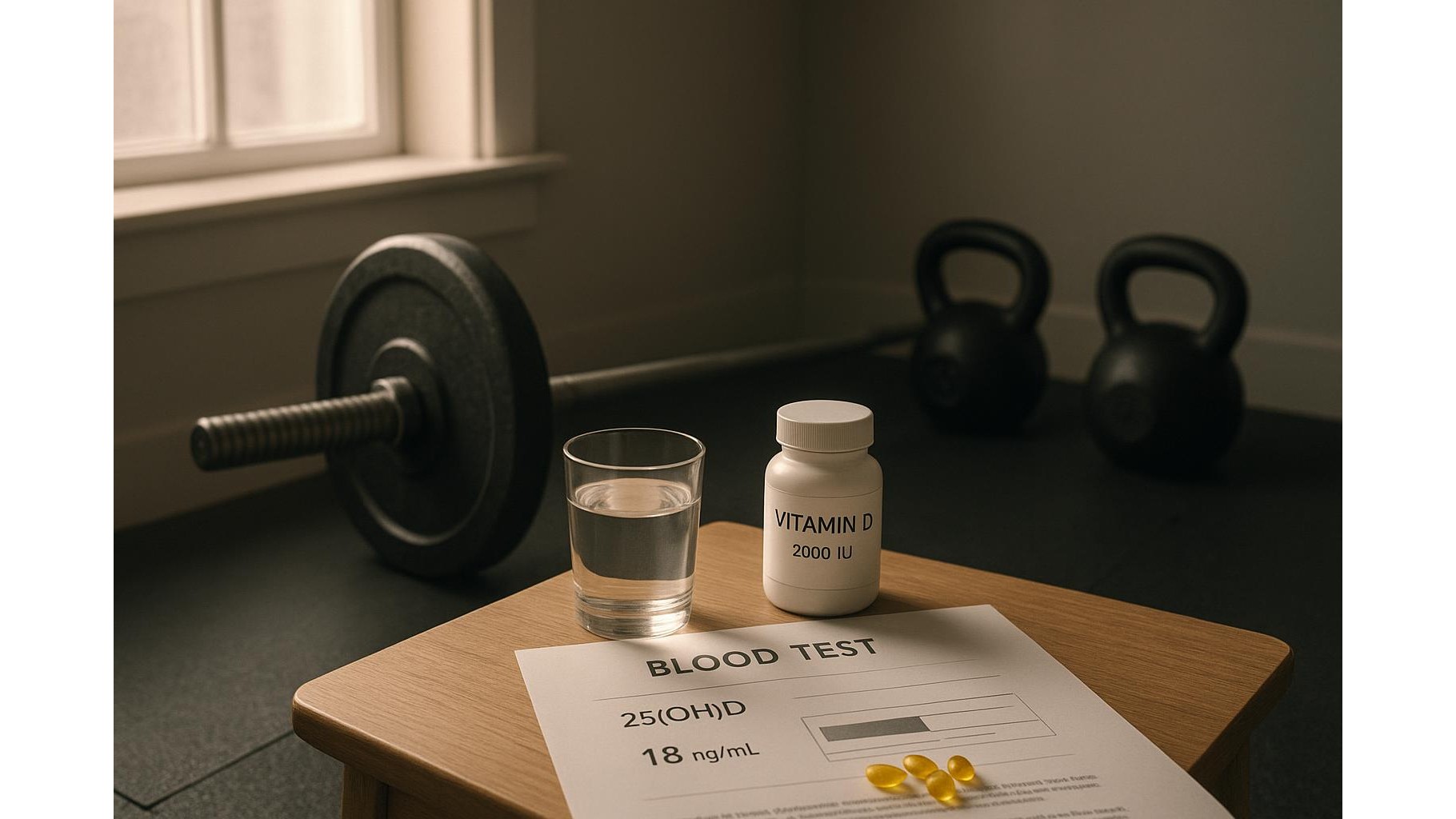
Spending most of the week training in a home gym means limited sun exposure, which can quietly drain your vitamin D levels. For lifters and endurance athletes alike, this matters: vitamin D influences muscle strength, recovery, bone health and immune function. This article walks through evidence-based guidance on dosage, timing, useful blood tests and how to pair vitamin D with other nutrients so you get the benefits without chasing hype.
Why vitamin D matters if you mostly train indoors
Vitamin D acts like a hormone that your body synthesises from sunlight. When you spend most of your time at work, then train in a garage gym or spare room, your skin simply doesn’t make enough. Low vitamin D is linked to reduced muscle performance, higher risk of stress fractures and more frequent respiratory infections – all bad news if you care about consistent training. Research in athletes shows that bringing levels from deficient to sufficient can improve power output and support recovery, particularly in those who start with very low levels. For home athletes, supplementing smartly can replicate the “sunlight advantage” you’re missing, especially in autumn and winter at higher latitudes.
[h ol_placeholder type=”cta” id=”telegram”/]
How much vitamin D should home athletes take?
For generally healthy adults training indoors, most sports medicine guidelines suggest a daily intake between 1,000–2,000 IU of vitamin D3 as a safe, effective baseline when sun exposure is limited. Lower doses (400–800 IU) may maintain levels if you already test in the optimal range and get some sunshine, but are often too low to correct a deficiency. Higher doses such as 3,000–4,000 IU per day can be used short term under medical supervision, especially in winter, larger-bodied athletes or those with darker skin who synthesise less vitamin D from the same sun exposure. Extremely high weekly or monthly “mega-doses” are generally unnecessary for home athletes and can increase the risk of side effects if not carefully monitored, so stick to reasonable daily doses unless your doctor advises otherwise.
Timing, absorption and how to actually take it
Vitamin D is fat-soluble, so your body absorbs it best when taken with a meal that contains some dietary fat – for example, your post-workout meal with eggs, salmon, olive oil or nut butter. Timing across the day is far less important than consistency; choose a time that fits your routine and stick with it. Many home athletes prefer taking their vitamin D at breakfast to create a simple daily habit. Because vitamin D has a long half-life, missing the occasional dose is not a disaster, but your levels reflect your average intake over weeks. If you use other fat-soluble supplements (like omega‑3), it is perfectly fine to take them together with vitamin D as long as the total doses are within safe limits.
Lab checks and target blood levels that matter
The most useful test is serum 25-hydroxyvitamin D [25(OH)D]. For most active adults, a practical target range is around 30–50 ng/mL (75–125 nmol/L). Below about 20 ng/mL (50 nmol/L) is generally considered deficient and is associated with weaker bones, reduced muscle function and higher illness risk. Above roughly 60 ng/mL (150 nmol/L), benefits plateau and the risk of adverse effects starts to rise if you keep pushing levels higher. If you train mostly indoors, it’s sensible to test once going into winter and again in late winter or early spring to see how your levels respond to your current dose. Always share your supplement plan and blood results with your doctor, especially if you have kidney issues, take certain medications or have a history of calcium problems.
Synergy with calcium, magnesium and vitamin K2
Vitamin D does not work in isolation. It increases calcium absorption from the gut, which is great for bone density but can be problematic if calcium is high and vitamin K2 and magnesium are low. For home athletes, it is wise to ensure you meet daily calcium needs (roughly 1,000–1,200 mg from food and supplements combined) while also prioritising magnesium-rich foods such as nuts, seeds, whole grains and leafy greens. Adequate magnesium helps your body activate vitamin D and supports muscle relaxation and sleep. Emerging evidence suggests that vitamin K2 may help direct calcium into bones and teeth rather than soft tissues, so many sports nutritionists now look at vitamin D as part of a wider bone-supporting stack rather than a standalone fix.
Putting it all together for your home training
For indoor lifters and cardio enthusiasts, smart vitamin D use is less about chasing extreme levels and more about staying in a solid, safe range all year. Aim for a daily D3 supplement of around 1,000–2,000 IU with a meal, get your 25(OH)D checked at least once a year, and adjust your dose with professional guidance based on the result. Combine vitamin D with adequate protein, sensible programming, enough sleep and supportive nutrients such as calcium, magnesium and vitamin K2, and you give your body the raw materials it needs to build strength, maintain resilient bones and keep your immune system ready for hard training blocks – even if the only sun your home gym sees is through a small basement window.