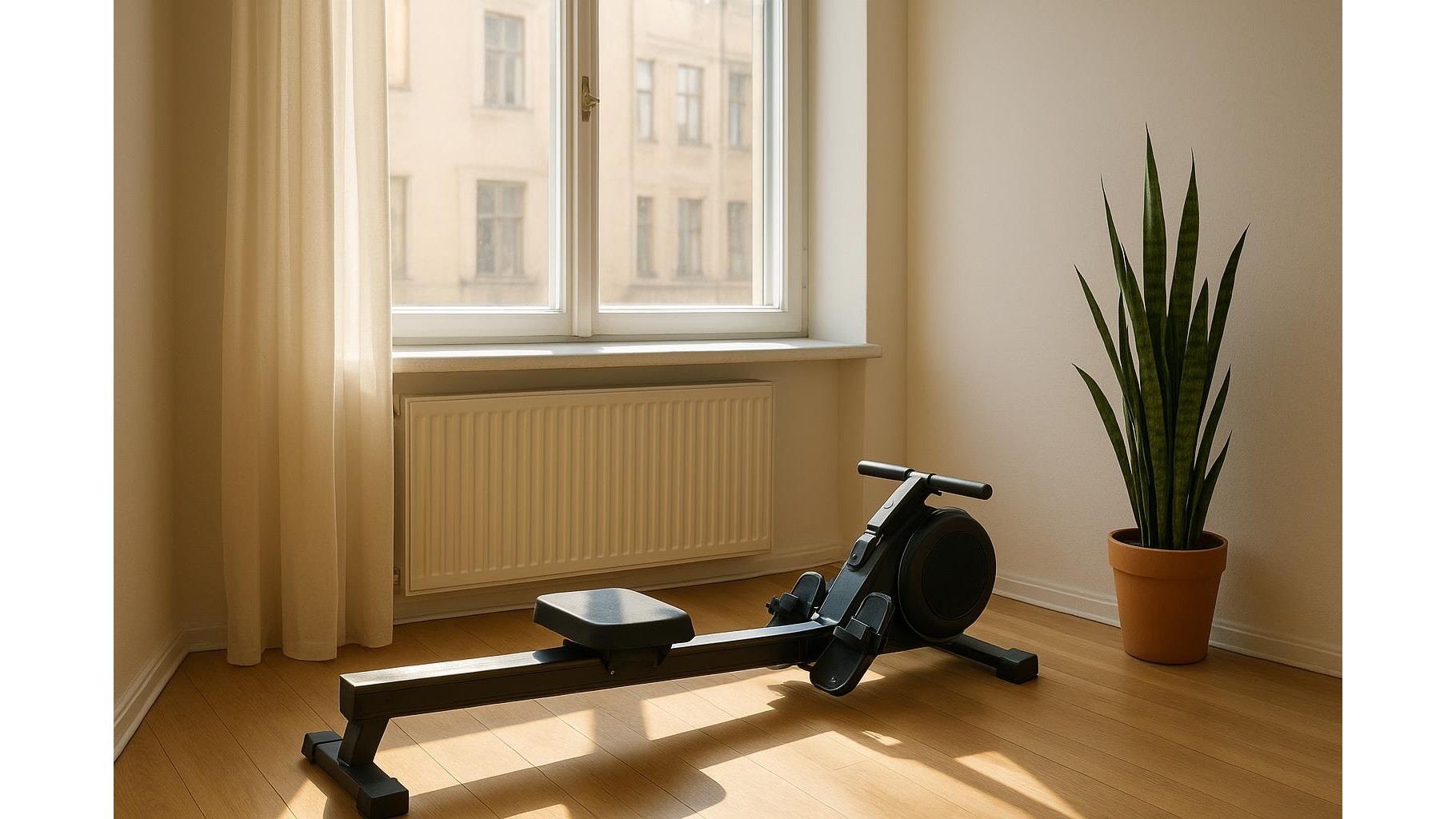
Designing a home gym under a window or beneath a sloped ceiling demands equipment that is both low-profile and genuinely quiet. Rowing machines are perfect for small apartments because they offer full-body conditioning in a narrow footprint, but not every model will slide neatly under a windowsill or tuck into a compact nook. In this guide we’ll look at how to choose a compact rowing machine with low height, smart rail length, appropriate resistance type and noise levels suited to close neighbours and shared living spaces.
Measure your under-window space and overall footprint
Before choosing any low-profile rower, measure your available space. Focus on height under the windowsill, maximum length along the wall, and the depth you can spare when the machine is in use. Because there is significant variation between brands and models, prioritise machines marketed as compact or space-saving, and carefully compare their assembled dimensions with your room measurements. Look for low rail heights and frames that do not rise far above seat level when stored, so the machine can sit unobtrusively under a window without blocking light or views. A slim frame also makes it easier to place the rower parallel to a wall or radiator in narrow apartments.
Choosing the right rail length for your height
Even on a compact rowing machine, the rail length must suit your body to prevent compromised form. Taller users (around 185 cm and above) should pay close attention to maximum user inseam or recommended height in the specifications; shorter rails might cut off the stroke and stress your knees or lower back. If you are of average or shorter height, you can often opt for very short footprint models without issue. Always check user reviews for comments from people of a similar height; if many note they cannot achieve a full extension, consider a slightly longer model. Balancing a small footprint with a safe, comfortable stroke is essential for consistent use and injury prevention.
Resistance types: magnetic, air, water or hydraulic?
For small apartments and under-window set-ups, resistance type is crucial. Magnetic rowing machines are typically the best option when you need quiet operation; the resistance is created by magnets, so there is no loud airflow or sloshing water. This makes them ideal for early-morning or late-night workouts in flats with thin walls. Air rowers deliver a more dynamic feel but are generally louder, while water rowers produce a pleasant but audible whoosh that may be noticeable in compact spaces. Hydraulic-piston rowers can be very compact and low, but their stroke often feels less natural and may heat up on longer sessions. Prioritise magnetic resistance if noise is your top concern, especially in shared homes.
Noise, vibration and floor protection in tight spaces
Even the best low-profile rower can transmit noise and vibration through floors and walls if not set up correctly. In under-window gyms, you’re often working in rooms with hard surfaces that echo sound. Choose machines with smooth belt drives and well-padded seats to minimise mechanical noise, and place the rower on a dense equipment mat to absorb vibration. This not only keeps neighbours happier but also protects hardwood or laminate floors from scratches. If possible, position the rower so that the flywheel or resistance mechanism is not pressed directly against a party wall. A compact footprint helps you rotate the machine slightly away from the wall, reducing noise transmission and creating a more comfortable training zone.
Storage options and everyday usability
In a small home gym, a folding or upright-storing rower can be the difference between a cluttered room and a clean, usable space. Some low-profile machines can be tipped vertically after use, while others feature folding rails to shorten overall length. When evaluating options, consider how heavy the machine is and whether you can realistically move it yourself; a compact design loses value if it is too cumbersome to reposition under the window after every workout. Check that the console and handles do not protrude excessively when stored, which could block a radiator or sill. A good low-profile rower will feel stable during intense intervals yet disappear almost completely when training is done.
Building an under-window home gym around a rowing machine is entirely feasible when you focus on low height, smart rail length and the right resistance technology. By prioritising quiet magnetic systems, verifying that the dimensions match your space, and planning for vibration control and easy storage, you can enjoy full-body cardio sessions without sacrificing natural light or living area. Choose a compact, low-profile rower that fits your body and your room, and you will be far more likely to row regularly and make the most of your limited home gym space.