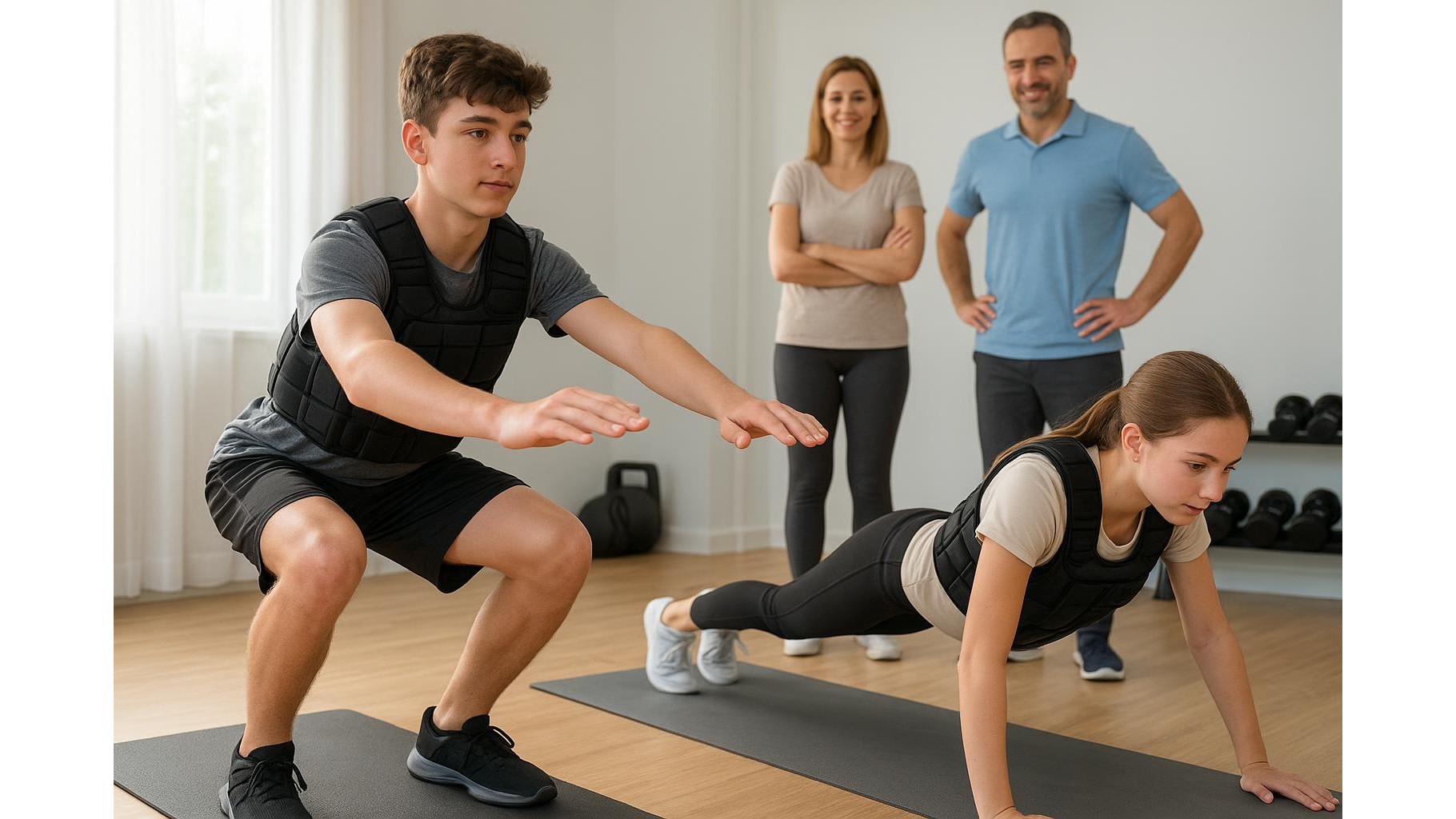
For active teenagers who love bodyweight workouts, adjustable weighted vests can be a tempting upgrade. Extra load can make squats, push-ups and jumps more challenging, building strength without buying large machines. However, teens are still growing, so choosing the right vest is crucial to protect joints, posture and long‑term development. This guide helps parents and young athletes understand what to look for in a growth-friendly weighted vest for home training.
Why weighted vests for teens need special care
Unlike adults, teenagers are still developing bones, growth plates and coordination. A weighted vest for teens must allow very gradual load increases, so the body can adapt safely. Overloading too quickly can stress knees, hips and spine, especially during jumping or running. At home, without a coach watching, it is even more important to keep weights modest and technique strict. Look for models clearly describing low entry weights (for example starting from 1–2 kg) and emphasising balanced front–back loading. Teens should be able to move naturally: if posture changes noticeably or they lean forward, the vest is too heavy.
Key safety features: fit, adjustability and comfort
Safe home workout weighted vests for teenagers must fit securely on smaller frames. Prioritise vests with wide, adjustable shoulder straps and dual chest or waist closures to stop bouncing during squats, lunges and light jumps. Padding around shoulders and neck reduces pressure on the collarbones, which can be sensitive in lean teens. Breathable materials and mesh panels also matter: teens sweat a lot, and overheating during home sessions can quickly ruin consistency. Finally, check that weight pockets are symmetrically placed on front and back, so the load stays centred over the mid‑foot instead of dragging the torso forwards.
Choosing appropriate loads for growing bodies
For most teenagers, a good rule is to keep a weighted vest load in the range of 5–10% of bodyweight for general home training. Beginners, especially under 14, should start lower and focus on perfect form. Pick a vest with many small weight increments, so you can add just 0.5–1 kg at a time. Sessions should be short and technical: bodyweight warm-up, then a few sets of controlled squats, step‑ups or push-ups with the vest, finishing with unloaded movements. If joints feel sore the next day rather than normally tired, reduce the load or frequency. Remember that teens can progress a lot just by refining technique and increasing reps without chasing big weights too quickly.
How to integrate weighted vests into teen home workouts
A weighted vest for home training should complement, not replace, basic strength and mobility work. For younger or less experienced teens, use it mainly on simple, stable exercises: goblet-style squats, stationary lunges, incline push-ups, step-ups onto a solid box or stair. Avoid high‑impact plyometrics and long running sessions with a vest until at least late teens and only if technique and strength are solid. Limit loaded sessions to two or three times per week, with at least one rest day between. Parents can help by checking that the vest is fitted tightly each time and by encouraging teens to stop if they feel unusual pressure on knees, hips or lower back.
Signs you have chosen the right model
The best adjustable weighted vest for teens will feel almost like a snug backpack: it stays close to the body, does not ride up during push-ups and does not dig into the neck. Teens should be able to raise their arms overhead, hinge at the hips and perform bodyweight movements without rubbing or chafing. After a few weeks of use at home, you should notice better control and strength, not frequent stiffness or pain. A quality vest will also be easy to clean, with removable weights and durable stitching, so it can grow with the teen through several years of training as loads slowly increase.
Used thoughtfully, weighted vests for teenagers can be a safe, effective tool to make home workouts more engaging and productive. The priority is always joint safety, gradual progression and a comfortable fit that respects a growing body. By keeping loads modest, focusing on clean movement and choosing an adjustable, well‑padded model, parents and young athletes can enjoy the benefits of added resistance without compromising healthy development.