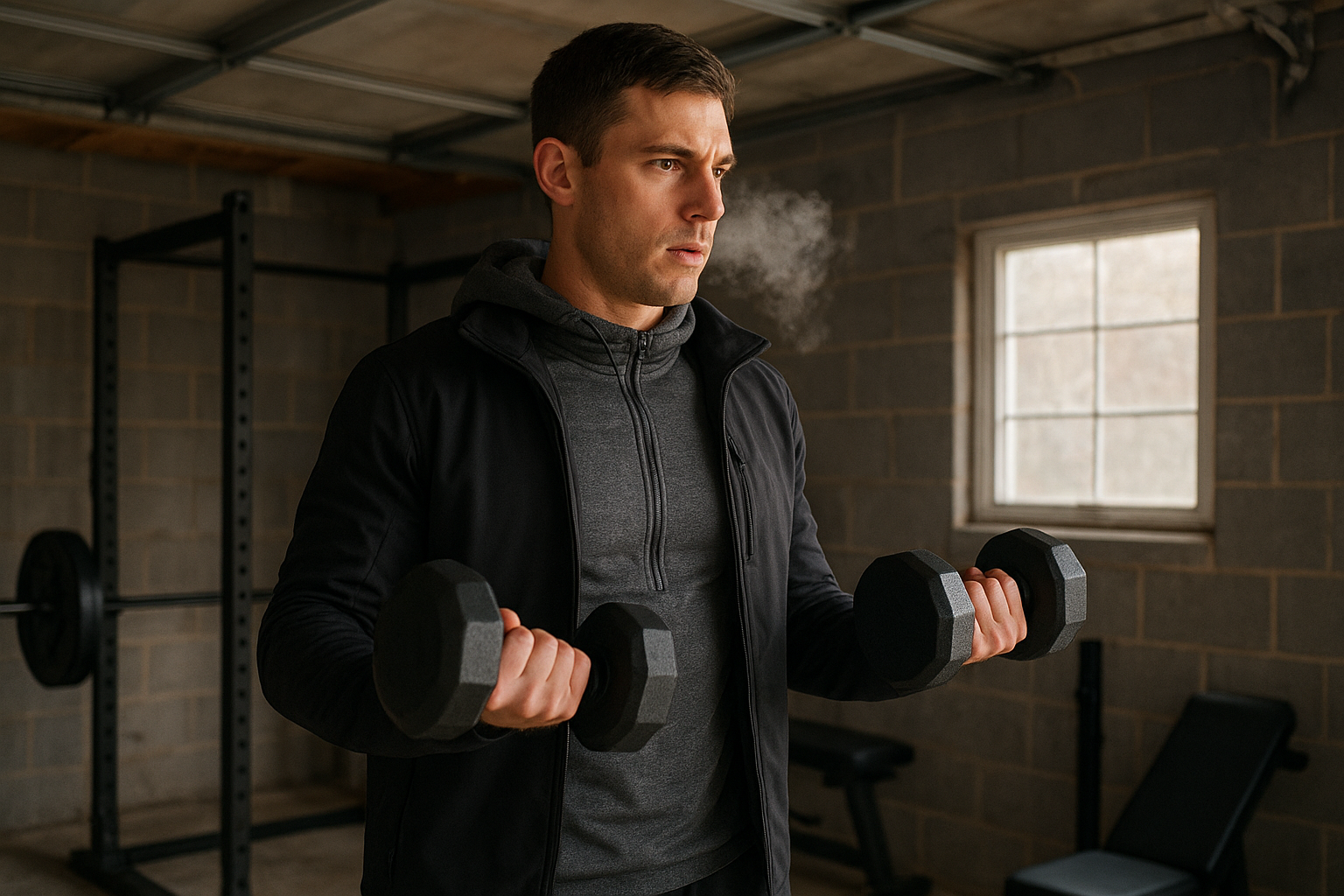
Training in a chilly garage, spare room or attic can make warm-ups miserable and cool-downs risky if you are underdressed. A smart home workout layering system lets you start warm, peel layers as your heart rate climbs, and avoid getting chilled in between sets. By combining the right base layer, mid layer and outer layer, you can build an adaptable outfit that works across seasons without overheating or soaking your clothes in sweat.
Why layering matters for home workouts
Unlike commercial gyms, a home training room is often not temperature controlled, so your body experiences bigger swings between feeling cold at the start and very hot once the session gets intense. Good layering solves this by trapping warm air close to the skin while allowing moisture to escape. Start your session with all layers on, then remove the outer and sometimes mid layer as you warm up. In rest periods or during mobility work, you can throw a layer back on before you cool down too much. This dynamic approach keeps muscles supple, reduces injury risk and makes early-morning or winter training far more comfortable.
Choosing an effective base layer
The base layer sits next to your skin and has one job: move sweat away quickly while providing a light thermal buffer. Look for technical fabrics such as polyester, nylon or blends with elastane for stretch, marketed as moisture-wicking or quick-dry. A close, second-skin fit prevents cold air pockets and chafing during squats, presses or skipping. Long-sleeve compression tops or fitted training shirts work well, as do leggings under shorts in very cold spaces. Avoid cotton, which retains moisture, becomes heavy and clammy, and will make you feel colder once you stop moving. Seam placement also matters; flatlock seams and tagless designs minimise rubbing during high-rep bodyweight or kettlebell sessions.
Smart mid layers for adaptable warmth
The mid layer adds adjustable insulation. In a home gym this is typically a lightweight sweatshirt, fleece or technical hoodie you can easily pull on or off. Prioritise breathable fabrics rather than chunky cotton; smooth-face fleece or performance knits trap warmth but still allow excess heat to escape. A half-zip or full-zip design is ideal because you can vent heat by opening the zip between sets without fully removing the garment. Aim for a regular, not baggy, fit so fabric does not catch on dumbbells, barbells or cable attachments. Thumbholes can help keep wrists warm during pulling movements, and raglan sleeves improve overhead mobility for presses and snatches.
Outer layers for cold garages and patios
When your training space is truly cold or drafty, an outer layer becomes essential, especially during your first 10–15 minutes of warm-up. Lightweight softshell jackets or insulated gilets designed for running or training are perfect: they block wind, add core warmth and still breathe. Look for synthetic insulation rather than bulky down, which can overheat quickly once you start doing circuits. Features like a two-way zip, drop tail hem and elasticated cuffs help seal in warmth without restricting your squat depth or bench setup. Because this layer will come off once you are hot, choose something you can easily hang on a rack or hook without taking up floor space, and avoid noisy fabrics that distract when skipping or lifting.
Managing heat, sweat and comfort through the session
A good home workout layering system is not static; it changes as your body temperature rises and falls. Begin your session with all three layers, then shed the outer layer once your warm-up is done and your breathing rate climbs. As you move into heavy strength work or conditioning, you may train in just your base layer, relying on its moisture management to stay comfortable. During longer rest periods, mobility blocks or core work on the floor, put your mid layer back on to avoid getting chilled in sweaty clothes. Pay attention to small comfort details: swap into dry socks if your feet get cold on hard floors, and keep a light beanie nearby for very cold spaces, as you lose plenty of heat through your head when resting.
Dialling in your home workout layering system makes training in a non–temperature controlled room far more enjoyable and sustainable. By pairing a wicking base layer with a breathable mid layer and a removable outer layer, you can start warm, push hard without overheating and finish your session without shivering through cooldown stretches. Experiment with different fabrics and fits across seasons, then keep your favourite pieces ready in your gym space so getting dressed for a productive, comfortable workout becomes automatic.