Hybrid cardio circuits are a smart way to turn your living room into a mini studio, mixing step work, exercise bike intervals and bodyweight drills into one smooth session. When programmed well, they boost endurance and fat loss while staying joint friendly and manageable around a busy schedule. The key is balancing intensity, volume and recovery so you avoid overtraining and keep progressing week after week.
Why hybrid cardio circuits work at home
Combining multiple home cardio tools in a single workout gives you several advantages: you can keep your heart rate elevated without pounding your joints, you reduce boredom by rotating stations, and you can scale each block to your current fitness level. Alternating a simple step platform, a stationary bike and low‑impact bodyweight exercises lets you target both the aerobic base and higher intensity bursts. This variety is particularly useful for home athletes who want better conditioning and fat loss but need to protect their knees, hips and lower back.
Choosing the right step and bike for circuits
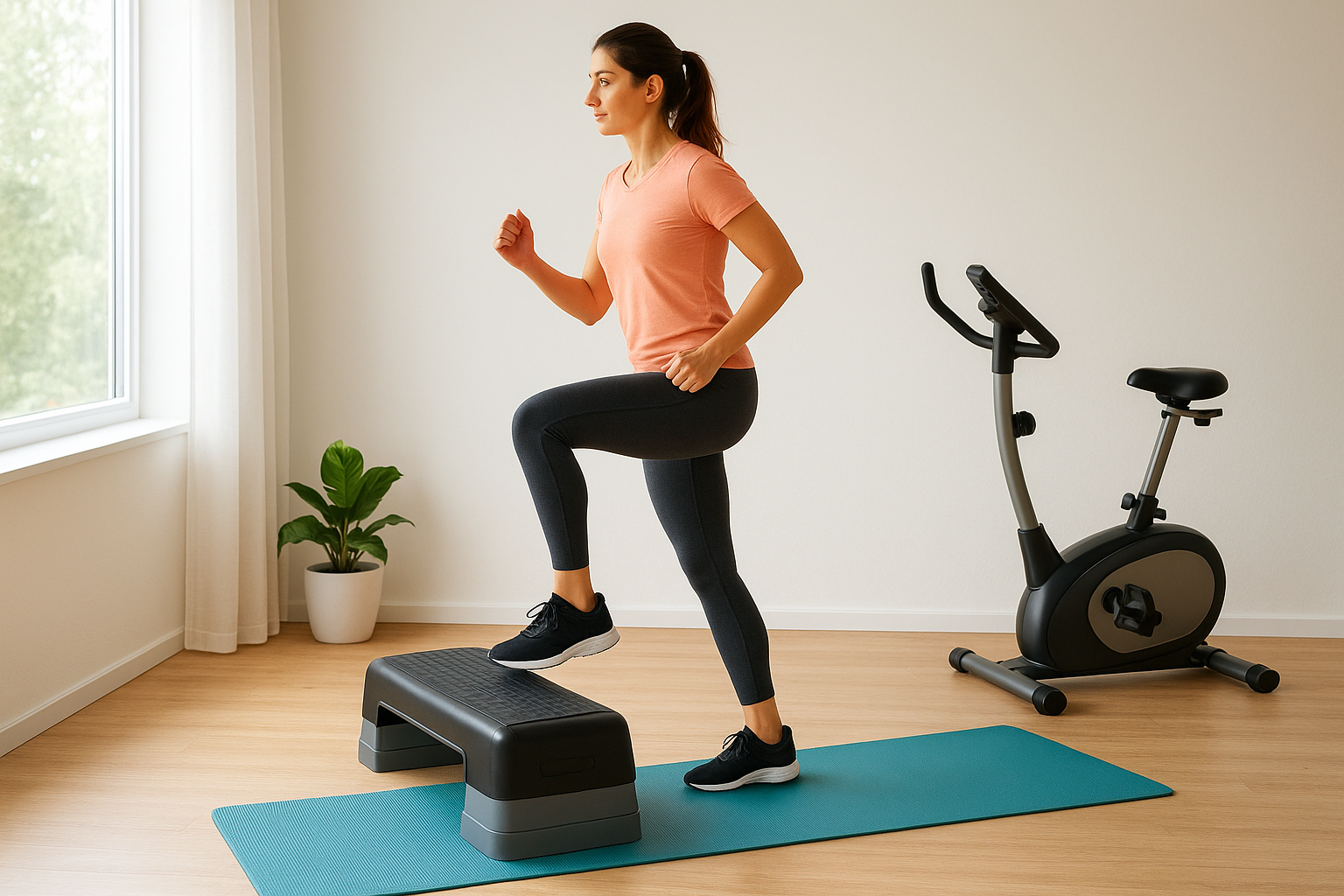
When you build hybrid circuits, equipment choice matters. A stable, non‑slip aerobic step with adjustable height is ideal so you can fine‑tune impact and intensity; look for a wide deck, grippy surface and solid risers rated for more than your bodyweight. For the exercise bike, a compact magnetic or upright model with smooth resistance changes and a comfortable saddle works best in circuits, because you can quickly shift from easy pedalling to short sprints. Prioritise quiet operation, simple controls and a clear display of time and cadence so you can stay focused on intervals rather than fighting your kit.
Programming intensity to avoid overtraining
To stay clear of overtraining, think in terms of weekly load rather than just one hard workout. For most home athletes, three hybrid cardio circuit sessions per week are enough, with at least one full rest or light mobility day in between. Inside each session, structure the work so that only one or two blocks are truly high intensity, keeping the rest at an easy‑to‑moderate pace where you can still talk in short sentences. Use a perceived exertion scale from 1 to 10: aim for 6–7/10 on most circuits, touching 8/10 briefly on bike sprints or faster step segments, and drop back to 4–5/10 for recovery periods.
Example joint‑friendly hybrid cardio session
Here is a sample 30–35 minute joint‑friendly hybrid circuit you can do at home. Warm up for 5 minutes with easy pedalling on the bike and gentle step‑ups. Then complete 4 rounds of: 2 minutes brisk but controlled stepping on a low to medium height step; 2 minutes moderate cycling; and 1 minute of low‑impact bodyweight moves such as incline push‑ups on a countertop, standing knee lifts or glute bridges on a mat. Rest 60–90 seconds between rounds. Finish with 5 minutes of light cycling and stretching for hips, calves and chest. Adjust step height, bike resistance and tempo rather than adding more rounds when you want progression.
Progressions, variations and safety tips
As your fitness improves, progress by tweaking one variable at a time: slightly raise the step, add a little bike resistance, or shorten rest periods, but avoid increasing everything in the same week. You can also rotate in other low‑impact drills like side steps on the platform, slow mountain climbers with hands on the step, or seated cadence sprints on the bike. Always prioritise smooth technique over speed, keep your torso tall on the step, and maintain a gentle bend in the knees to respect your joints. If your resting fatigue, soreness or sleep worsen over several days, scale back a session or two to keep your hybrid routine sustainable.
With the right planning, hybrid cardio circuits at home can deliver impressive gains in endurance and fat loss without grinding your joints or burning you out. By pairing a simple step, a reliable exercise bike and controlled bodyweight movements, you create a flexible training framework that fits almost any schedule. Start modestly, build consistency, and adjust intensity week by week: you will stay clear of overtraining and turn your home space into a powerful, long‑term conditioning hub.