Designing a compact home gym isn’t just about choosing a barbell and bench; it’s about managing space and keeping your training area safe. A smart plate storage system ensures your weight plates are always accessible, organised and out of the way, preventing trip hazards and protecting your equipment. In this guide we’ll look at how to combine plate trees, wall racks and storage carts to create a tidy, efficient home gym layout.
Plan your layout before buying plate storage
Before you start adding racks and holders, map out your training area. Identify where you lift most often – near the power rack, by the bench press, or in an open space for deadlifts. Your weight plate storage should sit close to these “work zones” so you minimise walking with heavy plates. Leave clear walkways at least shoulder-width wide and avoid placing storage directly behind benches or in doorways. Think vertically too: wall space can handle wall-mounted plate racks, leaving floor real estate free for platforms and machines. A simple sketch of your room with measurements will help you choose the right combination of floor and wall storage.
Use plate trees as your central storage hub
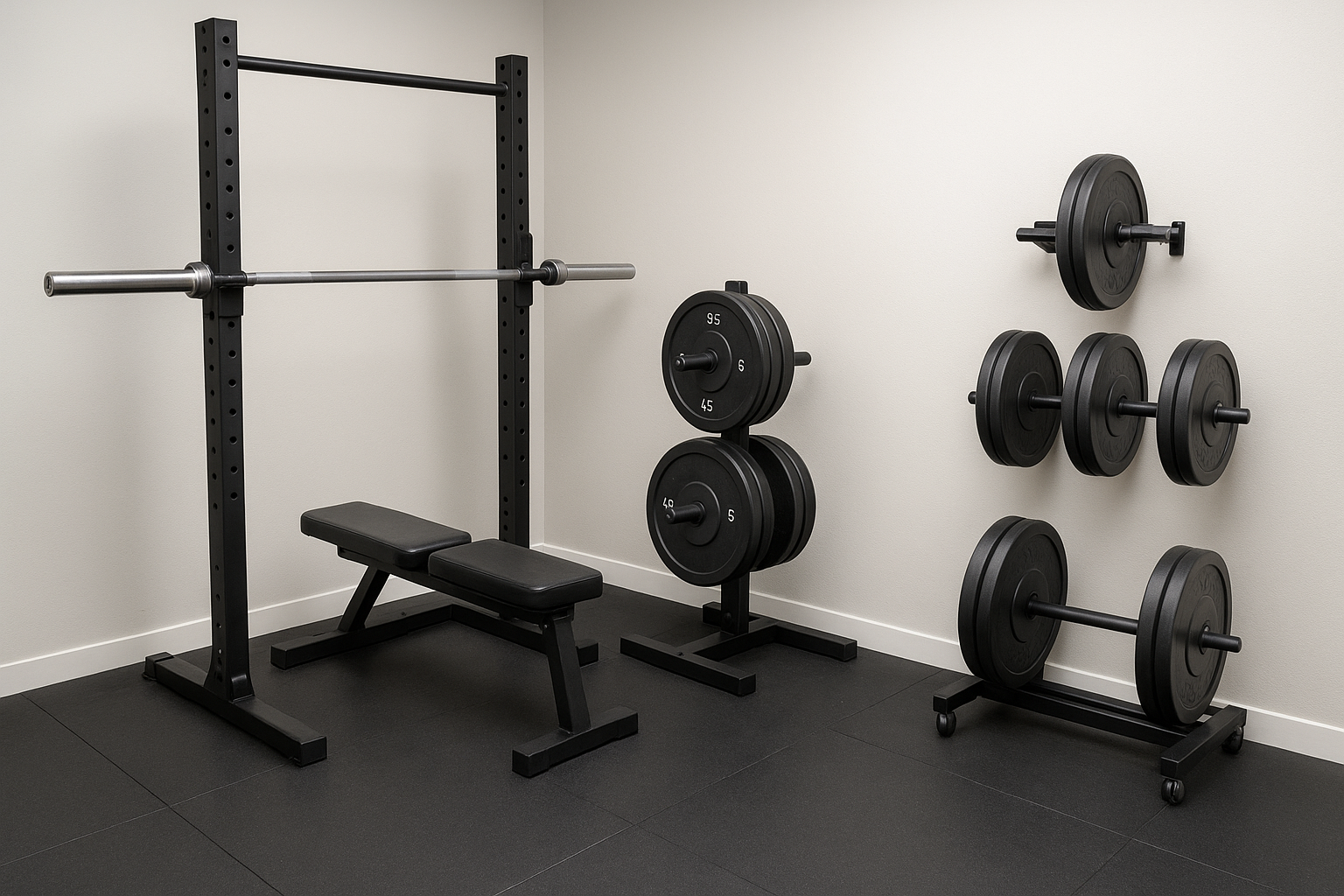
A sturdy plate tree is ideal as the main hub for storing Olympic plates in a home gym. Look for a model with a wide base, thick gauge steel and evenly spaced posts so you can separate 20 kg, 15 kg, 10 kg and smaller plates without overcrowding. Many plate trees also include vertical barbell holders, which is a great way to keep bars upright and off the floor. Place your plate tree near your rack or squat station so loading is quick and intuitive. Heavier plates should sit on the lower posts for stability, with lighter change plates higher up. A central tree makes it clear where plates “live”, cutting down on clutter and making post-workout tidy-up almost automatic.
Add wall-mounted racks to free up floor space
If you’re training in a tight garage or spare room, a wall-mounted plate rack is one of the most space-efficient solutions. These racks anchor directly into solid brick or stud walls and hold plates on horizontal pegs, keeping them flush to the wall. This not only frees up floor space for platforms or cardio kit, it also reduces the chances of plates being kicked or rolled under equipment. When installing, make sure you hit solid studs or masonry and follow the manufacturer’s anchoring instructions. Mount the rack at a height where you can comfortably rack and unrack your heaviest plates without bending or reaching dangerously overhead. Wall racks also work well for fractional plates and specialty discs that might otherwise get lost.
Use storage carts and dollies for flexible training zones
For lifters who rearrange their setup often or share the space with cars or household storage, a weight plate storage cart on wheels offers valuable flexibility. These low-profile carts or vertical rolling trees let you move a full set of plates between your squat rack, deadlift platform and cable station without multiple trips. Choose a cart with robust casters rated for heavy loads and a locking mechanism so it stays put while you train. Flat carts suit bumper plates particularly well, while vertical wheeled trees are better if you need to save floor space. Rolling storage is also helpful if you train outdoors on good days and roll everything back into a shed or garage afterwards.
Prioritise safety, accessibility and plate organisation
Whatever combination of storage you choose, build your system around safety and accessibility. Avoid stacking plates on the floor or leaning them against walls, as this creates trip hazards and can damage both plates and flooring. Keep the weights you use most often between knee and chest height so you are not constantly bending or twisting under load. Group plates by size and type – for example, all bumpers on one rack, all iron plates on another – and always return plates to the same spot. This way, you can quickly see what’s available and avoid hunting around mid-workout. Consider adding a small dedicated area for collars, change plates and specialty discs so nothing ends up scattered around the room.
Combining solutions for a tidy, long-term setup
The most effective home gym plate storage system usually combines several solutions: a central plate tree near your rack, wall-mounted racks to reclaim floor space, and a mobile storage cart if you need flexibility. By planning your layout, anchoring equipment correctly and keeping safety and organisation front of mind, you’ll create a training space that feels professional, runs efficiently and stays clutter-free. Investing in smart plate storage not only protects your equipment and flooring, it also makes every workout smoother and more enjoyable – and that’s what turns a basic home gym into a space you genuinely look forward to using.