If you train at home, it is tempting to skip your warm-up and jump straight into heavy swings, presses and squats. But taking just 15 minutes for a focused kettlebell mobility warm-up can transform your session: you will move better, feel stronger and massively cut down your risk of tweaks in the hips, shoulders and lower back. This simple, equipment-light routine uses one kettlebell and your own bodyweight to prime every major joint before you go heavy.
Why kettlebell mobility before heavy lifting matters
Most home lifters sit all day, then expect their bodies to instantly handle heavy hip hinges, overhead presses and squats. Tight hip flexors, stiff thoracic spine and cranky shoulders are a recipe for poor form and nagging injuries. A targeted kettlebell warm-up increases blood flow, wakes up stabilising muscles and opens the range of motion you actually need for strong reps. Instead of random stretches, this 15‑minute sequence uses dynamic patterns — swings, halos, windmills and flows — to mimic the movements of your main lifts while keeping intensity low. The result: joints feel lubricated, the nervous system is ready to fire and technique feels automatic when the weight gets heavy.
Essential kit: choosing the right home kettlebell
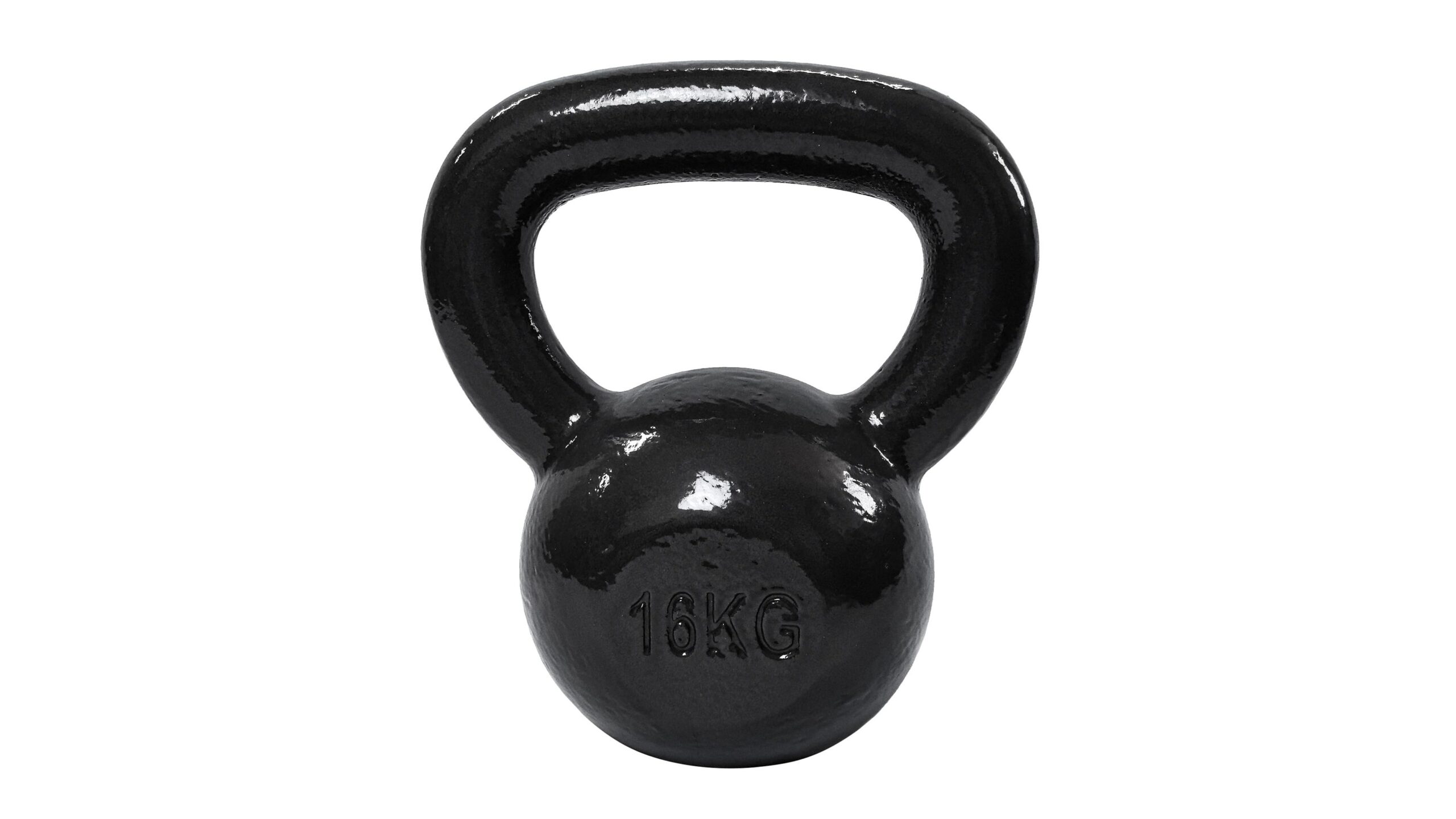
To get the most from a mobility warm-up, you want a kettlebell that is light enough to move smoothly but heavy enough to give feedback. For most lifters, that means roughly 6–12 kg, depending on experience and bodyweight. Look for a solid cast-iron bell with a smooth, wide handle you can grip with two hands, and a flat base so it will not wobble during windmills or loaded stretches. While you can improvise with dumbbells, the offset mass of a kettlebell makes rotations, halos and swings feel more natural and shoulder-friendly. If you train on a hard floor, consider adding a simple exercise mat to protect your joints and keep your bell from skidding during dynamic flows.
5-minute joint prep and kettlebell halos
Start with 2–3 minutes of full‑body joint prep: slow neck turns, big shoulder circles, and gentle hip circles. Move into bodyweight cat‑cow flows and deep squat pries, sitting into a squat while holding your toes and pushing your knees out with your elbows. Once you feel warmer, grab your kettlebell by the horns and perform kettlebell halos. Stand tall, brace your core and slowly circle the bell around your head, keeping elbows tucked and ribcage down. Aim for 3 sets of 6–8 halos each direction. This pattern opens the shoulders, warms the rotator cuff and teaches you to stabilise your neck and upper back — vital before any overhead or front‑rack work.
7 minutes of swings, hinges and hip‑opening flows
Next, focus on unlocking the hips and engaging the posterior chain. Begin with 2–3 sets of light kettlebell swings for 10–15 reps, thinking of them as powerful but controlled hip hinges, not a cardio sprint. Between sets, drop into deep, supported split‑stance hip flexor stretches, gently shifting the pelvis under and squeezing the glute. Follow with 2–3 sets of kettlebell deadlifts or Romanian deadlifts, using a slow eccentric to groove your hinge pattern. To blend mobility and strength, finish this block with a simple flow: 1 deadlift, 1 swing, then park the bell, step into a long lunge and rotate the torso over the front leg. This combination opens hamstrings, hip flexors and glutes while reinforcing a solid hinge.
Windmills, core stability and shoulder control
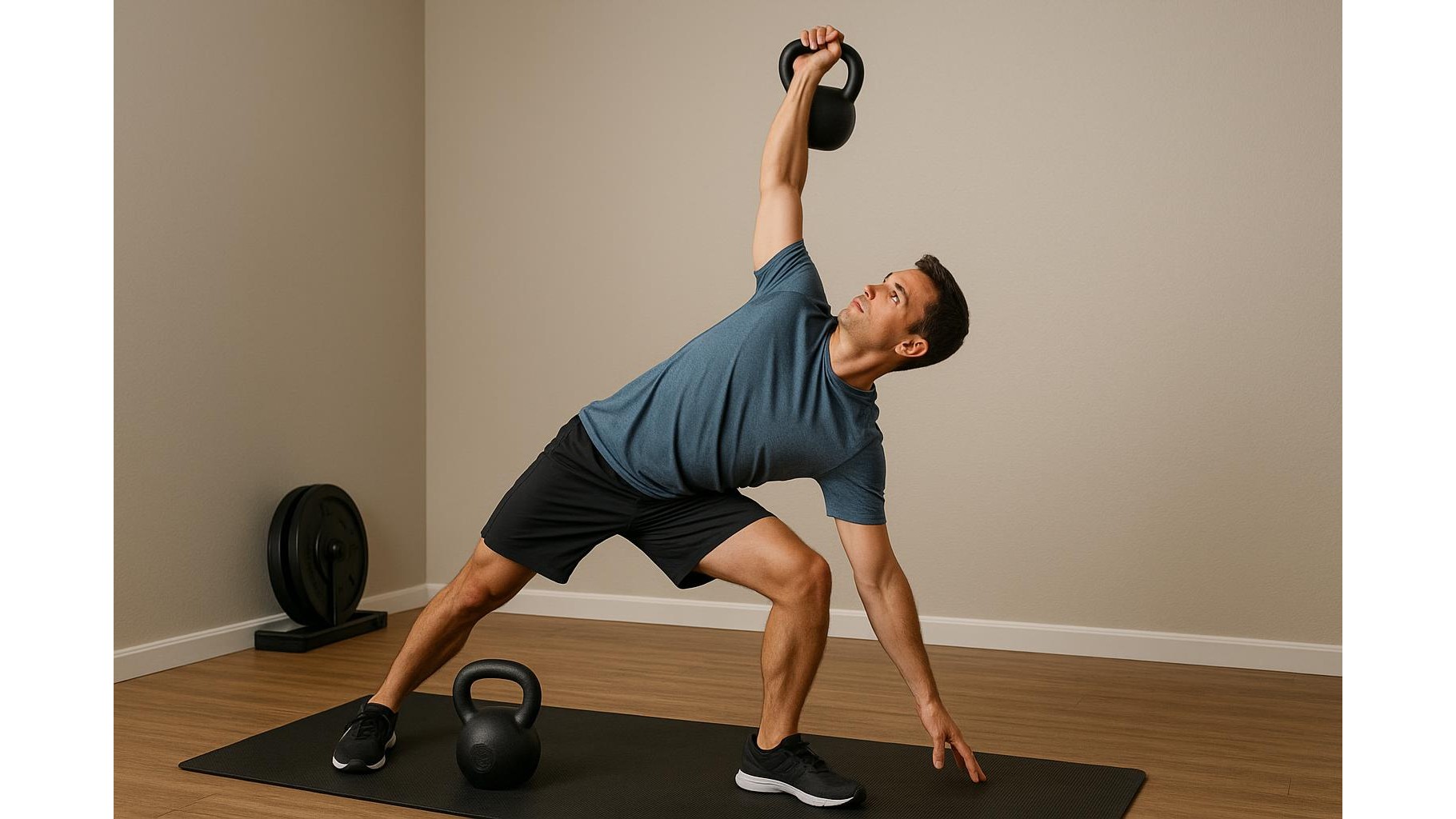
The final focus is integrating shoulders and core with the hips. Start with light kettlebell windmills: press the bell overhead on one side, lock the elbow and pack the shoulder down. With feet at about 45 degrees, slide your free hand down your front leg as you hinge at the hip, keeping your eyes on the bell. Perform 3 sets of 5 reps per side, moving deliberately. Windmills build lateral hip mobility, oblique strength and overhead stability all at once. Finish with a slow Turkish get‑up pattern without standing fully: roll to elbow, then to hand, bridge the hips and reverse. Even at low load, this teaches your body to link shoulder stability, core tension and hip drive — exactly what you need before serious pressing or squatting.
Putting it all together in 15 minutes
To structure this 15-minute kettlebell mobility warm-up, keep it simple: 3–4 minutes of joint prep and halos, 7–8 minutes of swings, hinges and hip‑opening flows, then 3–4 minutes of windmills and partial Turkish get‑ups. Move continuously but never rush; the goal is fluid control, not exhaustion. Over time, you will notice smoother squats, stronger hip drive and more confident overhead positions, all while feeling fewer twinges in your lower back and shoulders. Make this routine a non‑negotiable start to your home sessions and you will unlock more strength from every heavy set you do.