Starting a cardio routine at home can be intimidating if you are a beginner or have sensitive knees, hips or back. A recumbent exercise bike is one of the most joint-friendly ways to build endurance, burn calories and improve heart health without leaving your living room. With the right interval structure, you can get more results in less time, while staying comfortable and safe.
Why choose recumbent bike intervals at home
Unlike upright bikes or treadmills, a recumbent bike supports your back with a wide seat and a reclined position, reducing stress on knees and spine. This makes it ideal for beginners, people returning from a break or anyone who needs low-impact cardio. At home, you control the environment: no gym crowds, no waiting for machines, and you can train in short, focused interval sessions. Intervals alternate between easier and slightly harder efforts, which improves cardiovascular fitness faster than staying at one constant pace. You can start with very gentle progressions and gradually build confidence and stamina over a few weeks.
How to set up your recumbent bike and posture
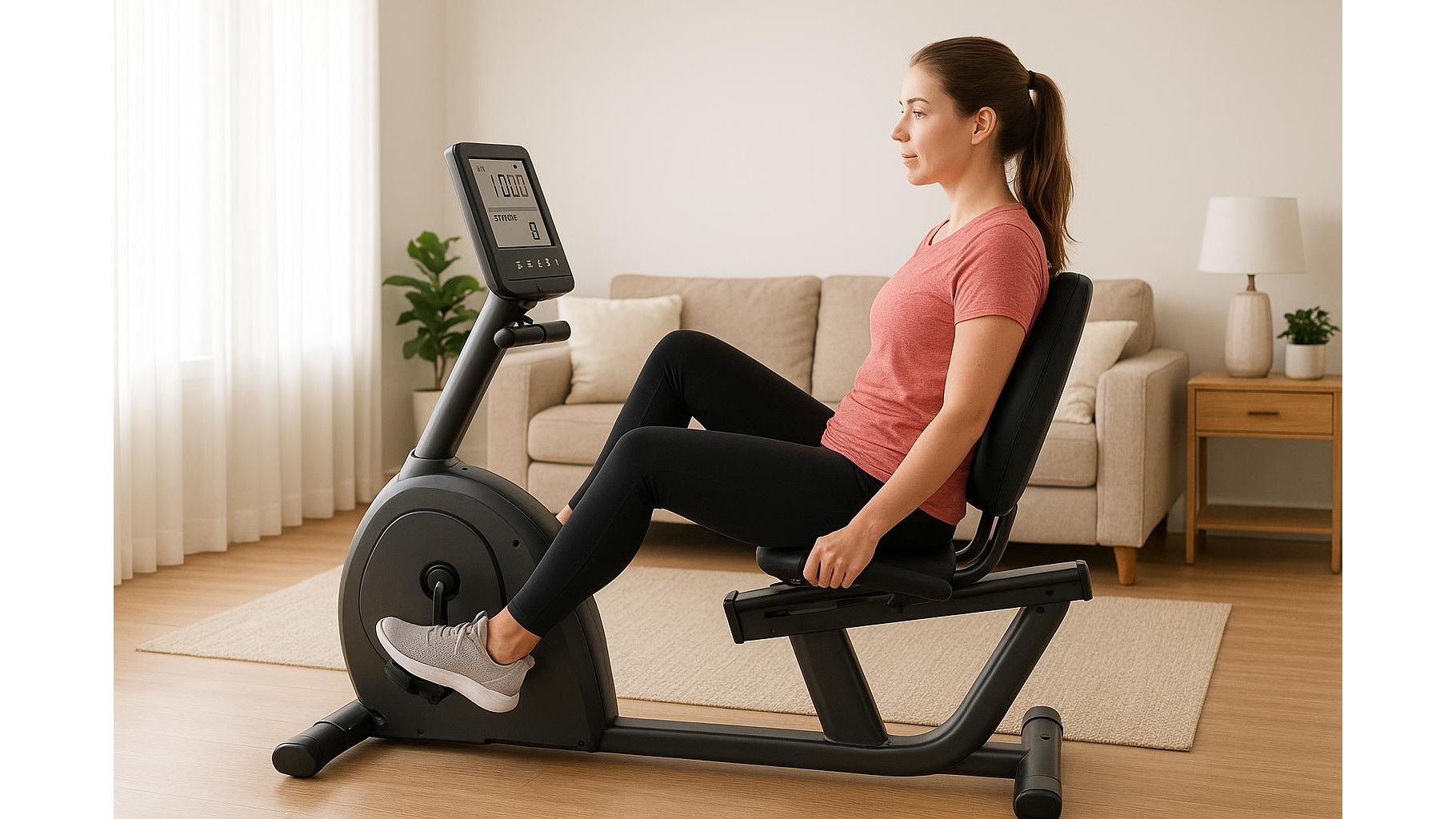
For joint-friendly training, correct bike setup and posture are essential. Sit with your back fully supported by the backrest and adjust the seat so that when one pedal is furthest away, your knee is slightly bent (never locked). Keep your feet flat on the pedals with the strap snug to avoid slipping. Hold the side handles lightly or rest your hands on your thighs to stay relaxed. Aim to keep your chest open and shoulders down, avoiding hunching forward. Start with a low resistance level that lets you talk in full sentences, then use the console to track time, cadence and heart rate if available. This comfortable baseline will be your “easy” interval intensity.
Beginner-friendly interval structures you can follow
Begin with a simple 20-minute workout. After a 5-minute easy warm-up, alternate 1 minute of slightly faster pedalling with 2 minutes very easy, for 5–6 rounds, then finish with a 3–4 minute cooldown. Keep the hard intervals at a level where you are working but not gasping; use a 1–10 effort scale and stay around 6–7 during the work bouts and 3–4 for recovery. As you progress, extend to 25–30 minutes by increasing the number of rounds or making the work intervals 90 seconds while keeping the recovery generous. The key for joint-friendly intervals is smooth pedalling and gradual changes in resistance rather than sudden, maximal sprints.
Weekly schedule and realistic progression for beginners
A sustainable plan for a new rider is 3 sessions per week on non-consecutive days. In week 1–2, focus on consistency: do 15–20 minute sessions with very gentle intervals and pay attention to how your joints feel afterwards and the next morning. In week 3–4, you can add a fourth session or slightly increase total time by 5 minutes. From there, progress by changing only one variable at a time: either add one extra interval round, slightly raise resistance on the work segments, or add 2–3 minutes to your total duration. Keep at least one day per week as complete rest or light walking, so your muscles and connective tissues adapt to the new cardio load without overload.
Safety tips and listening to your body
Even with a joint-friendly setup, you still need to respect your body’s limits. Stay hydrated, and never skip the warm-up and cooldown, which should feel easy and comfortable. If you notice sharp pain in knees, hips or back, reduce resistance, shorten the intervals or stop the session and reassess your bike position. Focus on smooth, circular pedalling, not mashing the pedals. Breathing should be steady: during harder bouts you should feel winded but still able to say a short sentence. Over time, track small wins such as lower resting heart rate, easier breathing on stairs or being able to add a minute or two to your workout. These are signs your home recumbent interval plan is working.
By structuring simple, low-impact interval sessions on your home recumbent bike, you can build a strong fitness foundation without punishing your joints. Start conservatively, focus on posture and smooth effort changes, and increase only one element at a time—duration, intensity or frequency. In a few weeks, you will likely feel more energetic, more confident and better equipped to keep progressing with your joint-friendly cardio routine at home.