Setting up your home exercise bike correctly is one of the simplest ways to ride stronger and stay pain‑free. Yet many riders hop on, spin the knobs a bit and never adjust anything again—until their knees, hips or lower back start to complain. A few careful tweaks to saddle height, fore–aft position and handlebar reach can transform your comfort, protect your joints and make every indoor session more effective.
Why proper bike fit matters on an exercise bike
A good indoor bike fit does two things: it maximises comfort and protects your joints while helping you produce more power with less effort. If the saddle is too high, you may rock your hips and strain your hamstrings and lower back. If it is too low, your knees and quads take a beating and you lose power. Poor handlebar reach can overload your shoulders, neck and wrists. Even on simple home spin bikes, getting your position roughly right—rather than perfectly “pro”—is enough to reduce aches, improve pedalling efficiency and help you enjoy longer, more consistent workouts.
How to set your saddle height at home
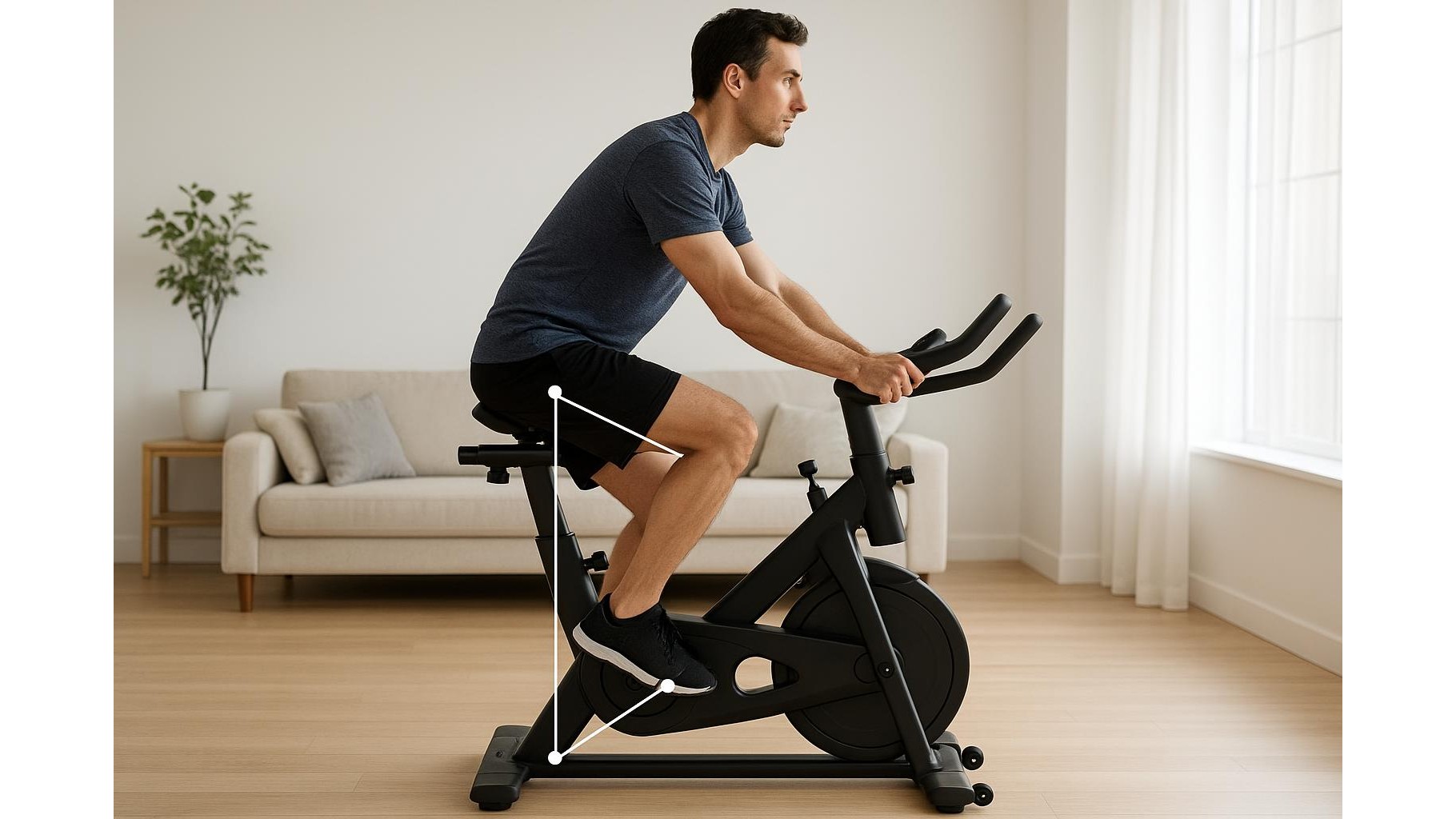
Start by standing next to your bike and raising the saddle height so the top is roughly level with your hip bone. Then clip in or place your feet on the pedals and sit on the saddle. With the crank in the 6 o’clock position and your heel on the pedal, your knee should be almost straight without your hips rocking. When you move your foot so the ball sits over the pedal axle, you should have a soft bend of about 25–35 degrees at the knee. If your knee is very bent at the bottom of the stroke, increase saddle height a little; if you are reaching and your heel struggles to stay on the pedal, lower it. Make adjustments in small increments until your legs spin smoothly with no hip rock.
Dialling in fore–aft saddle position to protect your knees
Once height is set, adjust the fore–aft saddle position. Sit on the bike with the cranks horizontal (3 and 9 o’clock). Drop a plumb line (or hang a small weight from a shoelace) from the front of your kneecap on the forward leg. Ideally, the line should fall close to the centre of the pedal axle. If it falls in front, slide the saddle slightly back; if it falls behind, move the saddle a little forward. This “knee over pedal spindle” check helps balance the load between the front and back of the leg, reducing stress on the knee joint and making it easier to push comfortably at higher resistance.
Finding a comfortable handlebar reach and height
Handlebar reach affects your back, shoulders and hands. From your correct saddle position, place your hands on the tops of the bars. Your shoulders should feel relaxed, with a slight bend in your elbows and no need to shrug or over‑reach. If you feel cramped, try moving the saddle slightly back (if your knee check still passes) or, on bikes with adjustable stems, lengthen the reach. If your lower back or neck feels strained, shorten the reach or raise the bars. Many home riders benefit from bars set a little higher than on outdoor road bikes, especially if they have tight hamstrings or any history of back pain. Aim for a position where you can maintain a light grip without numbing hands.
Simple on‑bike checks during longer sessions
As you ride your next few indoor cycling workouts, perform quick comfort audits. After 10–15 minutes, ask yourself: Are my knees tracking straight, or collapsing inwards or outwards? Do my hips feel stable, or am I rocking side to side? Is there any concentrated pressure in the front of the knee, low back or neck? Small issues early in the ride often become big discomforts later. If your knees hurt at the front, lower the saddle slightly or move it back a touch. If your hamstrings or back feel tight, try a minor saddle drop or raising the bars. Take brief standing breaks, stretch your hip flexors and hamstrings regularly, and continue to fine‑tune your exercise bike fit over several sessions until it feels natural.
Once your home exercise bike is properly set up, riding becomes far more enjoyable and sustainable. A few minutes spent adjusting saddle height, fore–aft position and handlebar reach pays off in stronger, smoother pedal strokes and fewer aches in your knees, hips and back. Revisit your settings every few weeks, especially if multiple people share the bike or your flexibility and strength change with training. With a comfortable, joint‑friendly position, your indoor rides can truly support your long‑term fitness instead of undermining it.