If your forearms burn after long days of typing and heavy lifting, you are not alone. Home athletes who also work at a desk often overload the same tissues with thousands of keystrokes and repeated grips. The good news: you do not need a clinic or fancy tools to feel better. With a spare wall, your bathroom sink, a towel and a few minutes of focused mobility and recovery, you can ease tension, restore range of motion and keep training consistently.
Understand why your forearms are so tired
Forearm discomfort from keyboard work and strength training usually comes from a mix of muscle fatigue, tight tendons and irritated tissues around the wrist and elbow. Long periods of gripping a mouse, hammer curls, pull-ups and barbell work all load the same flexor and extensor muscles. Over time, they become stiff and lose their ability to glide smoothly. Before you attack the pain with aggressive stretches, accept that recovery is about gentle, repetitive inputs: light stretching, short bouts of self-massage and smart warm–cold water exposure. Your aim is to lower tension and improve blood flow, not to “smash” the tissue into submission.
Wall-based stretches to open the forearms
A wall is a perfect at-home tool to lengthen overworked forearm flexors and extensors. Start with a gentle palm-on-wall stretch: stand an arm’s length from the wall, place your palm flat with fingers pointing down, elbow straight but not locked. Slowly rotate your biceps outward until you feel a mild stretch through the inside of the forearm. Breathe deeply for 20–30 seconds and repeat 2–3 times per side. Then flip the hand so the back of your hand touches the wall with fingers pointing up, targeting the extensors used during typing and deadlifts. Keep intensity at 3–4 out of 10; if you feel sharp pain, back off. These low-intensity, frequent wall stretches are ideal between work calls and in your warm-up or cool-down to maintain healthy tissue length.
Sink routine: warm–cold water relief for wrists and forearms
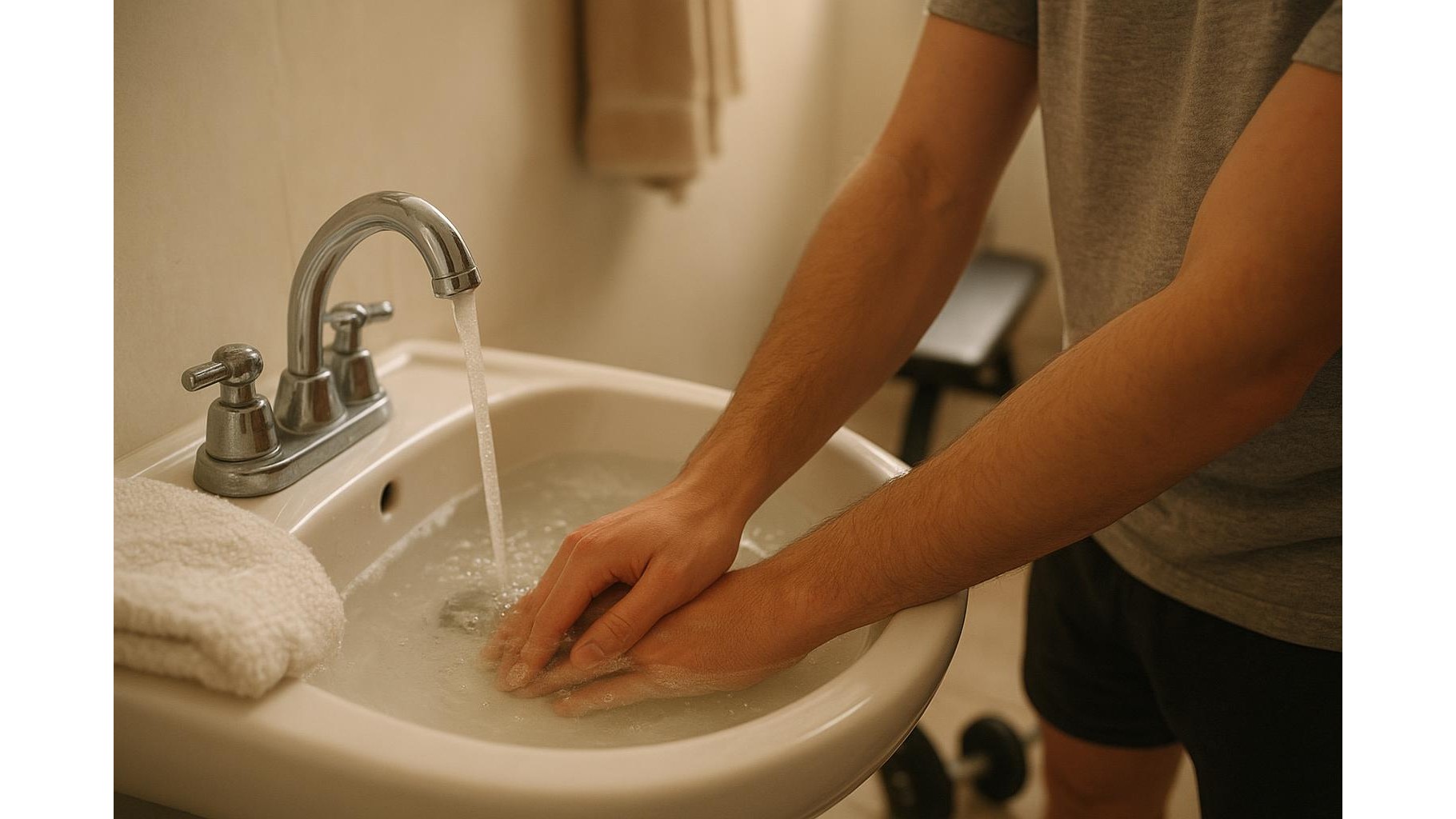
Your sink can act as a compact contrast bath station to calm down tight forearms. Begin with warm water: fill the sink and submerge your hands and lower forearms for 3–5 minutes, gently opening and closing your fists to pump blood through the tissues. The warmth helps muscles relax before stretching or training. Then, for a simple cold exposure, switch to cool (not icy) water for 1–2 minutes to reduce lingering ache after a heavy lifting session or long computer day. Cycle warm for 3 minutes and cool for 1 minute up to 3 times, finishing on warm in the evening to promote relaxation. Always monitor your skin: if numbness or excessive redness appears, stop. This warm–cold sink routine pairs perfectly with wall stretches to support daily recovery.
Towel-based stretching and light self-massage
A regular towel becomes a versatile home recovery tool for your wrists and forearms. For a traction-style stretch, roll the towel lengthwise, grip each end and place the middle under your palm. Gently pull the ends upward while you press the palm down onto a table, feeling a stretch along the underside of the forearm. Hold 20–30 seconds and repeat. You can also use the rolled towel for self-massage: place it on a desk, rest your forearm on top and slowly roll your arm back and forth, searching for tight bands. Apply only light pressure, especially near the elbow and wrist tendons. This is not deep tissue work; think of it as a way to increase awareness and circulation. Done for a few minutes daily, towel stretches and massage reduce stiffness from both high-volume typing and pulling exercises.
Daily routine and training adjustments at home
Recovery is most effective when it is built into your daily home routine. Between email blocks, stand up, shake out your hands and do 1–2 quick wall stretches. After lifting sessions that challenge your grip—like rows, pull-ups or farmer’s carries—run a short sink contrast cycle and a minute of towel massage. On heavy training days, temporarily reduce bar thickness and strap volume if your forearms are extremely fatigued, and alternate grip-intensive moves with lower-demand exercises. At the desk, adjust keyboard height so your wrists are neutral, not constantly extended. Over a week, these small changes compound, lowering perceived tension and helping you avoid chronic overuse issues while keeping your home gym sessions productive.
By combining simple wall stretches, a practical sink warm–cold routine and towel-based self-massage, you can manage tired forearms without special equipment. Consistency beats intensity: a few minutes sprinkled through your day supports healthier muscles and tendons than one long, painful stretch session. If pain persists or worsens, consult a healthcare professional, but for everyday tightness from typing and lifting, this accessible at-home recovery plan will help you protect your grip, maintain training volume and feel more comfortable at your desk.