Training at home on tiles, parquet or rubber mats puts your feet in direct contact with hard, sometimes slippery surfaces. The right combination of home training socks, minimalist shoes and indoor trainers can improve grip, cushioning and hygiene, protecting joints and helping you lift and move with more confidence. In this guide we explain how to choose footwear for different home surfaces and training styles, and how to use them safely.
Grip socks for tiles and slippery floors
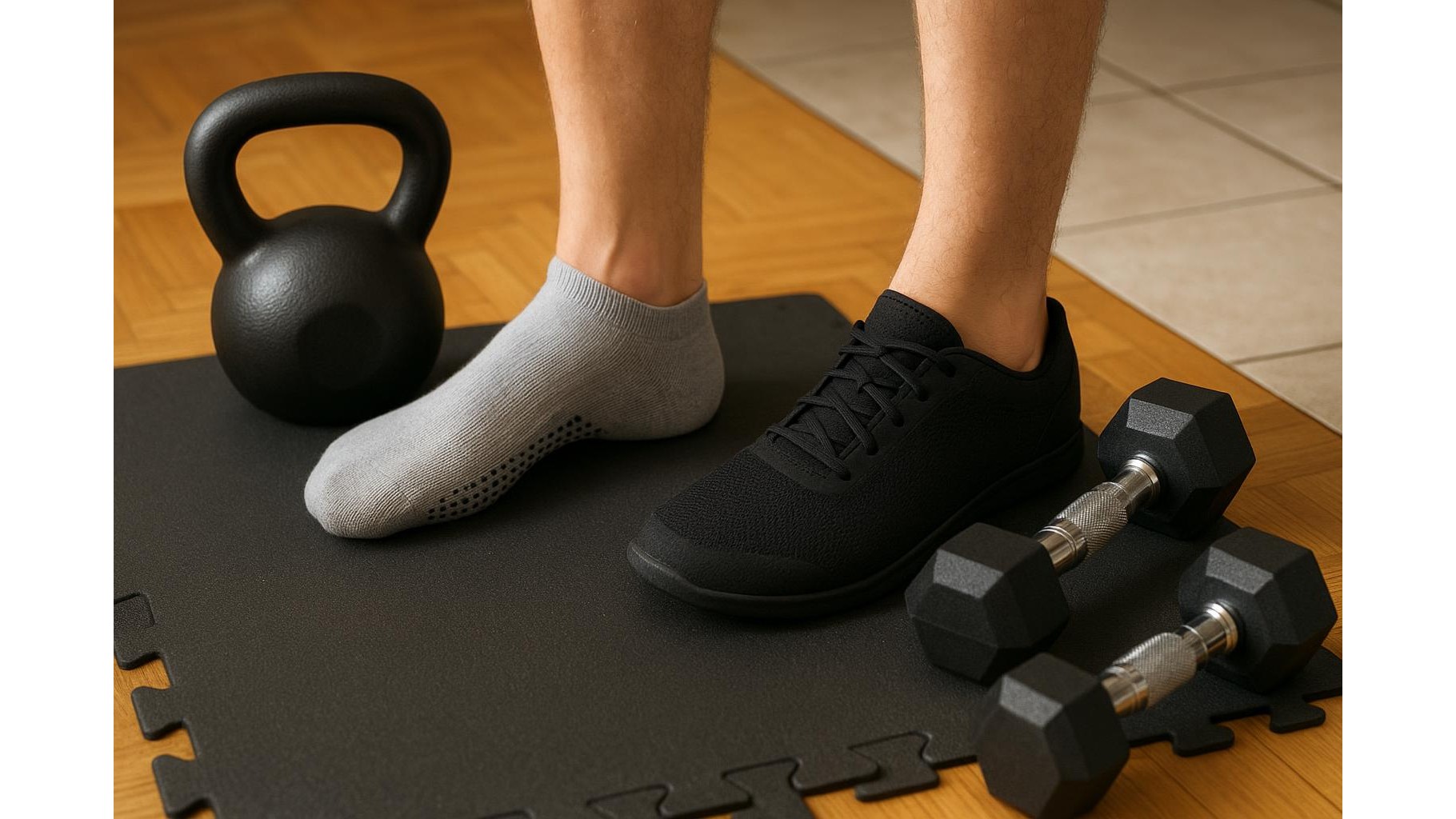
On smooth tiles and lacquered wood, non‑slip grip socks are often the most practical solution. Look for models with full‑length silicone dots or rubber patterns on the sole, as they increase traction during bodyweight moves, yoga flows and light strength work. A snug elastic band around the midfoot prevents the sock from twisting when you pivot, while breathable cotton or technical fibres reduce sweat build‑up. For stability in squats or lunges, choose low‑profile socks that keep you close to the ground, without thick cushioning that could make you wobble. Grip socks are also ideal if you share your living space, because they protect floors from sweat and keep your feet covered for hygiene.
Minimalist shoes on parquet and rubber mats
If you perform barbell lifts, kettlebell work or dynamic circuits, minimalist shoes offer more protection than socks while keeping a barefoot‑like feel. Features to prioritise include a wide toe box so toes can spread, a thin, flexible sole (usually 3–6 mm) and minimal heel‑to‑toe drop to maintain solid contact with the floor. On parquet, the outsole should be grippy but not overly sticky, to allow controlled rotation during presses and landings. On rubber mats, look for patterned rubber that resists abrasion from repeated jumps and sled drags. Minimal cushioning is better for heavy lifts, because it preserves force transfer, while still shielding you from cold or uneven spots on the floor.
Indoor trainers for cardio and high‑impact workouts
For HIIT, dance workouts and indoor cardio sessions, a pair of indoor training shoes is usually safer than socks. Key elements are multi‑directional grip, shock absorption in the midsole and good lateral support. On tiles, a non‑marking rubber outsole prevents slipping and protects the surface; on rubber mats, look for deeper flex grooves to maintain traction when the mat compresses under impact. Choose lightweight uppers with mesh panels so your feet stay cool during longer sessions. Avoid thick, squishy running shoes for side‑to‑side moves, as they can feel unstable; cross‑training shoes with a slightly firmer platform are better for burpees, skaters and jump squats in a home gym corner.
Hygiene, odour control and floor protection
Whatever footwear you choose, hygiene should be part of your home training routine. Grip socks can be machine‑washed frequently, so check that the silicone patterns are durable and stitched securely. Minimalist shoes and indoor trainers benefit from removable insoles: you can air them out after intense sessions and, if necessary, wash or replace the insoles to control odour. Training barefoot directly on shared mats is less hygienic; a clean pair of socks or shoes creates a barrier between sweat and the surface. On delicate parquet, choose soles that are clearly labelled non‑marking and periodically check for embedded grit that could scratch the floor when you pivot or shuffle.
How to match footwear to your home workouts
The best solution often combines more than one option. Use grip socks for low‑impact mobility, yoga and light strength on tiles or wooden floors; switch to minimalist shoes for heavy strength work and kettlebell sessions on rubber mats; choose indoor trainers with more cushioning for HIIT and cardio intervals. Keep a dedicated pair for indoor use only to reduce dirt and wear. Pay attention to feedback from your feet and joints: if you feel unstable in the ankles or experience impact pain, adjust your level of cushioning or support. Rotating between two models also gives each pair time to dry fully between workouts, improving comfort and durability in your home gym space.
Protecting your feet in a home gym is more than a comfort choice; it directly influences stability, performance and floor longevity. By selecting appropriate socks, minimalist shoes and indoor trainers for tiles, parquet and rubber mats, you can lift heavier, move faster and train more often with less risk of slips or overuse injuries. Invest in a small rotation of purpose‑built footwear, keep it clean, and treat your training space like a real gym for safer, more enjoyable sessions at home.