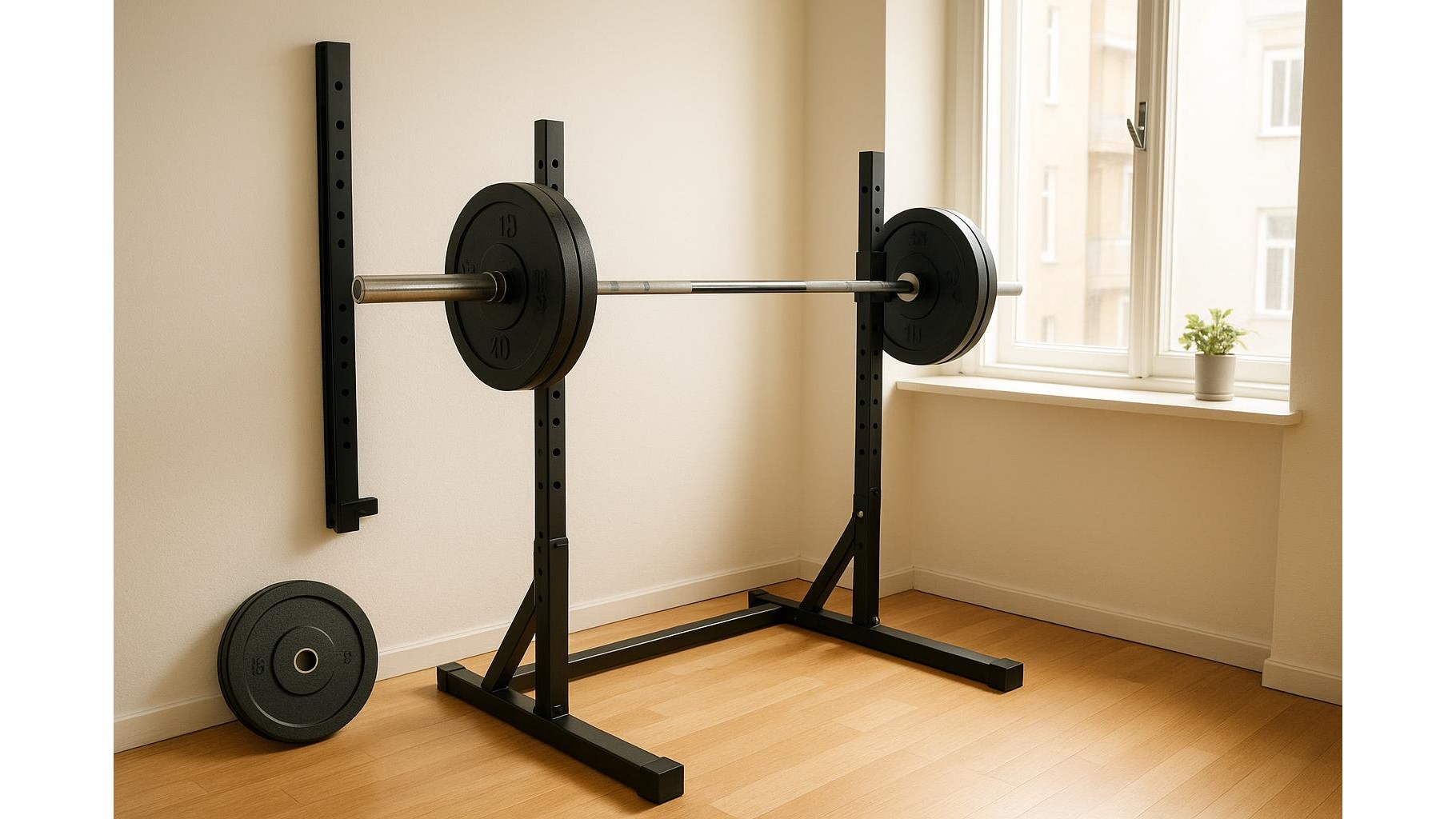
Building a corner home gym is all about making the most of limited space without sacrificing safety or performance. A compact folding squat stand lets you lift heavy, store the rack away when not in use, and keep your living area usable. This guide explains what to look for in a folding stand, how to match it to your current and future strength levels, and the key safety and stability features that really matter in a small corner setup.
Measure your corner and plan the footprint
Before you even look at models, measure your space. A corner home strength setup typically has two constraints: ceiling height and usable floor depth. Check your ceiling is high enough for overhead presses and pull‑ups (if you’ll add a bar) and make sure there is at least the width of your Olympic barbell plus some clearance to load plates. Many folding squat stands need about 120–130 cm of width and 60–80 cm of depth when in use, then fold nearly flat against the wall. Think about doorways, radiators and sockets in that corner, plus where your bench and plates will live. Planning the footprint first means you can focus only on stands that truly fit your room rather than trying to force a too‑big rack into a cramped corner.
Key stability and safety features to prioritise
A folding squat stand must be just as safe as a fixed rack. Look for a solid steel frame, a stated maximum load that comfortably exceeds your current squat by at least 50–70%, and a wide enough base or wall‑mounting system to prevent wobble. Heavy‑duty J‑cups, robust locking pins and clearly rated safety spotter arms are essential if you train alone. Anti‑tip design, such as floor bolting options or wall brackets, is a big plus in a tight corner. Even on compact models, choose stands with numbered uprights so you can quickly set consistent heights for squats, bench and overhead press, reducing setup errors that can lead to unsafe positions under the bar.
Choosing specs to match current and future strength levels
It can be tempting to buy the smallest, cheapest stand, but your strength levels will likely increase. Select a stand with a load rating that is well above your medium‑term goals. If you squat 80 kg now and aim for 140 kg, look for at least a 200–250 kg rating for peace of mind. Consider the height of the uprights too: taller lifters need enough adjustment range for low‑bar squats and overhead presses without hitting the ceiling. If you plan to add accessories such as dip handles or a pull‑up bar later, check compatibility in advance; not all folding squat stands accept upgrades. Investing a little more in a stronger, better‑specified rack now avoids outgrowing a flimsy stand and having to replace it just as your training gets serious.
Practical folding mechanisms and everyday usability
In a corner home gym, the way your rack folds matters as much as its raw strength. Some stands fold flat against the wall, while others pivot inward to reduce depth but still occupy some floor space. Prioritise racks with simple, tool‑free folding mechanisms so you are actually willing to fold and unfold them for each workout. Smooth hinge action, secure locking pins and clear, intuitive movement patterns minimise the risk of pinched fingers or misalignment. Think about the daily routine: where will the barbell go when the stand is folded? Can you move a bench in and out easily? If storing the rack is a hassle, it will stay open or – worse – discourage you from training consistently, undermining the main benefit of a compact folding design.
Flooring, accessories and overall corner setup
A compact folding squat stand is the centrepiece of your corner setup, but the surrounding details make it safe and enjoyable. Use dense rubber flooring or interlocking gym tiles under the stand to protect your floor and add friction so the base does not slide. Plan wall storage for plates and smaller accessories to free up ground space and keep walkways clear. A flat or adjustable bench that can tuck under the stand gives you a full barbell strength station in one corner – squat, bench, row and overhead press. Finally, ensure good lighting and enough ventilation around that corner so heavy sets feel comfortable and secure. With smart planning, even a very small area can become a highly functional strength zone built around a reliable folding stand.
Choosing the right compact folding squat stand for your corner home strength setup comes down to accurate measurements, realistic assessment of your current and future lifting numbers, and a focus on stability and safety features over flashy extras. Prioritise a solid frame, dependable spotter arms, intuitive folding and floor protection, then add accessories as your training evolves. With these principles in mind, you can turn any spare corner into a strong, safe and efficient home gym that supports years of progress.