
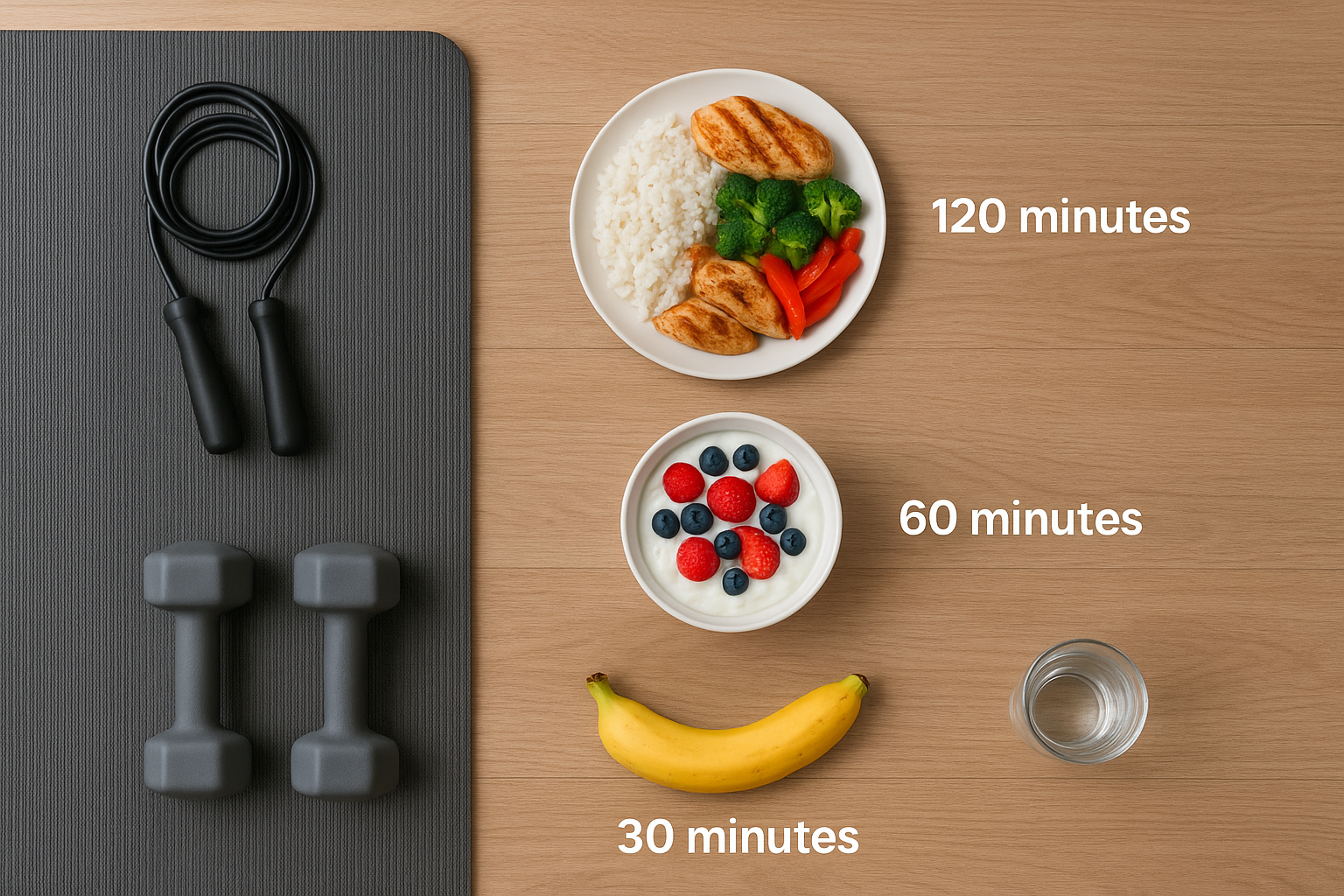
Dialling in your pre-workout nutrition can make home training feel stronger, more focused and more comfortable. The right mix of carbohydrates, protein and fluids – timed correctly – helps stabilise energy, supports performance and reduces stomach discomfort. Whether you have just 30 minutes before a quick workout or a full 2 hours before a heavy strength session, you can structure simple snacks and meals at home to get the most from your training.
Key principles of pre-workout nutrition at home
Evidence shows that carbohydrates are the primary fuel for moderate to high‑intensity exercise, while protein supports muscle repair and adaptation. For most home workouts, aim for a pre‑exercise intake that is higher in carbs, moderate in protein and relatively low in fat and fibre to reduce the risk of bloating or cramps. Hydration matters as much as food: start your session well hydrated and sip water if it lasts longer than 45–60 minutes. Think of the timing as a sliding scale – the closer you are to training, the smaller and simpler your snack should be; the further away, the more your meal can look like a normal balanced plate.
What to eat 120 minutes before a home workout
With around two hours before exercise, you can eat a full meal and still digest it comfortably. Focus on a plate that is rich in slow‑release carbohydrates (such as oats, rice, potatoes or wholegrain bread), plus 20–30 g of lean protein (eggs, poultry, Greek yoghurt, tofu) and a modest portion of healthy fats. An example would be porridge made with oats and milk topped with banana and a spoon of peanut butter, or a rice bowl with chicken and vegetables. Keep very high‑fat or deep‑fried foods to a minimum, as they slow gastric emptying and can leave you feeling heavy. This is also a good window for those who prefer to have coffee or tea for a mild caffeine boost.
What to eat 60 minutes before a home workout
At around one hour before training, aim for a smaller, easily digestible meal or substantial snack. Prioritise carbohydrates that are not too high in fibre, such as white toast with a thin layer of jam and a side of yoghurt, a small bowl of cereal with milk, or a fruit smoothie made with banana, berries and a scoop of protein powder. Protein in this window should still be moderate, around 10–20 g, to reduce hunger and support muscles without overloading your stomach. If you are sensitive to fibre, choose peeled fruit and refined grains rather than dense wholegrains just before exercise. Continue to sip water so you begin your home workout well hydrated but not overfilled.
What to eat 30 minutes before a home workout
With only 30 minutes to go, your focus should be on a small, carb‑rich snack that is very easy to digest. Good options include a banana, a slice of white toast with honey, a small handful of dried fruit, or a few rice cakes. Keep fat and fibre low and avoid large servings of protein at this point, as they can cause gastrointestinal discomfort once you start moving. A glass of water or a light electrolyte drink is usually sufficient for hydration. If you use caffeinated drinks, this is a typical time to finish a small coffee, but avoid adding heavy cream or large amounts of sugar. The goal is to boost blood glucose and mental energy without feeling weighed down.
Adjusting pre-workout food to workout type and goals
Your ideal pre-workout meal also depends on the style and length of your home session. For strength training or hypertrophy workouts of 45–75 minutes, combine carbs with a solid protein source in the 60–120 minute window to support both performance and muscle growth. For HIIT or circuit training, slightly higher carbs and very low fat just before exercise can reduce the risk of nausea. If your goal is fat loss, you still benefit from pre‑workout carbs: they help maintain training intensity, which burns more total energy over time. Those training early in the morning might only manage a quick 30‑minute snack; in that case, keep it small and carb‑focused and ensure your previous evening meal was balanced.
Hydration, comfort and individual tolerance
Even with ideal macros and timing, individual tolerance varies. Some people can handle a moderate snack 30 minutes before training, while others need 90 minutes to feel comfortable. Use your home workouts to test how your stomach responds to different foods and adjust accordingly. As a baseline, drink a glass or two of water in the hours before exercise and consider an extra 200–300 ml in the 30 minutes before starting, especially in warm rooms. Watch for signs of under‑fueling, such as dizziness, early fatigue or poor concentration, and do not hesitate to increase your carb intake before tougher sessions. Over time, you can build a simple, repeatable pre‑workout routine that fits your schedule and supports consistent progress.
In summary, effective pre-workout nutrition for home training is about matching meal size and composition to the time you have: balanced meals 120 minutes before, lighter mixed snacks 60 minutes before, and simple carbs 30 minutes before. Prioritise carbohydrates, include moderate protein, keep fat and fibre lower as you get closer to exercise, and stay on top of hydration. By paying attention to how your body feels and performs, you can refine your routine and turn every home workout into a more energetic, productive session.









