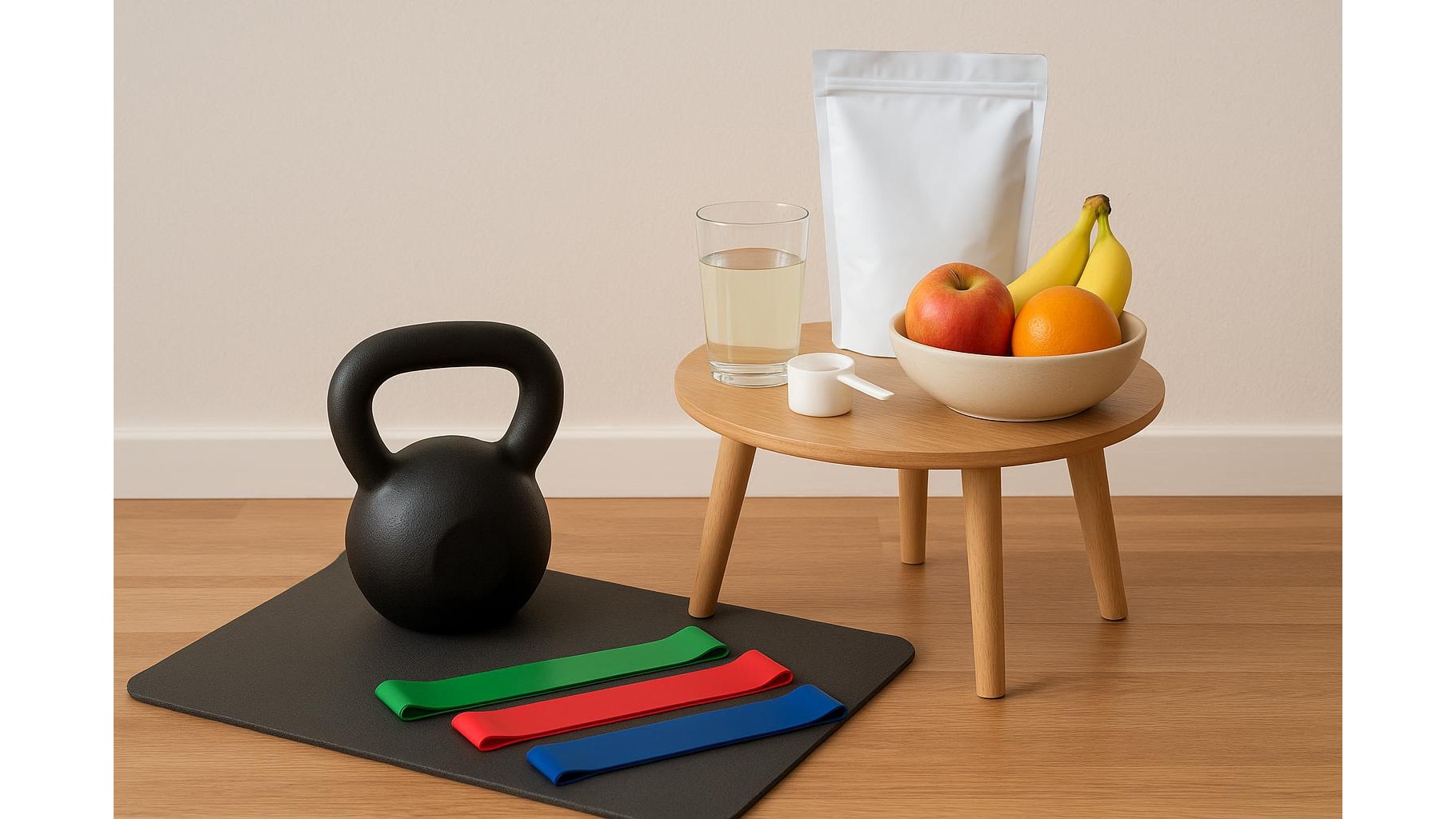
On home training days, it is tempting to reach for a brightly coloured carbohydrate supplement for every workout. Yet for many people training in a garage gym, living room or small studio, regular food covers most energy needs perfectly well. Understanding when powders and drinks actually offer a performance or convenience advantage – and when they are just expensive sugar – helps you fuel smarter, control body composition and get better results from your home workouts.
Table of contents
Understanding carbs for home workouts
Carbohydrates are your body’s preferred fuel for moderate-to-high intensity exercise. During short, hard sets of squats, push-ups or kettlebell swings, your muscles rely heavily on muscle glycogen, which comes from the carbs you eat over the day. For most people, if total daily carb intake is adequate, a specific pre-workout carb supplement is not essential for 30–60 minute home sessions. Instead, a balanced meal with wholefood carbs such as oats, rice, potatoes or fruit 1–3 hours before training will typically provide all the glycogen you need. Supplements become truly useful in more specific scenarios: when you train fasted, very frequently, for longer than about 75–90 minutes, or when you cannot tolerate solid food around exercise.
When carbohydrate supplements actually add value
Evidence suggests that intra-workout carbs start to matter when sessions are long, intense or back-to-back. If you regularly do 90–120 minute strength circuits, high-rep conditioning or mixed cardio and lifting at home, sipping a simple carb drink can help maintain performance, reduce perceived effort and protect muscle glycogen. A typical guideline is 20–40 g of easily digested carbs per hour once you go beyond 60–75 minutes of continuous hard work. Carbs can also help if you train twice per day in a home gym and have limited time to eat between sessions. In these cases, drinks and powders are not magically superior to food, but they are fast, predictable and easy on the stomach, making them a practical tool rather than a necessity.
Simple food vs powdered carbs: what to choose at home
For most home athletes, simple whole foods remain the best default. A banana, a slice of toast with jam, a small bowl of cereal or some cooked rice provide fast-acting carbohydrates that are cheap and easy to digest. These options also deliver useful micronutrients and, in some cases, fibre. In contrast, most carb powders are essentially refined starches or sugars (like dextrose or maltodextrin) designed to be mixed with water. They are rapidly absorbed, which can be helpful right before or during tough training, or immediately after if you need to refuel quickly. However, if you have at least a couple of hours between home sessions and regular meals, food alone will usually restore glycogen effectively. Reserve supplements for times when you lack appetite, are in a rush, or want very precise control over carb dose without extra bulk or fibre.
Carb timing by workout length, intensity and goals
Match your carb strategy to your training. For short (< 45 minutes) low-to-moderate intensity home workouts – think light dumbbell routines or easy cycling – you typically do not need any special carb intake beyond your regular meals. For moderate (45–75 minute) hard sessions, a normal pre-workout meal 1–3 hours before and a post-workout snack with carbs and protein is usually enough. For long (75–120 minute) high-intensity sessions, consider adding 20–30 g of fast carbs 30 minutes before or during the workout. If your goal is fat loss and calories are restricted, you can still use small carb doses strategically around your hardest training while keeping daily intake modest. For muscle gain and performance, a higher overall carb intake across the day plus targeted use of drinks in long or double sessions can support better training quality.
Special cases: fasted training and sensitive stomachs
Two scenarios where carbohydrate drinks are particularly helpful at home are early-morning fasted training and people with sensitive digestion. If you cannot stomach solid food before a dawn workout, a small drink with 15–30 g of carbs can reduce dizziness, improve focus and allow harder efforts without causing bloating. Likewise, if you experience gastrointestinal discomfort when eating close to exercise, a dilute carb solution may be more comfortable than toast or fruit. Start with a weak mix (around 6–8% carbs, like 20 g powder in 250–300 ml water), sip slowly and adjust based on how you feel. Even here, the goal is not to chase big sugar hits, but to provide just enough readily available energy to support training quality while respecting your digestive limits.
Putting it all together for smarter home fueling
A sensible rule for home athletes is to treat carbohydrate supplements as a targeted tool, not a default requirement. Let balanced meals of wholefood carbs handle day-to-day energy needs, and bring in powders or drinks when sessions are longer, more intense, closely spaced, or when eating solid food is impractical. By aligning carb timing and form with your actual workout length, intensity and body-composition goals, you can keep things simple, avoid unnecessary products and still enjoy strong, consistent performance from the comfort of your home gym.