
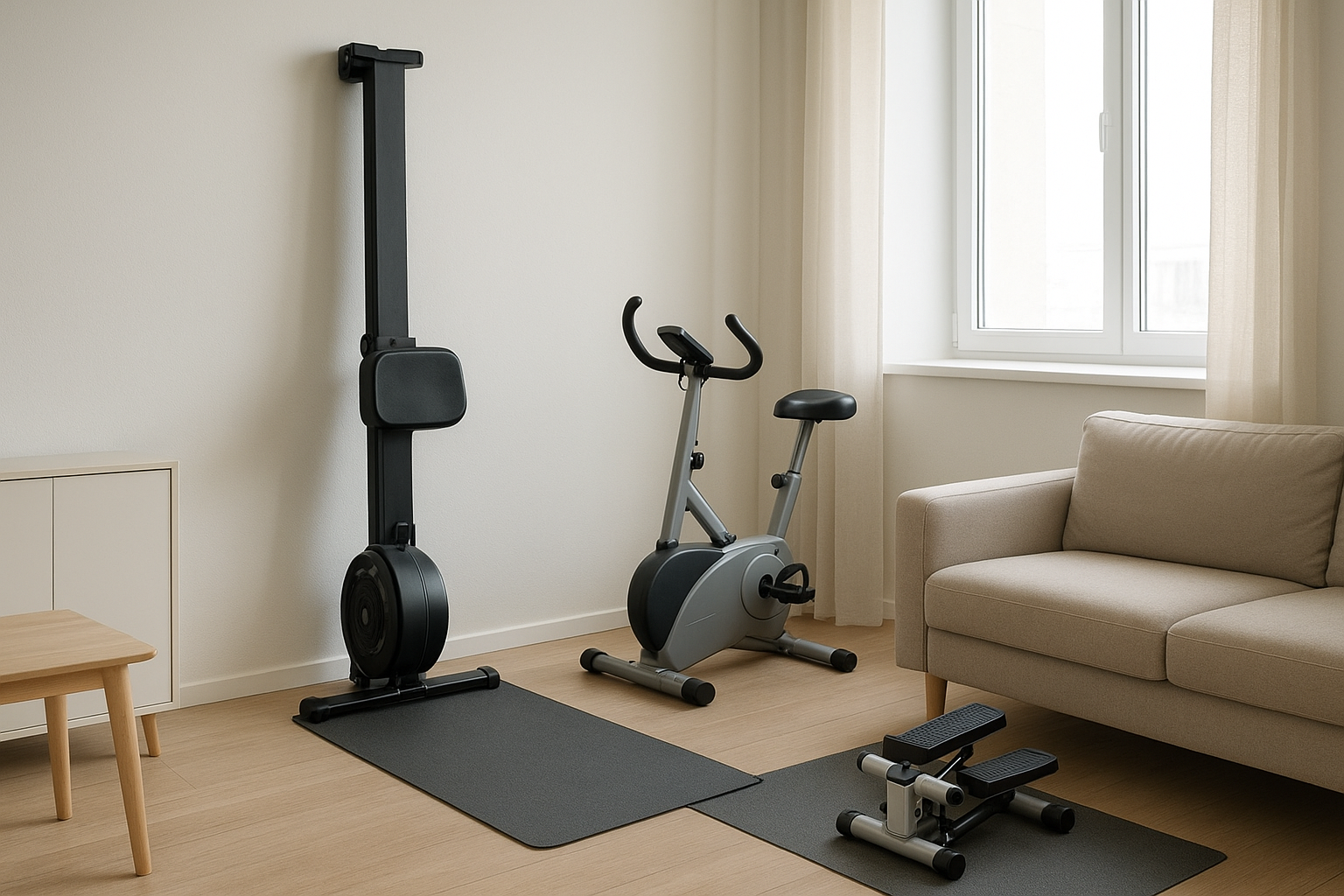
Living in a studio apartment does not mean giving up on effective cardio training at home. The key is choosing compact rowers, bikes and steppers that fit both your fitness goals and your tiny floor plan. In this guide we look at the main selection criteria – from storage and noise to training variety – and outline pros and cons of each type of machine so you can invest wisely and keep your living space liveable.
Key criteria for cardio in a studio apartment
When space is tight, start with the basics: footprint, foldability and weight. Check the machine’s dimensions in use and when folded, and compare them with the corner, wardrobe or under‑bed space you actually have. For studio living, low noise levels are crucial, especially in buildings with thin walls or late‑night workouts: magnetic resistance and belt drives are usually quieter than air or chain systems. Look at maximum user weight to be sure the frame is sturdy, and consider portability features such as transport wheels or a carry handle so you can move the unit after each session without rearranging your whole home.
Compact rowing machines: full‑body training in a narrow footprint
Compact rowing machines are ideal when you want full‑body cardio with strong emphasis on back, legs and core, yet only have a narrow strip of floor. Many modern hydraulic or magnetic mini rowers are designed to fold vertically so the rail stands upright against a wall, drastically reducing the footprint when not in use. Pros include high calorie burn, low‑impact movement that is gentle on the joints, and the ability to train both strength and endurance. On the downside, cheaper compact rowers may have a shorter rail length that does not suit very tall users, and small seats or basic consoles with limited training data. If you want to row early or late, prioritise models marketed as quiet, with smooth resistance and padded footrests to keep vibrations and noise to a minimum.
Folding and mini exercise bikes for all‑day cardio
For many studio dwellers, a folding exercise bike strikes the best balance between usability and space saving. Upright folding bikes typically collapse into a slim profile that can be stored behind a door or wardrobe, while mini pedal exercisers can slide under a desk or bed. Advantages include very low learning curve, low‑impact cycling suited to beginners and joint‑sensitive users, and usually very quiet magnetic resistance – a big plus in apartments. Some models offer basic pulse sensors and simple displays for time, speed and distance, keeping things compact. However, bikes mainly target the lower body and do not engage the upper body like a rower would. Very lightweight folding frames can also feel less stable during intense sprints, so consider your training intensity and choose a bike with a solid, adjustable seat and clear maximum height recommendations.
Mini steppers and stepper‑twisters for ultra‑small spaces
When floor space is almost non‑existent, mini steppers and stepper‑twisters become attractive options. These small platforms simulate stair‑climbing with hydraulic or magnetic resistance, often taking up no more room than a pair of shoes. Pros include extremely small storage volume – they can live under the bed or in a cupboard – and intense lower‑body and glute engagement that can be surprisingly challenging. Some models add resistance bands for the upper body, making the workout more complete. On the negative side, stepper motion can feel repetitive, and short stride lengths may not suit users with knee issues; long sessions on a basic stepper can also be noisy if you do not use a mat. Because there is no seat, balance and core strength are required, so absolute beginners should start with short, low‑resistance sessions and build up gradually.
Noise, neighbours and smart storage solutions
In a studio apartment, noise management is as important as workout intensity. Whichever machine you choose, place a protective floor mat underneath to reduce vibration and protect hard floors, and ensure all bolts and moving parts are tightened regularly to avoid squeaks. Magnetic resistance systems and belt drives are generally the quietest options across rowers, bikes and steppers, helping you stay on good terms with neighbours. For storage, think vertically: foldable rowers that stand upright, bikes that collapse into an X‑shape, and steppers that stack neatly on a shelf. Measure door frames, hallways and wardrobes before buying, and plan a dedicated “home” for the machine so setting it up becomes a simple, repeatable routine instead of a daily battle with clutter.
Matching the right machine to your training goals
Ultimately, the best compact cardio machine for a studio apartment is the one that aligns with both your living constraints and your fitness goals. Choose a rower if you want full‑body, strength‑oriented cardio and have a narrow strip of space available. Opt for a folding bike if you prefer seated, low‑impact sessions that can be done while watching TV or working, and go for a mini stepper when storage space is extremely limited and you enjoy short, intense leg‑focused workouts. Evaluate footprint, foldability, noise, comfort and build quality before purchasing, and do not forget to factor in training variety and how often you realistically plan to use the machine. With a considered choice, your tiny studio can double as an efficient, sustainable home gym without sacrificing comfort or style.









