After an intense VR fitness session, it is easy to rip the headset off, drop the controllers and forget that your eyes, neck and shoulders have been working just as hard as your legs. Long bouts of VR-based home workouts and gaming can leave eye muscles strained, the upper back tight and posture compromised. This simple, equipment-free routine is designed to help you unwind in a few minutes, so you can keep enjoying immersive training without burning out your body.
Table of contents
Reset your space before you reset your body
Start by stepping away from your headset and letting your visual system calm down. Turn down bright overhead lights and face a neutral wall or a window with soft daylight. Standing or sitting tall, take three slow breaths through the nose, making each exhale longer than the inhale to signal recovery to your nervous system. Imagine you are widening across the collarbones and gently lengthening the back of the neck, countering the forward head position many VR fitness fans fall into. This short pause clears your internal “visual noise” so the following eye, neck and shoulder work can be more effective.
Gentle eye reset after long headset sessions
Eye fatigue is a hidden cost of long VR workouts. To relax your eye muscles, rub your hands together to create warmth, then lightly cup your palms over your closed eyes without pressing on the eyeballs. Breathe slowly for 30–60 seconds and notice the darkness and warmth. Next, open your eyes and practice “near–far focusing”: hold a thumb about 20 cm from your face, focus on it for three seconds, then shift your gaze to something across the room for three seconds. Repeat 8–10 times. Finish with slow eye circles: look up, then trace a smooth circle with your gaze in one direction, then the other, keeping your head still. These simple drills help undo the fixed-focus demand of a headset screen and support long-term eye health.
Neck mobility to undo headset posture
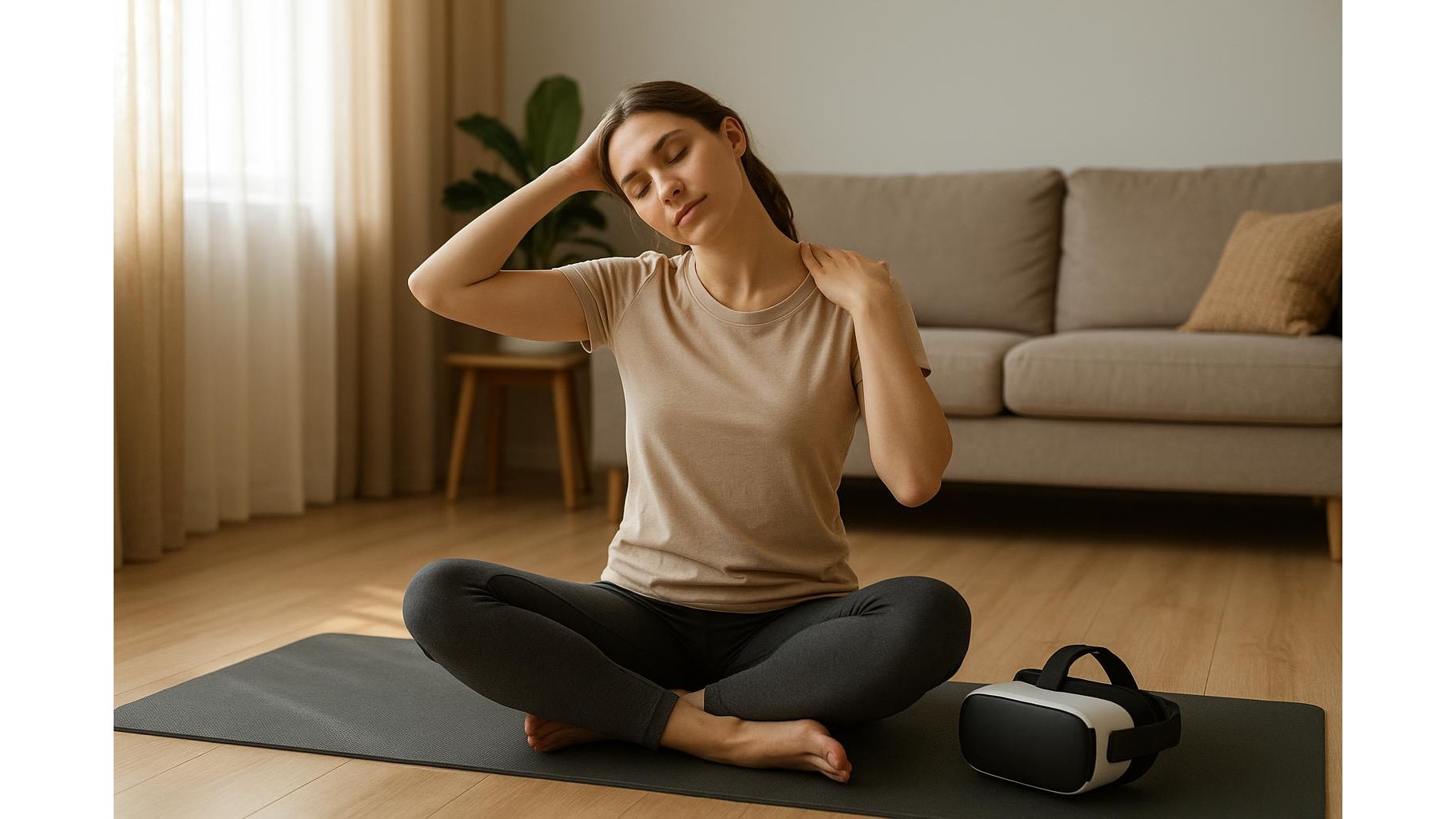
Wearing a heavy headset can encourage a forward head posture and stiffen the upper neck. Sit or stand tall, imagine a string gently lifting the crown of your head. First, perform slow nods: as you exhale, tuck your chin slightly towards your chest, feeling a stretch at the base of the skull; inhale to return to neutral. Repeat 8–10 times without forcing the movement. Then add side bends: drop your right ear towards your right shoulder while keeping the shoulders relaxed and level, hold for 15–20 seconds, switch sides and repeat two or three rounds. Finally, perform controlled neck rotations, turning your head to look over one shoulder, then the other. Keep movements smooth and pain-free to restore neck mobility after intense home VR training.
Open tight shoulders and upper back
During VR boxing, rhythm games and high-intensity apps, the shoulder girdle and upper back often tense up, especially if your form collapses as you fatigue. Stand with feet hip-width apart and perform slow shoulder rolls, lifting your shoulders up towards your ears, then rolling them back and down. Do 10 in each direction. Next, interlace your fingers behind your back, straighten the elbows if possible and gently lift your hands away from your body while opening the chest. Breathe into the ribs for 20–30 seconds. To target the upper back, cross your arms in front of you, holding opposite shoulders, and round gently through your mid-back while dropping the chin slightly. These moves help relieve trap tightness and restore a more open, athletic posture.
Spine-friendly stretches for VR athletes
Your thoracic spine (mid-back) and shoulder blades are crucial for both stability and power in VR fitness workouts. To care for them, start on all fours in a tabletop position. Inhale as you gently arch your back, lifting the chest and tailbone; exhale as you round your spine, drawing the navel towards the ceiling in a classic cat–cow sequence for 8–10 slow reps. Then, from tabletop, slide your right arm under your left, lowering your right shoulder and side of the head to the floor in a “thread the needle” stretch. Breathe deeply for 20–30 seconds and repeat on the other side. These spine-friendly stretches promote rotation and extension, countering the fixed, forward-oriented stance common in many VR apps.
Build a sustainable VR fitness habit
Consistent recovery work keeps your body ready for the next session and makes your VR fitness journey more sustainable. Treat this short routine as a non-negotiable cool-down after intense headset-based workouts or long gaming bouts. In just 5–10 minutes you will have addressed tired eyes, neck stiffness and shoulder tension, reducing the risk of headaches and lingering soreness. Over time, this mindful reset helps you move better, react faster and enjoy your virtual training worlds without sacrificing comfort in the real one.