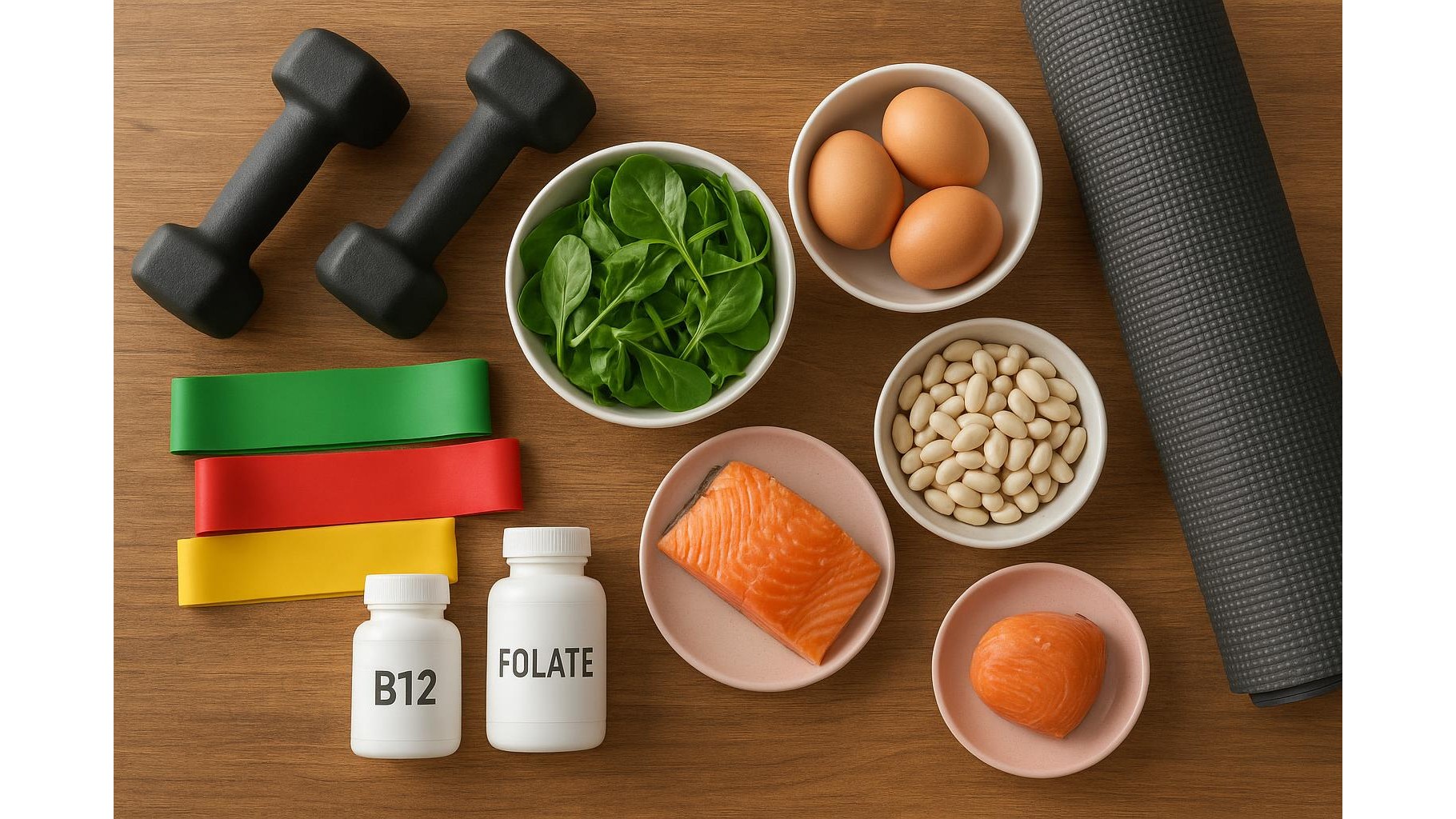
Training in a home gym puts steady demands on your metabolism, nervous system and recovery capacity. Two quiet workhorses in this picture are vitamin B12 and folate. These B vitamins help you convert food into usable energy, support red blood cell formation and contribute to a stable mood and sharp focus. When intake or absorption is low, you may feel flat, foggy or slow to recover, even if your training plan is solid. Understanding how B12 and folate work together can help home athletes fine‑tune nutrition, read supplement labels and use blood tests intelligently.
Table of contents
How vitamin B12 and folate work together
Vitamin B12 and folate are central players in one‑carbon metabolism, a network of reactions that drives DNA synthesis, red blood cell production and homocysteine control. Folate (especially in the form of 5‑methyltetrahydrofolate) donates methyl groups, while B12 acts as a cofactor that helps recycle homocysteine back into methionine. For a home athlete, this matters because efficient red blood cell production supports oxygen delivery to working muscles, and balanced homocysteine is linked to cardiovascular health and brain function. When either B12 or folate is low, you can develop megaloblastic anemia, leading to fatigue, breathlessness and reduced training capacity. Long‑term B12 deficiency can also damage nerves, affecting balance, coordination and the quality of your movements in strength or conditioning sessions.
Who is most at risk when training at home
Not everyone has the same risk of low B12 or folate. B12 is found almost exclusively in animal‑based foods, so vegans, vegetarians and athletes who heavily restrict meat or dairy are more vulnerable. Older home athletes and anyone taking certain medications (such as metformin or acid‑suppressing drugs) may absorb B12 less efficiently. Folate comes from leafy greens, legumes and fortified foods, so very low‑carb or convenience‑heavy diets can fall short. If your home training leaves you unusually tired, short of breath on simple sets, struggling with low mood or tingling in hands and feet, it is worth discussing possible B12 and folate deficiency with a healthcare professional rather than assuming the training itself is the problem.
Food‑first strategies for B12 and folate
A food‑first strategy makes sense for most home athletes with no diagnosed deficiency. For vitamin B12, focus on foods such as eggs, milk, yogurt, cheese, fish and lean meats, or fortified plant milks and breakfast cereals if you avoid animal products. For folate, load your plate with dark leafy greens (spinach, kale), lentils, beans, chickpeas, asparagus and avocado. Building these into pre‑ and post‑workout meals helps you support energy metabolism and recovery while also adding protein, fibre and other micronutrients. Batch‑cooked stews with beans and greens, omelettes with vegetables, or smoothies based on fortified plant milk and spinach are simple, home‑friendly options that fit around busy training and work schedules.
Understanding labels and basic blood work
When you read supplement labels, B12 may appear as cyanocobalamin, methylcobalamin or hydroxocobalamin, while folate may be listed as folic acid or 5‑MTHF (methylfolate). Doses are usually given in micrograms (µg). Multi‑vitamins often include both, but amounts can vary widely. On blood tests, typical markers include serum B12, serum folate, full blood count, MCV (mean cell volume) and sometimes homocysteine or methylmalonic acid. High MCV with low B12 or folate suggests megaloblastic changes, while elevated homocysteine can signal a functional problem even if basic values look borderline normal. Interpretation should always be done with a doctor or dietitian, but knowing the names of these markers helps you ask better questions and link lab data to your energy, mood and performance in the home gym.
When supplements make sense for home athletes
Targeted B12 and folate supplements can be useful in specific situations: documented deficiency, strict plant‑based diets, absorption problems or life stages with higher needs (such as pregnancy for folate). In these cases, supplements are a clinical tool, not an automatic performance booster. More is not better; extremely high doses taken “just in case” offer no proven benefit and may mask problems, such as folate hiding signs of B12 deficiency. For the average home athlete, a balanced diet, possibly supported by a moderate‑dose multivitamin, is usually enough. Before buying any product, it is wise to confirm your status with blood work, speak with a professional about appropriate dosing and duration, and remember that consistent training, sleep and overall nutrition remain the biggest drivers of performance and recovery.
For home athletes, the synergy between vitamin B12 and folate underpins energy production, mood stability and effective recovery. Low levels can quietly undercut your progress, making every workout feel harder than it should. By prioritising nutrient‑dense foods, understanding your personal risk factors and learning the basics of blood markers and supplement labels, you can make informed choices instead of guessing. Supplements have their place, especially for those with restricted diets or proven deficiencies, but they work best on top of a solid food‑first approach. Paying attention to these two vitamins is a small step that can have a meaningful impact on how you feel and perform in your home gym.