Staying consistent with home cardio is much easier when your equipment is comfortable, joint–friendly and compact enough for a small apartment. A dual-action recumbent bike with moving handles lets you lean back in a supported seat while still engaging your upper body, turning seated cycling into a genuine full-body workout. For home gym users who want low-impact conditioning that fits beside a sofa or in a corner of the bedroom, this category of bike can be a smart upgrade over a basic recumbent.
Table of contents
What is a dual-action recumbent bike?
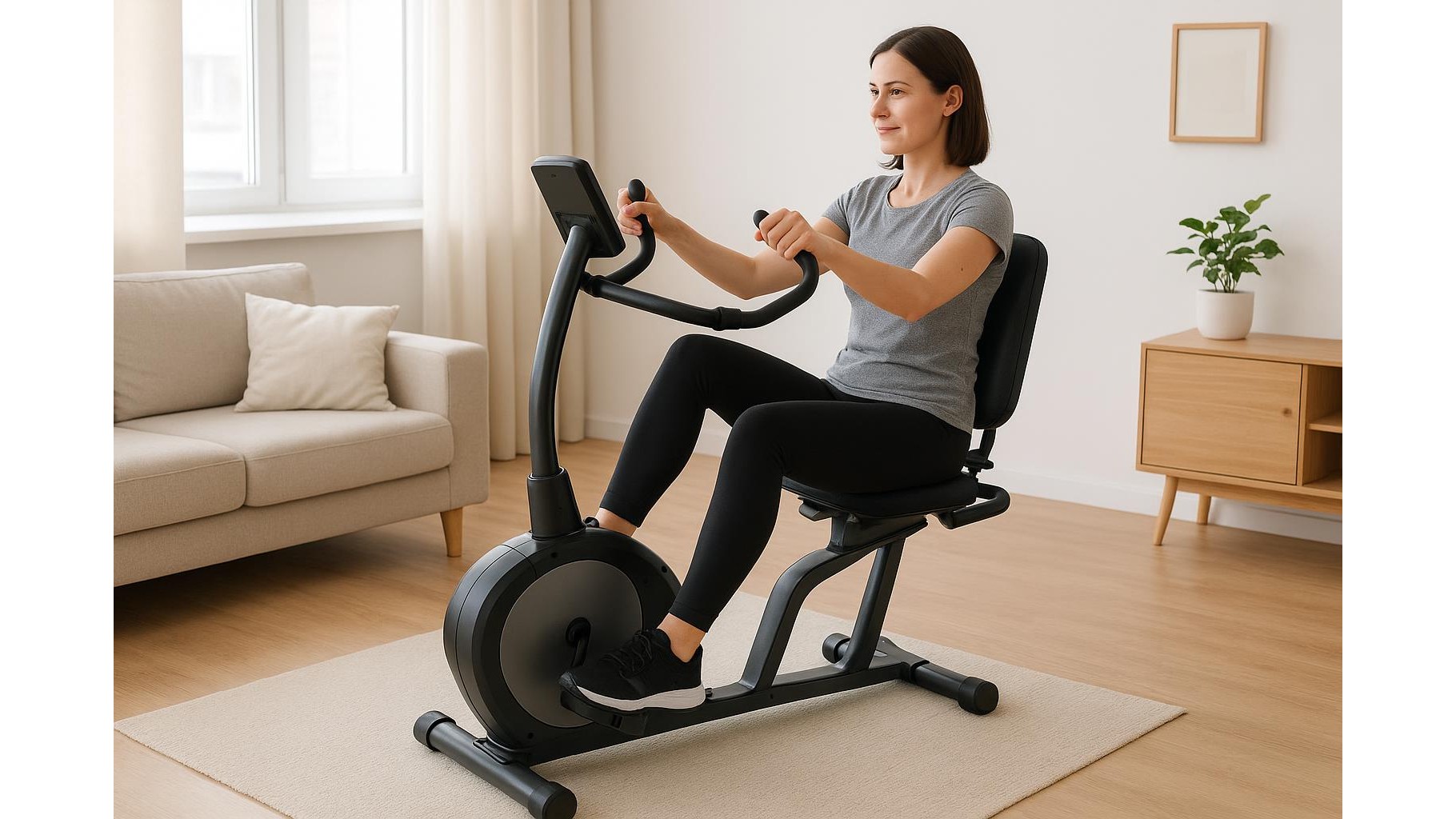
A dual-action recumbent bike combines the reclined, chair-like position of a traditional recumbent with moving arm handles similar to an air bike or cross trainer. Instead of letting your arms rest by your sides, you push and pull the handles in sync with your leg strokes. This distributes the effort between upper and lower body, raising heart rate faster at a lower pedal resistance. The seated posture reduces load on the lower back, hips and knees, making these bikes ideal for people who need low-impact cardio but still want to burn serious calories from a secure, stable position.
Who benefits most from seated upper-body cardio?
Dual-action recumbent bikes shine for users who struggle with long sessions on upright bikes, treadmills or ellipticals. If you have back pain, balance issues, are returning from lower-limb injury, or simply find upright cycling uncomfortable, the large recumbent seat and backrest offer welcome support. At the same time, older adults and beginners appreciate being able to hold the moving handles to stabilise the torso while they work the arms. Even fit home gym users can benefit: adding upper-body movement increases cardiovascular load without cranking resistance to knee-hostile levels. For anyone spending long hours at a desk, seated push–pull work for the shoulders, back and chest also counters some of the static, rounded-posture strain of office life.
Key features for compact home and apartment setups
In a small flat, the priority is choosing a bike that delivers full-body cardio without dominating the room. Look for a footprint that is relatively short in length and narrow enough to slide alongside a wall or under a TV. Transport wheels are essential so you can tilt and roll the bike into a corner after use, and a stable base with adjustable feet helps on slightly uneven floors. A quiet magnetic resistance system is preferable in apartments because it keeps noise low for neighbours and housemates. Also check that the seat height and rail offer enough adjustment for different user heights, and that the moving handles sit comfortably at chest level when you are properly set up on the seat, so you are not shrugging or reaching excessively during longer rides.
Essential specs and comfort details to check
Comfort will decide whether your dual-action recumbent becomes a daily habit or a dust collector. Prioritise a wide, padded seat with a supportive backrest and a smooth sliding adjustment mechanism. The pedals should have secure straps and a grippy surface so your feet do not slip when you increase cadence. For programming workouts, choose a console that at least tracks time, distance, speed, calories and heart rate, with clear, backlit digits. If you train early or late, a tablet holder lets you follow streaming classes or watch shows without craning your neck. Finally, verify the maximum user weight and overall build quality; a heavier, more solid frame usually feels more stable when you are driving the arm levers hard during interval work.
How to program effective full-body seated cardio
To get the most from a dual-action recumbent, treat it as more than a casual pedalling station. Warm up for 5–8 minutes at a light resistance, focusing on smooth, coordinated arm and leg movement. For efficient conditioning, alternate 1–2 minutes of moderate, sustainable effort with 30–60 seconds of higher-intensity intervals where you push and pull the handles aggressively while maintaining good posture against the backrest. Beginners might start with 10–15 minutes total, building toward 25–30 minutes as fitness improves. Aim to keep your core engaged, shoulders relaxed and grip just firm enough to control the handles. Two to four sessions per week are enough to notice improvements in cardio fitness and daily energy.
Fitting a dual-action recumbent into your home gym plan
When space and joints are both limiting factors, a compact dual-action recumbent bike gives you a rare combination: joint-friendly comfort, upper-body engagement and the practicality to live in a small home. Treat it as your primary cardio base, then supplement with bodyweight strength work or light dumbbells on non-cycling days. Because it is low-impact and easy to mount, you can also use it for short, frequent sessions—ten minutes before work, ten minutes after dinner—to accumulate more movement without overloading your schedule or your knees. Choose a model that fits your space, dial in the seat and handle positions, and you will have a reliable, inviting station for full-body seated cardio whenever you need it.