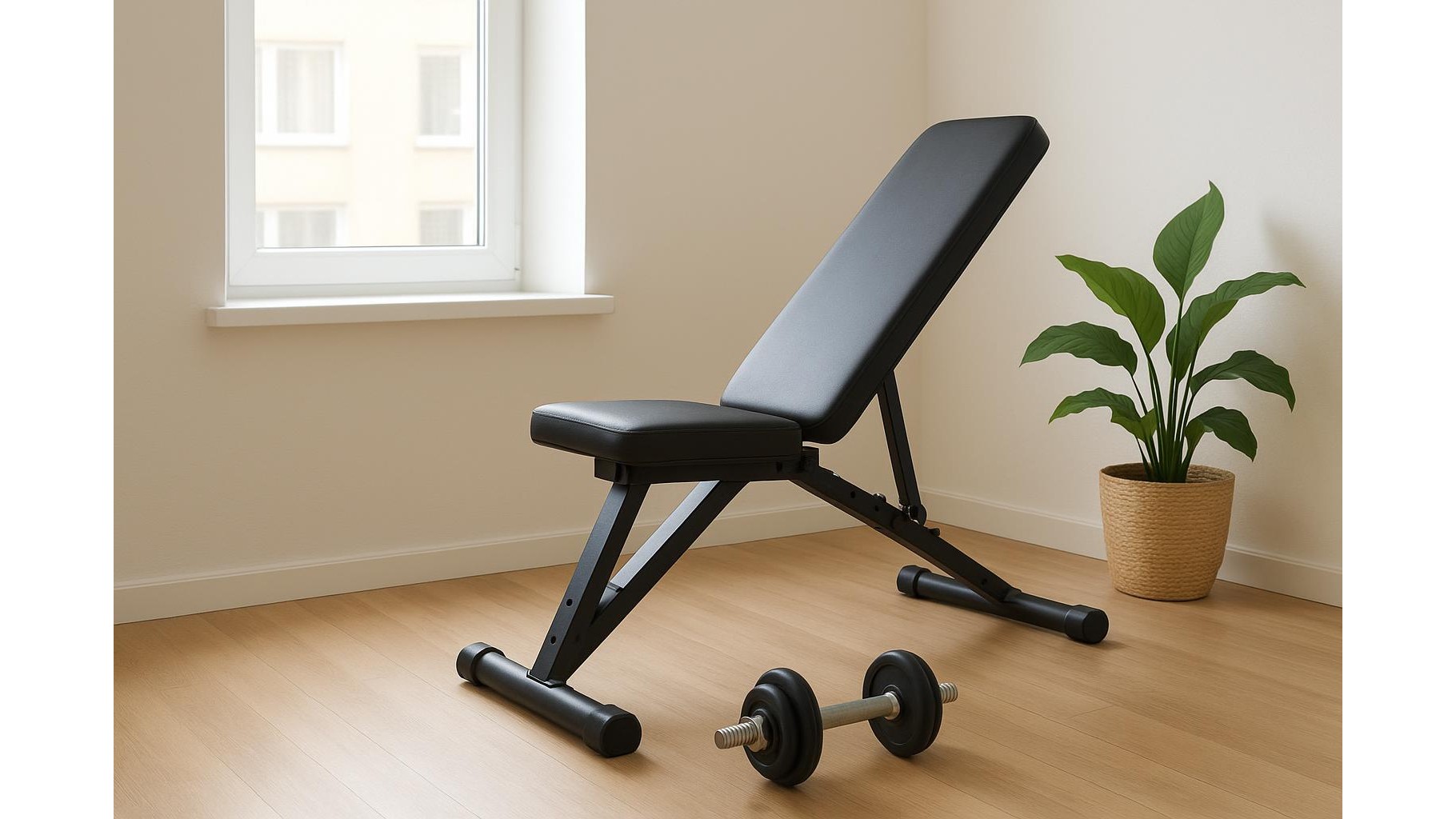
Choosing your first compact adjustable weight bench can feel confusing when you are just starting a home gym. Benches look similar in photos, but small details in safety features, incline range, padding and footprint make a huge difference to comfort, stability and how many exercises you can do. This guide walks you through the key points to check so you can match the bench to your space, your current equipment and your long‑term training goals.
Table of contents
Define your training goals and available space
Before comparing benches, be clear on how you plan to train and where the bench will live. If you mainly want dumbbell workouts for chest, shoulders and arms, a simple adjustable weight bench with flat and incline positions will be enough. If you also plan barbell presses inside a rack, check that the bench height lets your feet stay flat on the floor and that the length supports your torso fully. Measure the corner where the bench will stay: note both floor area and vertical clearance if you want to store it upright. Beginners in small flats usually benefit from a foldable compact bench they can slide under a bed or stand behind a door after training.
Prioritise safety, stability and weight rating
For beginners, stability is more important than fancy features. Look for a solid steel frame, wide rear feet and non‑slip rubber caps so the bench does not wobble during presses or rows. The bench should have a clear maximum user and load rating that comfortably exceeds your bodyweight plus the heaviest weights you aim to lift over the next few years. Locking pins or ladders that fix the backrest angles are safer than flimsy friction mechanisms. A good rule: if the bench looks very narrow, extremely light and ultra‑cheap, it may flex or rock when you move dynamically. For safe progress, choose something that feels like real gym equipment, even if it is still compact.
Check incline range, adjustability and bench dimensions
The biggest advantage of an adjustable bench over a flat bench is the variety of pressing and rowing angles. For a first bench, look for at least flat, 30°, 45° and 60° incline settings to cover incline presses, shoulder presses and supported rows. Some benches also offer a slight decline for crunches and decline presses, useful but not essential. Check how easily you can change angles between sets: quick, secure adjustments encourage you to actually use the full incline range. Dimensions matter, too: the pad should be long enough so your head and hips are supported, and narrow enough at the shoulders so your arms move freely. Beginners under about 185 cm usually fit well on most compact benches, but taller users should confirm pad length in the specs.
Padding, upholstery and comfort for longer sessions
Comfort might seem secondary, but on a home gym weight bench you will spend a lot of time lying or sitting still under load. Look for medium‑firm padding that does not bottom out when you press your shoulder blades into it. A slightly grippy surface helps you stay locked in during bench press and rows. Very soft, sofa‑like cushions may feel nice at first but can be unstable and wear out quickly. Check also the gap between seat and back pads: a small, well‑placed gap is fine, but a big step can dig into your lower back when you lie flat. Quality stitching and wipe‑clean vinyl upholstery will resist sweat and are easy to maintain, ideal for beginners training in a bedroom or living room.
Match the bench to your existing and future equipment
To get the most from your new adjustable weight bench, think about how it will work with the equipment you already own. If you have only dumbbells for now, check that the bench is easy to move so you can position it freely for presses, flyes and rows. If you plan to add a power rack or half rack later, confirm the bench height fits under the safety bars and that the feet are not so wide that they clash with rack uprights. For resistance band training, a slightly longer bench gives you more anchor options. Finally, consider storage: foldable models that stand vertically can share a corner with your barbell, while shorter fixed benches may tuck neatly under a compact squat stand.
Choosing your first compact adjustable weight bench for a home gym comes down to matching solid safety basics with the reality of your space and training style. Prioritise a stable frame, a useful incline range, firm and supportive padding and dimensions suited to your height. When your bench integrates smoothly with the dumbbells or rack you already have, you will feel more confident, train more consistently and get better results from every workout.