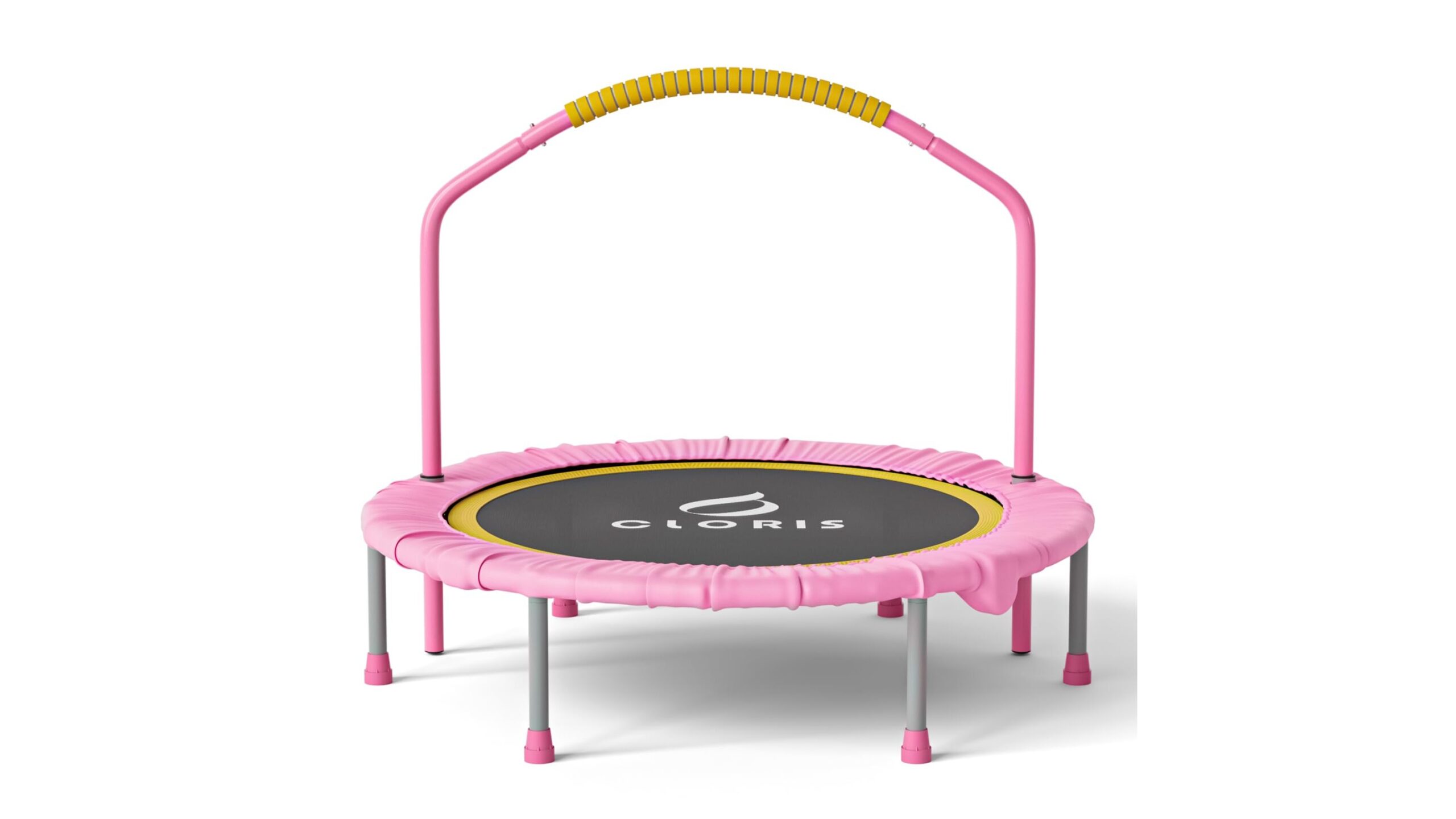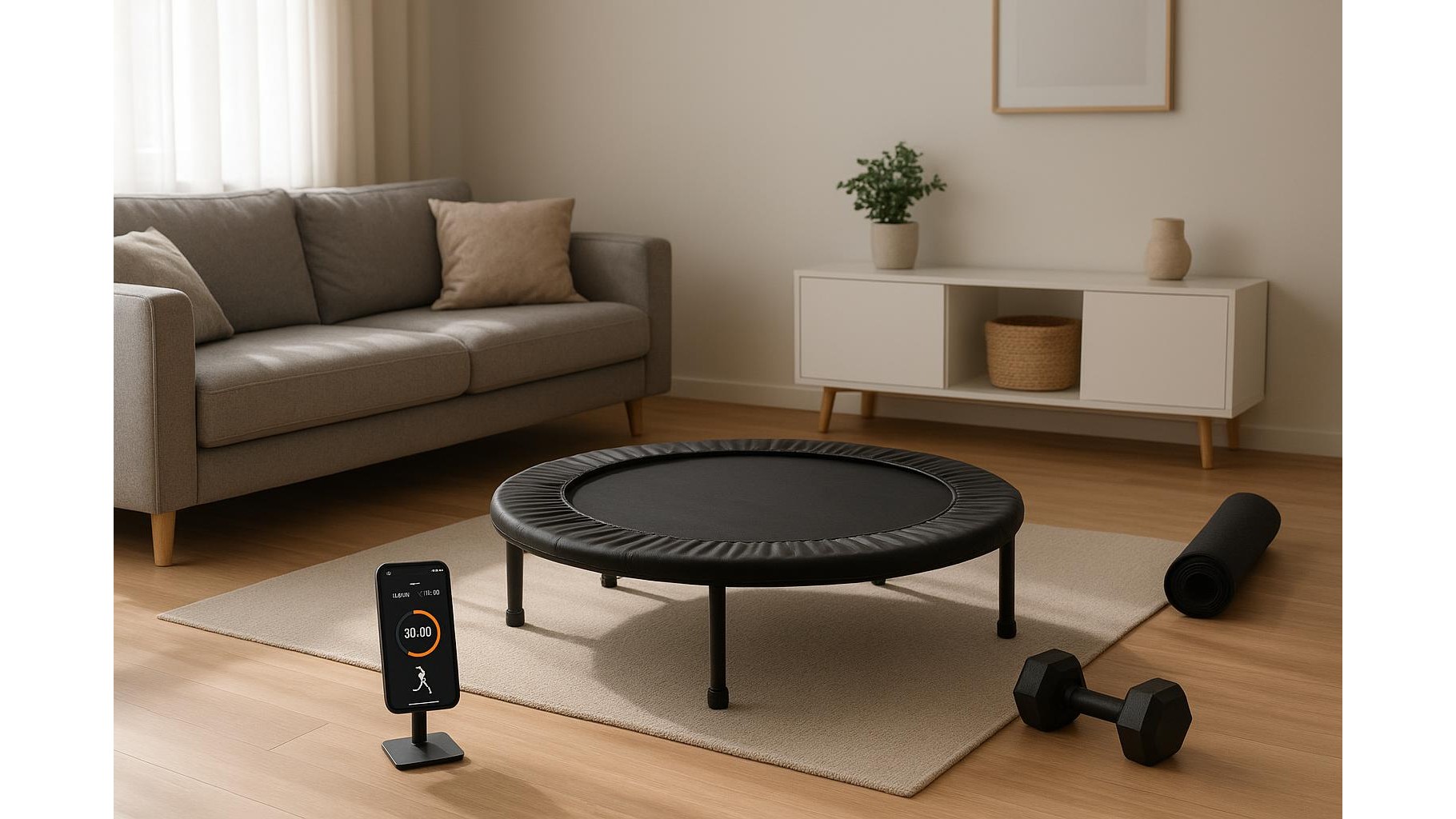
Smart mini trampolines are quietly becoming one of the most interesting pieces of home cardio kit. By adding built-in sensors, Bluetooth and companion fitness apps, these compact rebounders promise structured workouts, detailed tracking and extra motivation compared with a basic model. But not every feature really matters in day-to-day use, and not every user needs to pay for connectivity to get fitter.
Table of contents
What makes a mini trampoline “smart”?
In practice, a smart mini trampoline is simply a compact rebounder paired with digital tracking. Most systems use either a sensor in the frame, a pressure sensor in the mat, or an included wireless tracker to capture your jump count, cadence, estimated calories and session time. This data syncs to a smartphone via Bluetooth and appears in a dedicated app that logs your sessions, shows progress over time and may integrate with platforms like Apple Health or Google Fit. Unlike a simple rebounder, you’re not guessing how hard you worked: you see your effort in numbers and charts, which can be a powerful motivator during home cardio blocks.
Which tracking features actually matter?
It’s easy to be distracted by long spec sheets, but only a few tracking features really change the experience. First, look for reliable jump detection and responsive real-time feedback; if the sensor misses repetitions or lags, your stats and pacing cues become useless. Second, structured interval timers and heart-rate guidance (either via a paired HR strap or watch) are far more valuable than novelty metrics like estimated jump height. Third, check how clearly the app presents weekly and monthly summaries, because these views help you build consistent routines. Cloud syncing and multi-user profiles are a nice bonus for families, but they only matter if the fundamentals—accuracy, stable Bluetooth connection and intuitive controls—are solid.
How apps can structure effective home cardio sessions
The biggest upgrade a smart mini trampoline offers over a basic rebounder is programming. Companion apps typically include guided workouts ranging from low-impact beginner routines to intense HIIT sessions. Instead of bouncing randomly for 10 minutes, you follow intervals of high and low intensity tailored to your fitness level. Clear on-screen cues and audible prompts help you maintain the right cadence and rest periods, while adaptive plans adjust as your fitness improves. Over time, the app can recommend progressive overload—slightly longer sessions, more intervals, or higher target cadence—so you avoid plateaus. For people who struggle to design their own cardio plans, this structured coaching is where smart rebounders genuinely outperform basic models.
Who really benefits from spending more on a smart rebounder?
Not everyone needs an app-connected trampoline. A standard rebounder still delivers low-impact cardiovascular training and joint-friendly movement. Smart models make the most sense for users who are data-driven or easily motivated by streaks, achievements and visual progress. They’re ideal if you already track steps, heart rate and sleep and want your cardio sessions logged in the same ecosystem. Busy professionals training in short bursts at home can use detailed session data to ensure those 15–20 minute workouts are truly effective. On the other hand, if you dislike phones during workouts or prefer simple movement without screens, a well-built non-connected rebounder is probably a better, cheaper fit.
Key buying considerations beyond the smart features
Even the cleverest app cannot compensate for a flimsy frame. Whether you choose a smart or basic model, prioritise build quality: a sturdy steel frame, secure leg locks and a stable, non-slip base. Check the weight limit, especially if multiple household members will use it. A high-tension jump mat and robust springs or bungee cords make workouts safer and more comfortable. Foldability and overall footprint matter in small home gyms, as does noise level if you live in an apartment. When evaluating smart options, treat the tech as a layer on top of solid hardware: if the trampoline is unstable or noisy, even the best app will end up ignored in a few weeks.
Are smart mini trampolines worth it for most home users?
For many people starting a home cardio routine, a basic rebounder is enough to build endurance and burn calories. Smart mini trampolines become worth the premium when you value structured coaching, performance tracking and integration with your wider fitness data. Their sensors and apps are genuinely useful when they help you train consistently, pace intervals correctly and stay engaged over months rather than weeks. If those factors match your personality and goals, an app-connected model can turn a simple piece of equipment into a central pillar of your home gym; if not, you can safely invest in quality hardware without the electronics and still bounce your way to better fitness.