If you want a full body strength workout at home without turning your living room into a commercial gym, a simple combo of dumbbells, a sturdy chair and mini resistance bands is more than enough. This 40-minute circuit trains your legs, chest, back, shoulders and core with minimal equipment and space, offering clear progressions for both beginners and intermediates.
Table of contents
Equipment you need for the 40-minute circuit
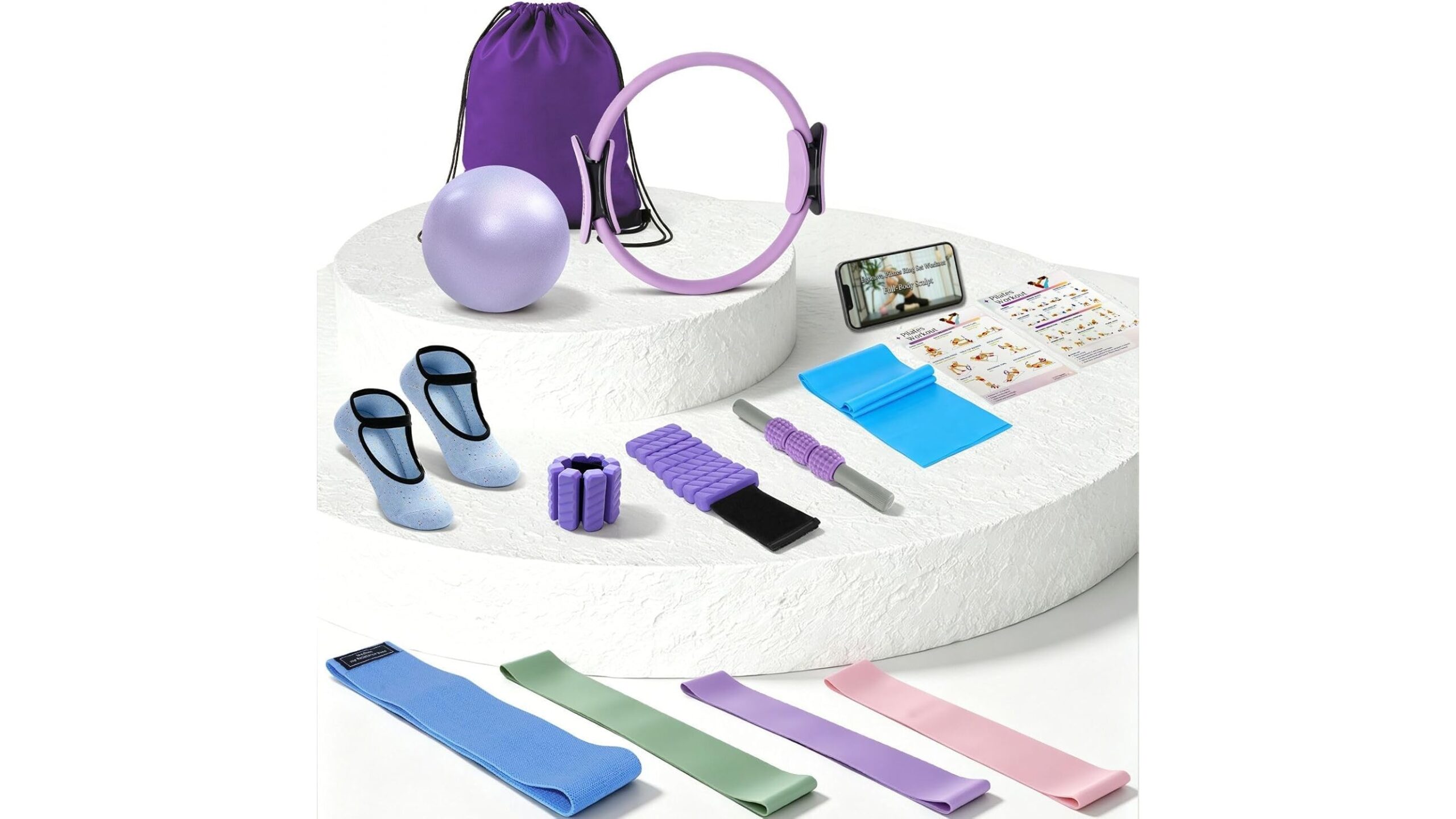
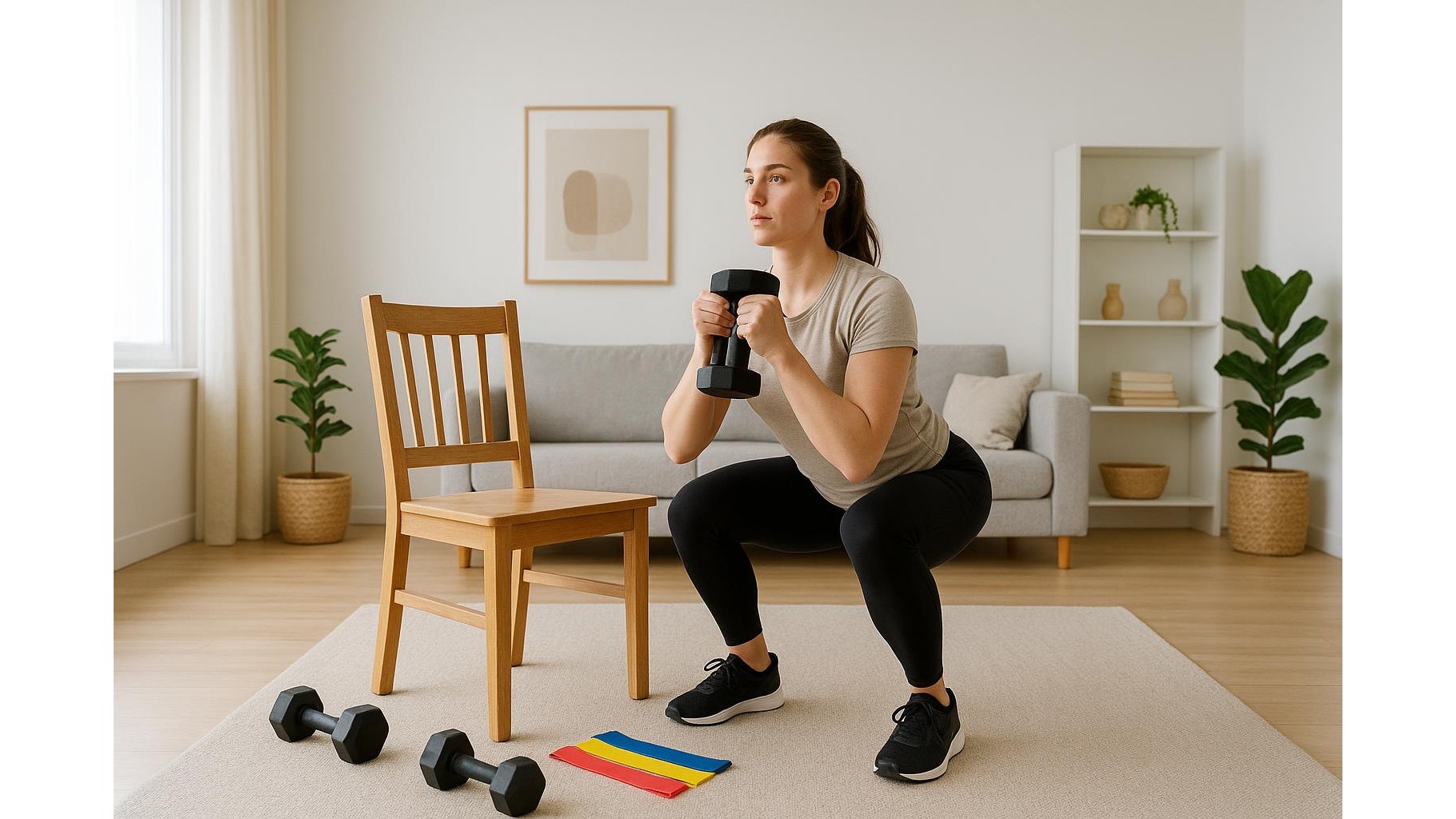
For this routine you only need three tools: a pair of adjustable or fixed dumbbells, a stable chair or bench that does not wobble, and a set of mini resistance bands with different levels of tension. Choose dumbbells that allow you to perform 10–15 reps with good form; if you own more pairs, keep a lighter set for upper body and a heavier one for leg exercises. A simple, non-folding wooden or dining chair is often safer than a flimsy folding model, especially for step-ups and triceps dips. With mini-bands, look for a fabric or thick latex set that includes at least light, medium and heavy bands so you can scale glute bridges, lateral walks and core moves by adjusting resistance instead of changing the exercise.
Structure of the full body 40-minute strength circuit
The workout is organised as a circuit of six exercises that you cycle through for 3–4 rounds. Each round lasts about 8–10 minutes, including short rests, bringing the total session to roughly 40 minutes with warm-up and cool-down. A sample structure looks like this: (1) Dumbbell goblet squat using the chair as a depth guide; (2) Chair-supported dumbbell row; (3) Mini-band glute bridge; (4) Dumbbell floor chest press; (5) Chair triceps dips or banded kickbacks; (6) Mini-band dead bug or plank with banded row. Beginners can work for 30 seconds per exercise followed by 30–40 seconds rest, while intermediates can push to 40–45 seconds of effort with 15–20 seconds rest, aiming to move continuously but with controlled, deliberate form.
Warm-up, safety and technique cues
Before loading up with dumbbells and bands, spend 5–7 minutes on a dynamic warm-up: bodyweight squats to the chair, hip circles, arm swings and light walkouts. Safety is non-negotiable: position the chair on a non-slippery surface, ideally against a wall if you are unsure of its stability. When squatting to the chair, lightly tap your glutes without collapsing your weight and keep your knees tracking in line with your toes. On dumbbell rows, hinge at the hips with a flat back, resting one hand on the chair seat for support and keeping the weight close to your body as you pull. For mini-band exercises, place the band flat (not twisted) above or below the knees depending on comfort, and focus on controlled tension instead of snapping the band with jerky movements.
Beginner variations and progressions
If you are new to home strength training, start with lighter loads and partial ranges of motion. Use the chair as full support for sit-to-stand squats with bodyweight or a very light dumbbell held at the chest, and reduce the height of step-ups by placing your foot on a lower platform like a sturdy stack of books or a low step. Swap chair triceps dips (which load the shoulders quite heavily) for standing dumbbell triceps extensions or banded push-downs anchored in a doorframe. With mini-bands, start with the lightest band for glute bridges and side steps, aiming for 10–12 smooth reps rather than chasing burn at all costs. As you grow stronger, you can gradually increase the band resistance, add a pause at the top of each bridge, and extend your working intervals by 5 seconds per week to build capacity safely.
Intermediate tweaks to build more strength
Intermediates can turn this 40-minute strength circuit into a serious muscle-building session with a few simple tweaks. Increase dumbbell load on goblet squats and rows so that the final 2–3 reps feel challenging but still technically clean. Turn the basic glute bridge into a single-leg version with a heavy mini-band, driving through the heel and keeping the hips level. On chest exercises, use a pair of dumbbells and perform a slow tempo (3 seconds lowering, 1 second pause, 1 second up) to increase time under tension even if your weights are limited. You can also make the circuit more demanding by adding a final “finisher” round of mini-band lateral walks and bear crawls, which will torch your shoulders and core without adding extra impact to the joints.
Cool-down and how to integrate this routine into your week
Wrap up with a 5-minute cool-down of gentle stretches for quads, hamstrings, chest and upper back, using the chair to support deeper positions if needed. This full body 40-minute routine fits well into a three-day weekly plan: perform it on non-consecutive days (for example Monday, Wednesday and Friday) and focus on daily walking or light cardio between sessions. As you adapt, you can alternate between a slightly heavier, lower-rep version (8–10 reps with more weight) and a lighter, higher-rep version (12–15 reps) using the same dumbbells, chair and mini-bands. Over time, you will notice stronger legs, more defined shoulders and a more stable core – all achieved in your living room with compact, versatile equipment and a smart, repeatable circuit structure.