
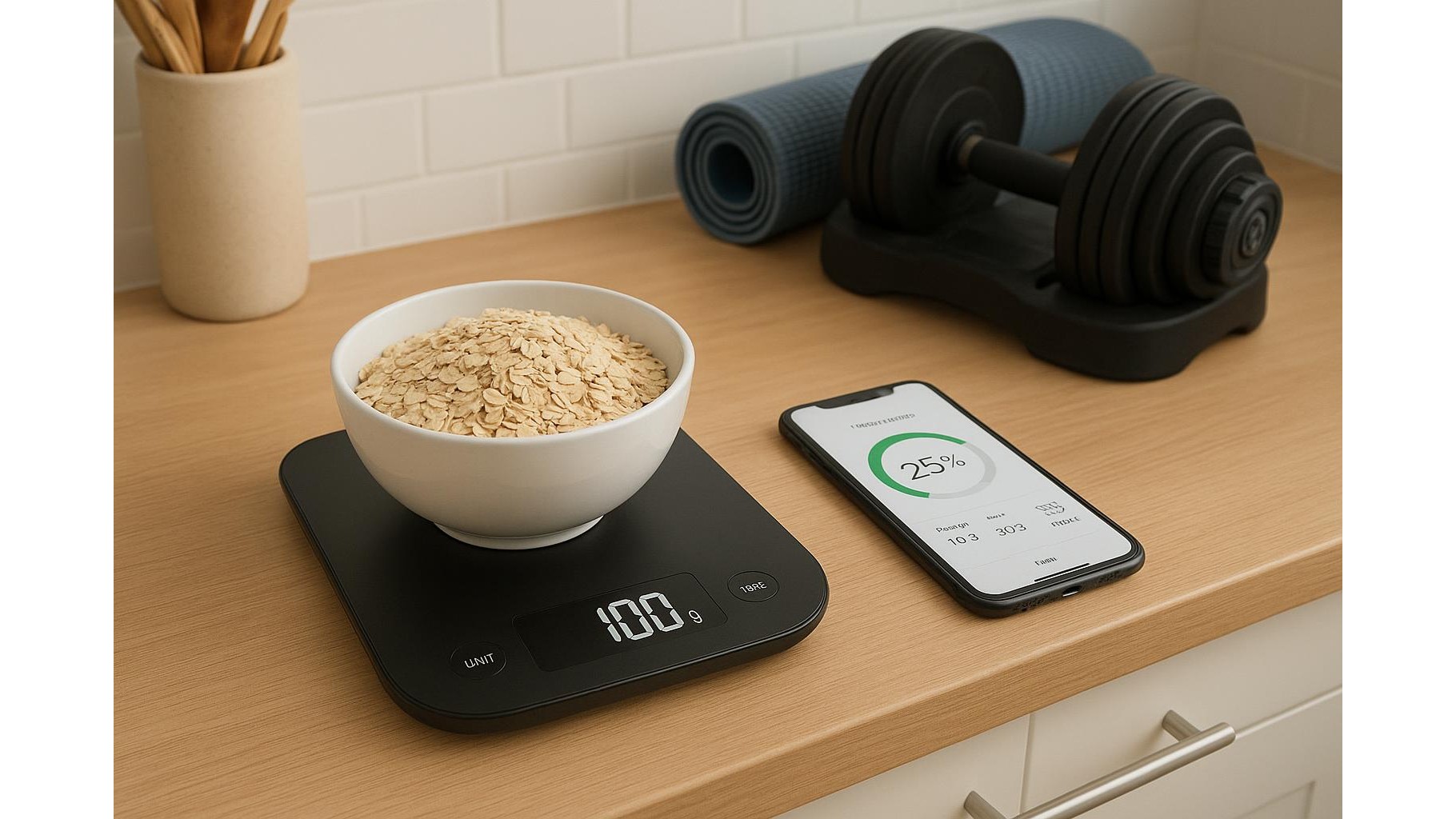
Dialling in your nutrition for home workouts doesn’t have to mean obsessively weighing every bite. With a basic smart kitchen scale, you can quickly estimate portions, track macros and streamline meal prep so your training is supported without turning food into a maths exam. The key is using the core features of any connected scale in a smart, flexible way: set up a few go‑to meals, create portion benchmarks and then rely more on consistency than perfection.
Why a smart kitchen scale helps home athletes
For anyone training in a home gym, nutrition is often the missing piece: you push hard with your workouts but guess on calories and protein. A smart kitchen scale fills that gap by giving you a realistic picture of how much you actually eat, without demanding a full-time tracking habit. Even the most basic models that sync to an app let you weigh food in grams, log it to a meal, and see estimated calories, protein, carbs and fats. That feedback makes it easier to hit targets like “2 g of protein per kg of bodyweight” or “slight calorie deficit for fat loss” while still enjoying flexible meals at home.
Setting up simple macro targets, not strict rules
The real power of a smart food scale is how it supports simple, realistic macro targets. Instead of perfection, aim for broad ranges: for example, 90–110 g of protein per day, or roughly 400–500 kcal before an intense strength workout. Weigh a typical portion of your usual foods once or twice – oats, rice, pasta, chicken, nuts – and save them as favourites in your app. After a week of using the scale consistently, you will know that “one scoop of oats” or “half a plate of rice” lines up with your targets, so you can relax and eyeball portions more often.
Turning meal prep into an easy system
If you train several times a week, using a digital kitchen scale during meal prep can save huge mental energy. Batch cook one or two recipes, place your container on the scale, hit tare, then divide the total weight by the number of servings you need. For example, if your chicken and rice tray weighs 1200 g and you want four meals, each portion is around 300 g. You can log one serving in your app and simply repeat it whenever you grab a box from the fridge. This keeps your pre-workout and post-workout meals consistent without weighing every individual plate.
Using the scale for snacks and problem foods
Instead of weighing everything, reserve your smart scale for the foods that are easiest to overeat: nuts, oils, cheese, chocolate, nut butters and high-calorie snacks. Weigh a realistic snack once – for example, 30 g of nuts or 15 g of peanut butter – and see how that fits into your daily macros. This small habit can prevent hundreds of unnoticed calories from creeping into your diet each day, which is crucial when your goals include fat loss, muscle definition or staying within a maintenance range while training hard at home.
Knowing when to stop tracking every gram
The goal of using a kitchen scale for fitness is to build awareness, not dependence. After a few weeks of tracking key meals, you will start to recognise what a “high-protein portion” or a “balanced plate” looks like. At that point, you can switch to occasional check-ins: weigh your usual breakfast once in a while, or spot-check dinner if your progress stalls. This approach lets your home workouts stay fuelled and aligned with your goals, while keeping your relationship with food relaxed, flexible and sustainable over the long term.
In summary, a basic smart kitchen scale can become a powerful, low-stress ally for your home training. Use it to learn realistic portion sizes, set loose macro ranges, streamline meal prep and keep an eye on calorie-dense snacks, then gradually move towards more intuitive eating. Instead of chasing perfect numbers, focus on consistency and trends: when your nutrition broadly supports your workouts, you will see better energy, recovery and body composition without letting tracking take over your life.









