Starting a fitness journey at home does not have to be complicated. This beginner-friendly bodyweight workout plan is designed for your living room, requires zero equipment, and guides you through a 4-week progressive program. You will train your whole body, learn proper technique, follow a clear weekly schedule, and track your progress with simple methods anyone can use.
Why a Living-Room Bodyweight Plan Works
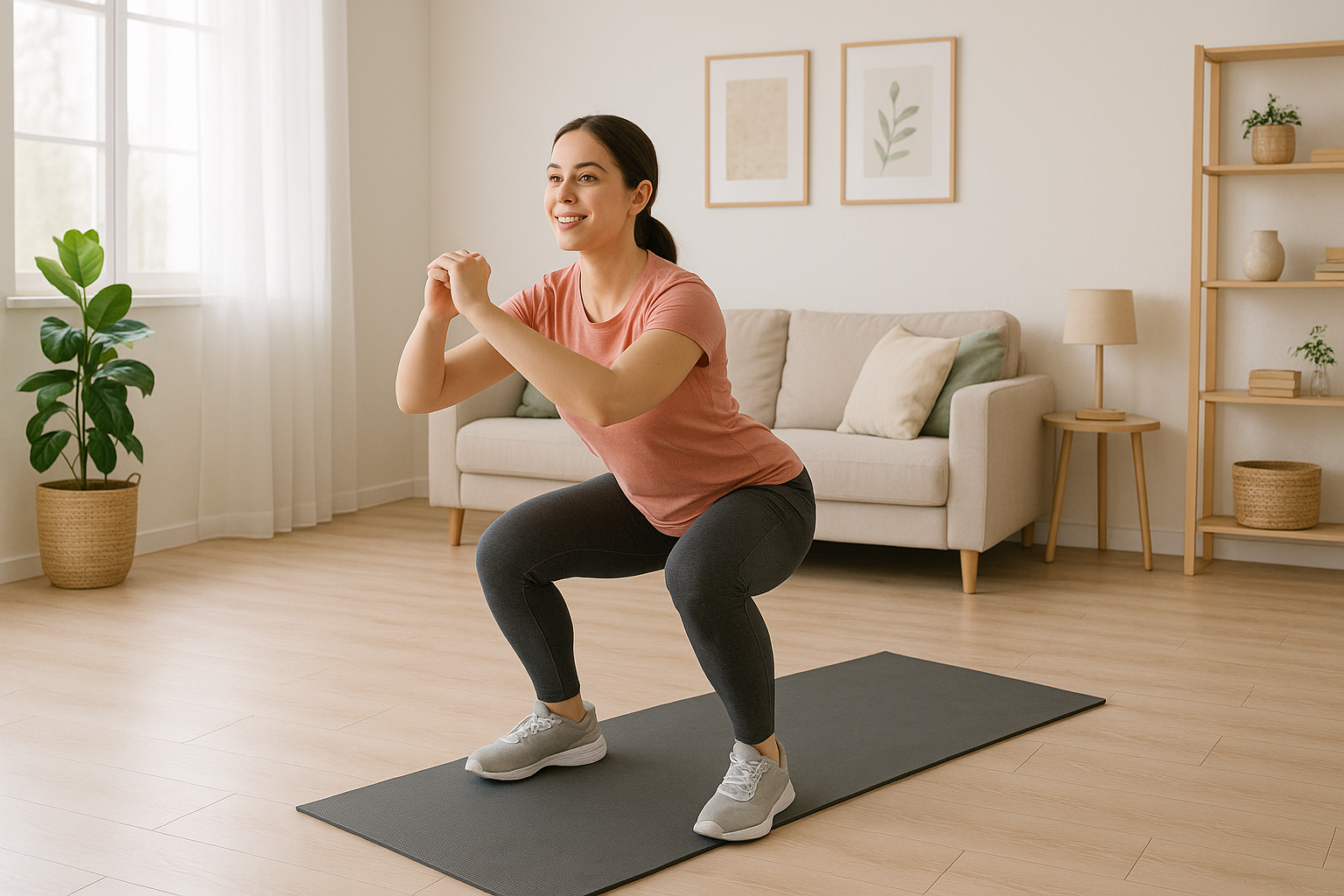
A bodyweight workout is ideal if you are new to training, short on time, or do not have space for bulky machines. Using only your own body as resistance improves strength, mobility, balance and coordination while keeping impact low on your joints. Training in your living room removes obstacles such as gym anxiety, commuting, or bad weather. All you need is enough room to lie down and move your arms freely. To make sessions safer and more comfortable, many beginners like to add a basic exercise mat such as the KG Physio Exercise Mat, which offers cushioning and a non-slip surface.
Core Exercises You Will Use Each Week
This 4-week plan focuses on simple, effective compound exercises that train multiple muscle groups at once. For your lower body you will use squats, glute bridges and reverse lunges. For upper body strength, you will perform incline push-ups against a sofa or sturdy table, wall push-ups and chair dips (using a stable chair). Your core will be challenged with dead bugs, bird dogs and planks. If you struggle with your wrists or want extra grip, a pair of basic push-up bars like the Power Press Push Up Bars can help you keep a more neutral wrist position.
The 4-Week Progressive Structure
The program is based on three full-body workouts per week (for example Monday, Wednesday, Friday) with at least one rest day between sessions. In Week 1, start with 2 sets of 8–10 reps per exercise, focusing on slow, controlled movement. In Week 2, increase to 3 sets and aim for 10–12 reps. In Week 3, keep 3 sets but reduce rest times slightly and push towards 12–15 reps. By Week 4, you can add a fourth workout day or introduce more challenging variations such as deeper squats, longer plank holds or elevating your feet slightly during glute bridges. This gradual increase in volume and difficulty creates progressive overload, the key to consistent gains without overtraining.
Sample Weekly Schedule and Warm-Up
A simple weekly schedule might look like this: Monday – Workout A; Wednesday – Workout B; Friday – repeat Workout A; following week, start with Workout B. Each session begins with a 5-minute warm-up: march in place, arm circles, hip circles, and gentle dynamic stretches for your legs and back. After warming up, perform 5–7 exercises in a circuit: squats, incline push-ups, glute bridges, dead bugs, bird dogs and a 20–30 second plank. Rest 45–60 seconds between sets. Finish with light stretching for your quads, hamstrings, chest and shoulders to improve flexibility and recovery.
How to Track Progress and Stay Motivated
Tracking your workout progress helps you stay consistent and see real improvements. Note down sets, reps and how difficult each exercise feels on a 1–10 scale. Aim to increase either reps, sets or total time under tension slightly each week. Monitoring your resting heart rate, steps or calories burned can also be motivating. A simple, beginner-friendly option is a basic fitness tracker like the Amazfit Band 7 Fitness Tracker, which can log heart rate and daily activity without overwhelming you with features. Combine this with weekly photos or body measurements to notice strength and posture improvements even if the scale does not change quickly.
With a clear 4-week bodyweight plan, you can build strength, confidence and healthier habits right in your living room. Focus on good form, gradual progression and consistent tracking rather than perfection. As your endurance and technique improve, you can repeat the program with slightly harder variations or start integrating simple home gym tools to keep challenging your body. The most important step is starting today and committing to those short, focused sessions three times per week.