
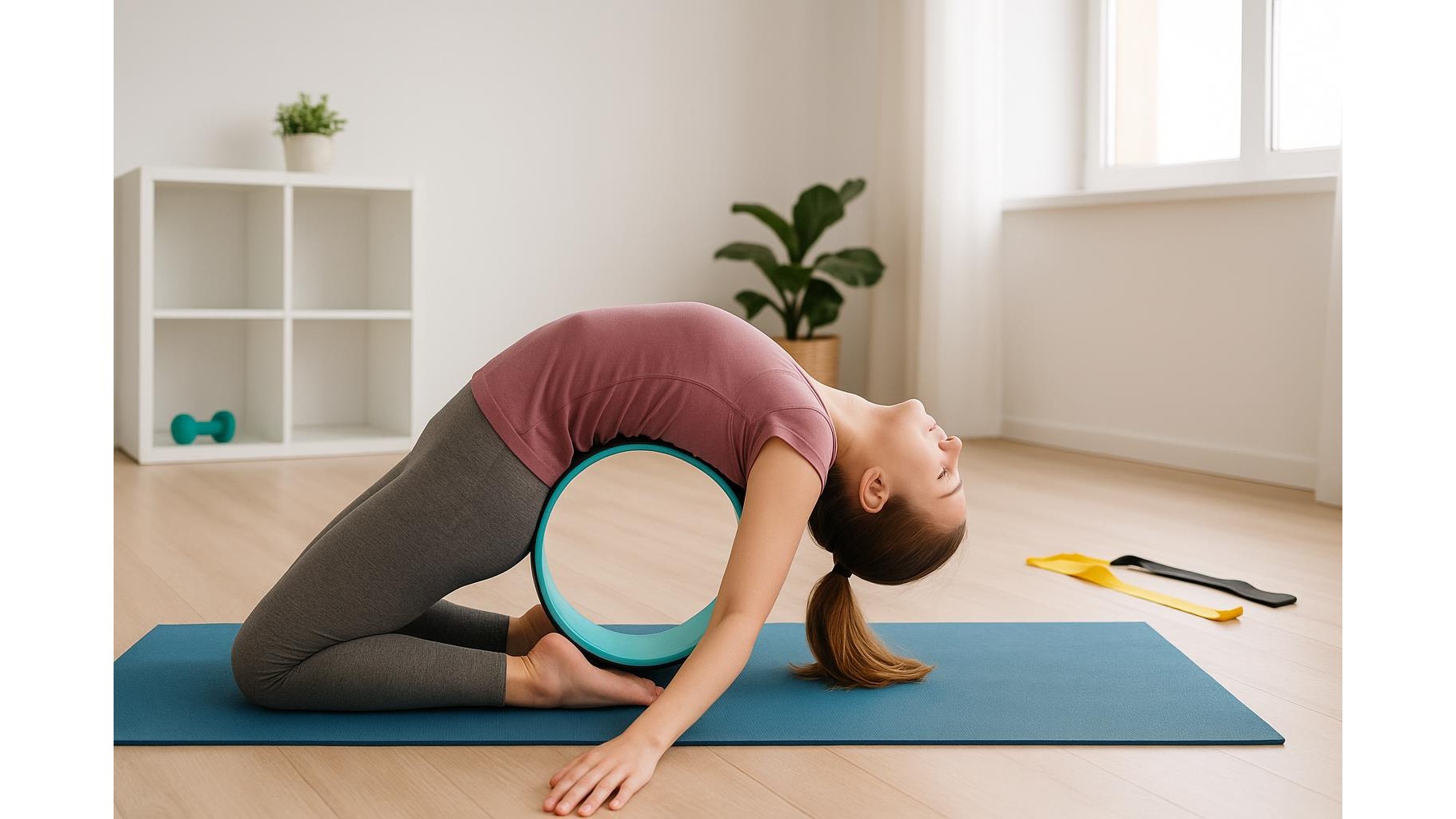
Adding a yoga wheel to your home gym is one of the simplest ways to improve backbends, open tight shoulders and challenge your core strength. But with so many models on the market, it can be hard to know which wheel is safe, comfortable and suitable for your level. This guide walks you through the key features to compare – from size and materials to grip and weight capacity – so you can choose a wheel that supports your spine instead of stressing it.
Choosing the right size for your back and level
The first specification to consider is wheel diameter. Larger wheels (around 32–33 cm) offer a gentler, more supported backbend and are ideal for beginners or anyone with a stiff thoracic spine. Medium wheels (around 26–28 cm) provide a more intense stretch and better suit intermediate users. Smaller wheels (20–25 cm) dramatically increase the range of motion and are best for advanced practitioners and targeted core training, like pike roll-outs and plank variations. If you are new to backbending at home, start with a larger wheel and progress to smaller sizes only when you can comfortably control your spine and core without discomfort or compression in the lower back.
Materials, padding and comfort on the spine
A good yoga wheel for home use should balance structural rigidity with comfort. Most quality models use a rigid plastic or ABS inner ring to support body weight, combined with a thick outer layer of EVA foam or TPE padding. This cushioning is crucial: too thin, and you will feel hard pressure along the spine; too soft, and the wheel may feel unstable. Look for high-density foam that is at least a few millimetres thick, with a lightly textured surface to prevent slipping when you begin to sweat. Hypoallergenic, PVC-free materials are preferable if you have sensitive skin. For home gym floors, foam padding also reduces noise and protects both the wheel and your flooring from wear.
Grip, traction and floor stability
Safe backbends and core exercises on a yoga wheel depend on reliable grip. Check that the outer surface has a non-slip texture rather than a completely smooth finish. Subtle ridges or a patterned tread can significantly improve traction against clothing and skin. If you plan to train on wooden or tiled floors, pay attention to the edges of the wheel as well: they should sit flat and not wobble when you put your weight on them. During poses like wheel-supported bridges, lunges or kneeling backbends, any lateral movement will increase the risk of falling. Before committing to a routine, always test the wheel with small movements close to a wall so you can exit safely if the grip is not as secure as expected.
Weight capacity and durability for regular use
Because a yoga wheel acts as a load-bearing prop, its maximum weight capacity is non-negotiable for safety. Choose a wheel rated well above your body weight, especially if you intend to use it dynamically for core rolls, planks or balance drills rather than just static stretches. A higher rating generally indicates thicker, better-engineered inner construction. Inspect product images and descriptions for signs of robust design: reinforced seams, consistent thickness and high-quality bonding between the inner ring and foam layer. In a home gym that sees frequent use, a durable wheel will better withstand sweat, pressure and the occasional drop, maintaining its shape and support over time without developing cracks or soft spots.
Exercise ideas to safely train backbends and core
Once you have chosen a suitable wheel, start with simple, low-risk movements before progressing. For back mobility, begin by sitting on the floor, aligning the wheel with your spine and gently rolling back, supporting your head and neck with your hands. Breathe deeply and stop if you feel pinching in the lower back. For the core, place your shins or feet on the wheel in a plank and slowly roll the wheel towards your chest, keeping the spine neutral and ribs drawn in. You can also use the wheel under your hands for elevated planks, mountain climbers or kneeling roll-outs to challenge stability. Always move slowly, engage your abdominal muscles and avoid forcing deeper backbends; the aim is progressive mobility and control, not dramatic shapes.
In summary, the best yoga wheel for home training is one that matches your current mobility, offers enough padding for spinal comfort, provides reliable grip and is built to safely support your body weight. By taking time to assess size, materials, traction and durability, you can invest in a wheel that enhances your backbends, builds core strength and fits seamlessly into your home gym routine, helping you progress confidently while reducing the risk of strain or injury.









