
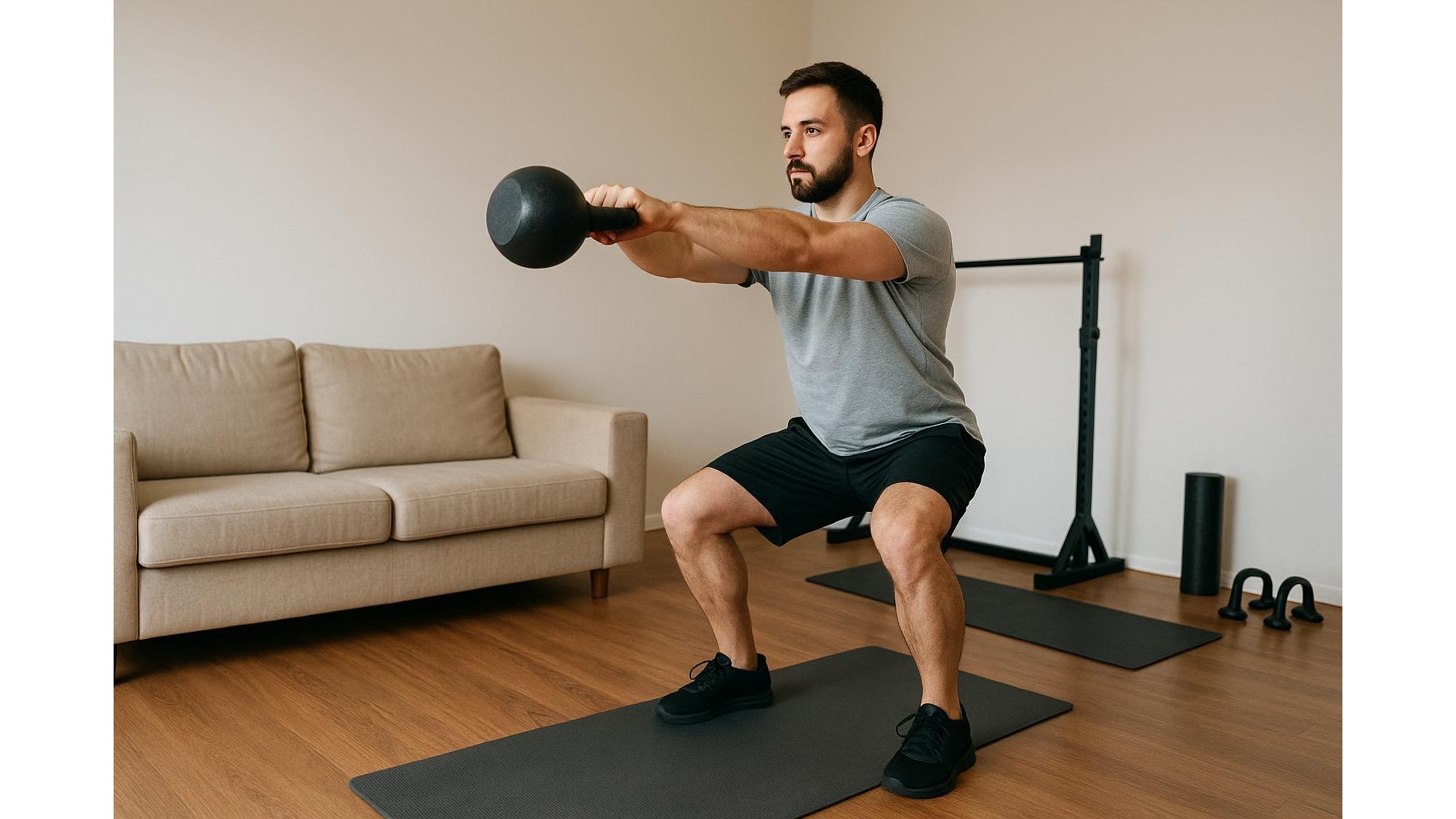
Training at home doesn’t have to mean long, complicated sessions. With just one kettlebell and your own bodyweight, you can build strength, power and conditioning in under 30 minutes, with almost no space and minimal setup. This article walks you through a full body kettlebell and bodyweight complex, explains how to structure the session, and shows you how to progress safely while keeping intensity high.
Why a kettlebell and bodyweight complex works
A kettlebell complex is a sequence of exercises performed back-to-back with the same weight, without putting it down. This makes your training extremely time-efficient: you hit multiple muscle groups, challenge your cardio and train your core all in one block. Combining it with simple bodyweight drills like push-ups and mountain climbers lets you balance upper and lower body work, without needing a full home gym. Aim for a medium kettlebell (8–16 kg for most people) so you can complete all reps with solid form while keeping your heart rate elevated.
Essential gear: one kettlebell, big possibilities
The only piece of equipment you truly need for this routine is a solid, comfortable kettlebell. A typical choice for home training is a cast iron bell around 12 kg, with a smooth handle that allows for swings, cleans and presses without tearing up your hands. Look for a model with a flat base for stability in exercises like renegade rows or when parking the bell between sets. A medium weight lets you perform full body moves such as kettlebell swings, goblet squats, cleans and presses in a complex format, so you don’t have to switch weights or interrupt the flow of your session. Pair your bell with a non-slip mat and you have a compact, quiet setup ideal for apartments.
The 30-minute full body kettlebell complex structure
Here’s a simple way to organise your 30-minute home session. Start with 3–5 minutes of light mobility: hip circles, arm swings, bodyweight squats. Then move into your main kettlebell complex. A sample sequence could be: 6 kettlebell swings, 6 goblet squats, 6 kettlebell rows per side, 6 push presses per side. Perform the exercises back-to-back without putting the bell down, then rest 60–90 seconds. Repeat for 4–6 rounds, depending on your level. After the complex, add 5–7 minutes of bodyweight conditioning (for example, 30 seconds of mountain climbers, 30 seconds of glute bridges, 30 seconds of high knees, 30 seconds rest, repeated for 3–4 rounds). Finish with a short cool-down and deep breathing.
Technique tips for safe and effective training
To get the most from this routine, prioritise form over speed. In the kettlebell swing, hinge at the hips instead of squatting, keeping your back neutral and your core braced; the power should come from your hips, not your arms. In the goblet squat, hold the bell close to your chest, push your knees out and keep your heels grounded. For rows and presses, pack your shoulder, avoid excessive arching of the lower back and control the descent of the weight. During bodyweight drills like push-ups and mountain climbers, maintain a straight line from head to heels and keep the core engaged to protect your lower back. Quality reps will build more strength and conditioning than sloppy, rushed movements.
Progressions, regressions and programming ideas
This 30-minute home workout can be adapted to different fitness levels. Beginners can reduce reps (for example 4 per exercise), extend rest periods, or perform easier variations such as elevated push-ups. Intermediates can stick to 6–8 reps per exercise and limit rest to 60 seconds. Advanced trainees can increase the kettlebell weight, add a fifth exercise to the complex (such as reverse lunges) or perform more rounds within the 30-minute window. You can run this session 2–3 times per week, alternating with lighter mobility days or low-impact cardio. Track your progress by noting rounds completed, rest times and perceived effort.
Putting it all together for a powerful home session
With a single kettlebell, smart bodyweight exercises and a well-planned complex structure, you can build strength, conditioning and core stability in just 30 minutes, using very little space. Focus on clean technique, smooth transitions and consistent breathing, and treat each round as practice rather than punishment. Over time, you’ll notice better posture, stronger hips and shoulders, and improved work capacity. This simple setup turns your living room into an efficient, effective home gym that fits even the busiest schedule.









